Phones and eclipses: what works, what risks your eyes and sensor, and what to skip
A solar eclipse is exactly the kind of event that makes people reach for the nearest camera. For most families, that means a phone. And that is fine — as long as you understand one big truth up front: your phone is good at documenting the experience, but it is not magic protection for your eyes or your camera.
That is the heart of eclipse smartphone photo safety. A screen does not make the Sun safe. A dark pair of sunglasses does not make the Sun safe. And a random scrap of tinted plastic, smoked glass, or improvised film does not become a solar filter just because it looks dark.
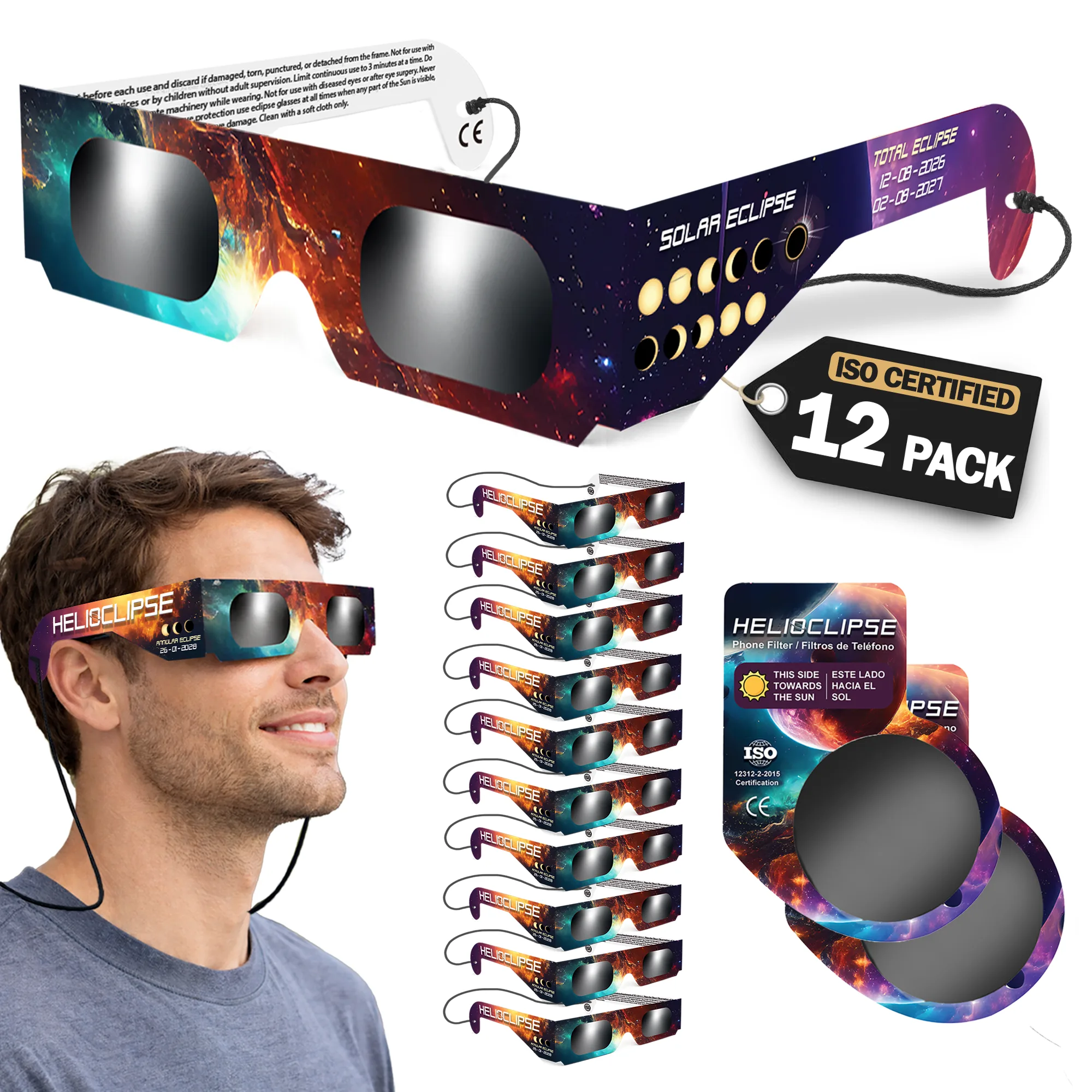
If you are planning ahead for 2026 or any other eclipse, start with safe viewing first and photos second. We recommend checking the Helioclipse Eclipse Explorer / 3D map to confirm whether you will be in totality or only a partial eclipse, because that changes what is safe to do and when. If you still need proper viewers, our shop for eclipse glasses is the right place to get ready early.
The short answer: yes, you can use a phone — but not casually
An eclipse photo smartphone setup can work for wide shots, crowd reactions, changing light, shadow patterns under trees, and short videos of the moment. What it usually cannot do well is produce the kind of dramatic close-up solar disk image people imagine from professional eclipse galleries.
That gap matters, because it leads to bad decisions. People zoom digitally until the image falls apart. They point the phone at the Sun for too long. They try to tape on a homemade filter. Or they stare upward while framing the shot, forgetting that their own eyes are the first thing at risk.
Good eclipse smartphone photography is less about forcing your phone to behave like a telescope and more about using it for what it actually does well: quick exposure control, video, HDR, low-light scene changes, and storytelling around the event.
If you are new to eclipse viewing, read our guide on when glasses on, when glasses off: eclipse phases explained for first-time viewers. It will help you avoid the most common mistake of all: treating every phase of every eclipse as if it were totality.
Your eyes are the main safety issue, not your camera settings
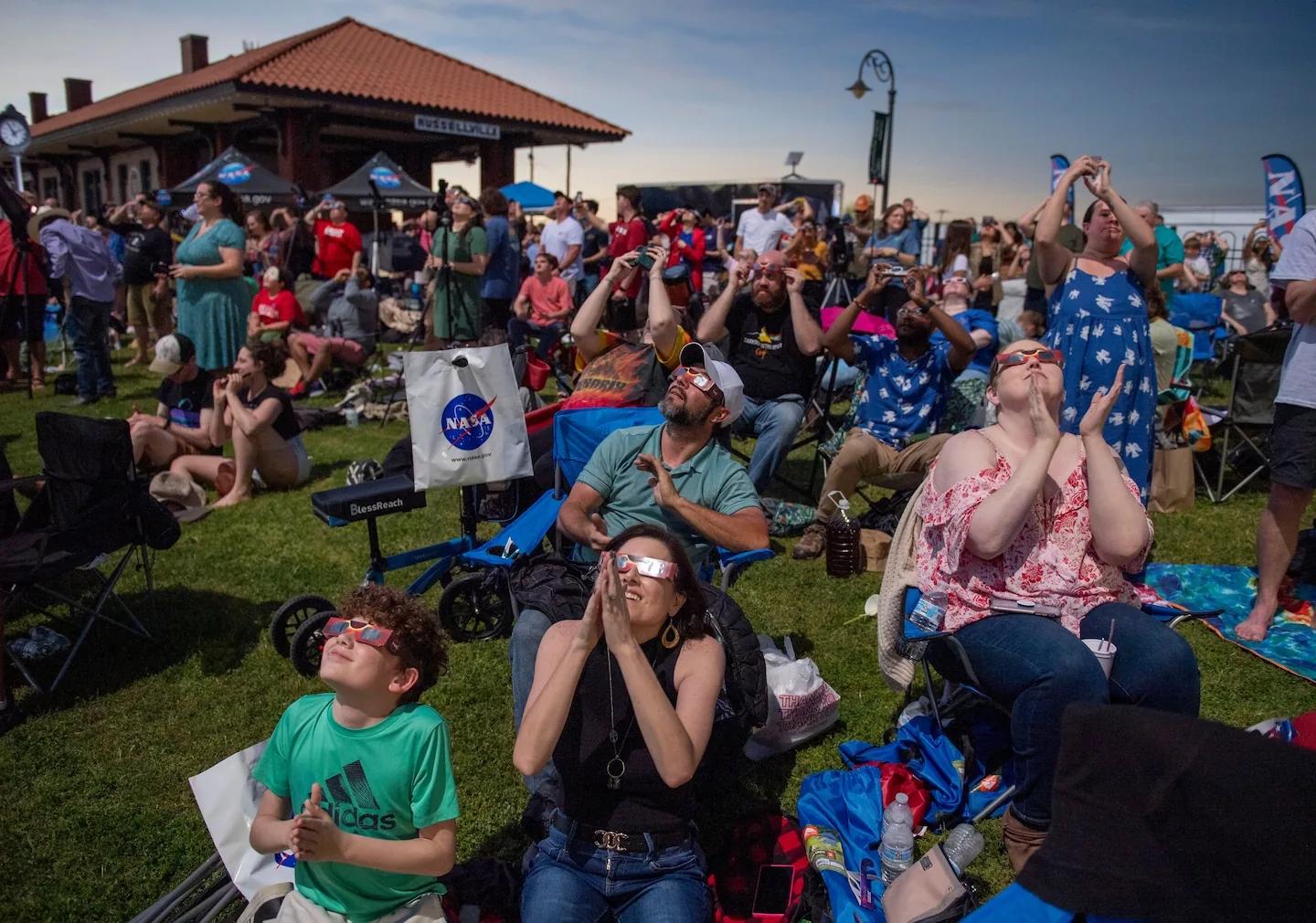
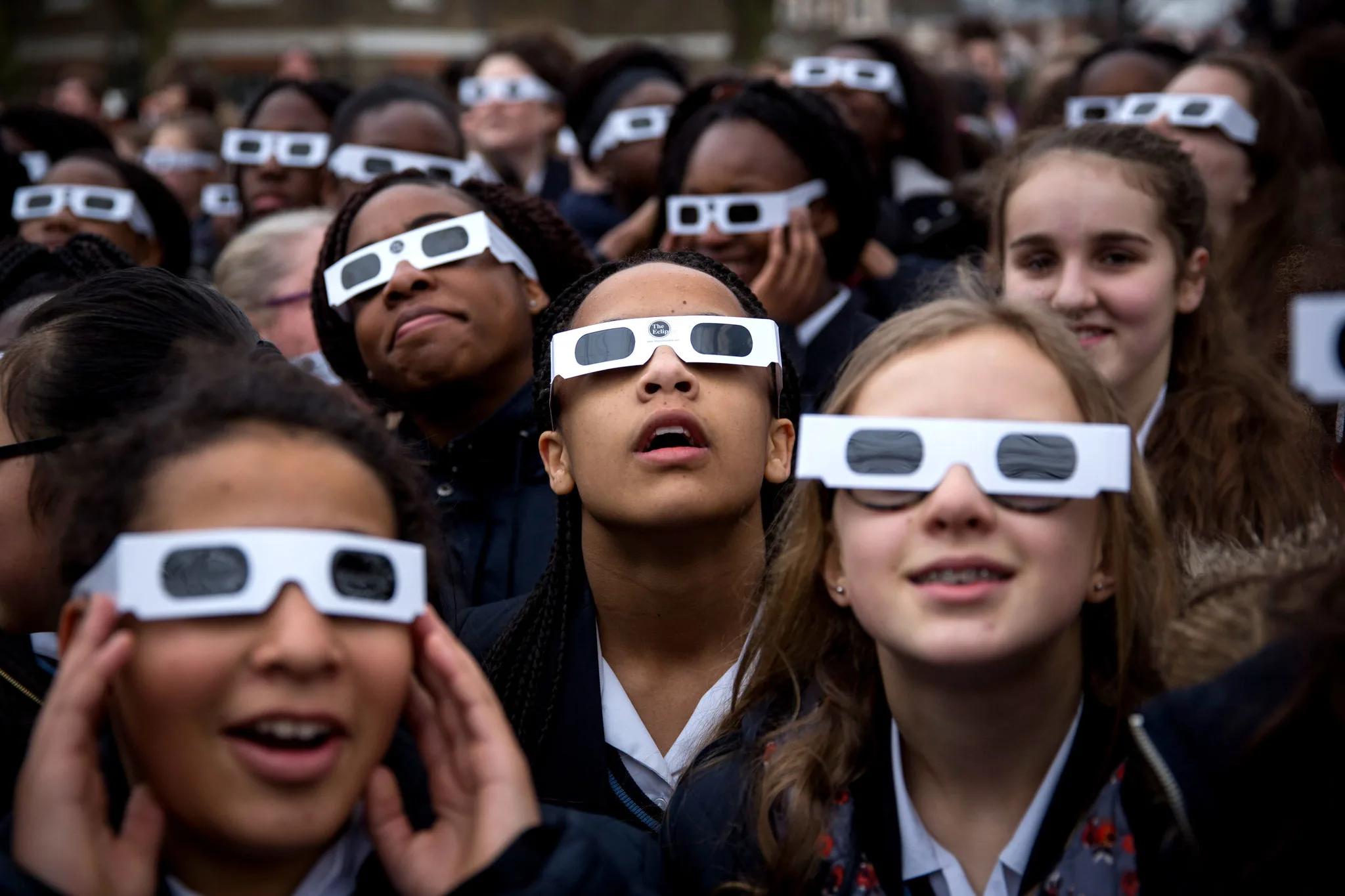
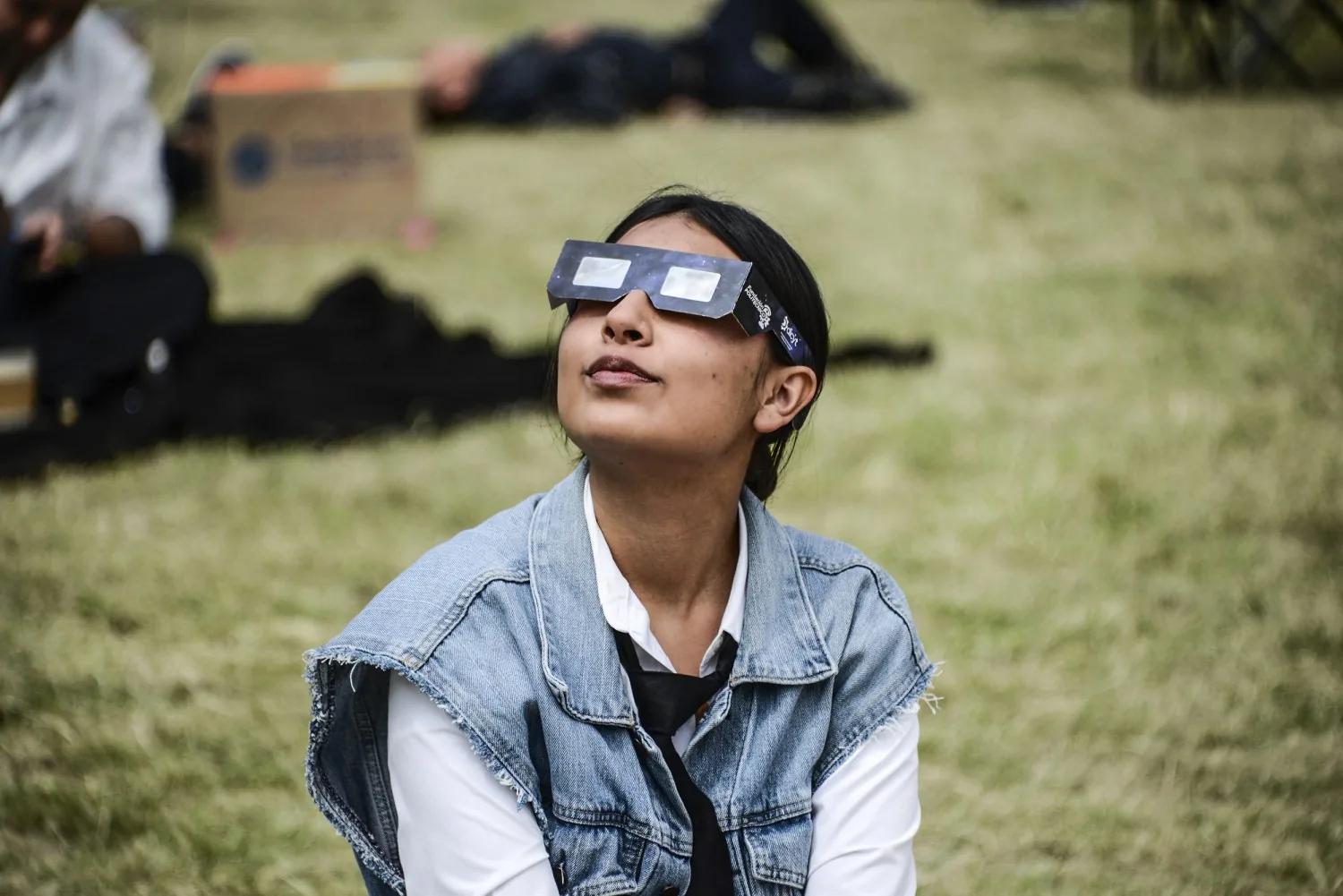
Let’s answer the practical question behind a lot of anxious searches: how do i protect my eyes during a solar eclipse? You protect them by never looking directly at the uneclipsed or partially eclipsed Sun without proper solar viewing protection, and by understanding that phones, camera screens, and ordinary sunglasses are not substitutes.
NASA’s guidance is clear: except during the brief total phase of a total solar eclipse, when the Sun’s bright face is completely covered, you need safe solar viewing protection to look directly at the Sun. During a partial eclipse or an annular eclipse, there is no safe unfiltered phase at all.
That means eclipse phone safety starts before you even open the camera app. If you are aiming the phone by glancing around the device and peeking at the Sun, you can still hurt your eyes. If you lift the phone and then look over it “just for a second,” you can still hurt your eyes. If you wear ordinary sunglasses and assume that is enough, it is not. Anyone wondering what happens if you look at a solar eclipse with sunglasses should know the answer is simple: sunglasses are nowhere near protective enough for direct solar viewing.
If you want the deeper why, our post on why staring at the Sun without protection is never “just a quick look” is worth reading before eclipse day, not after.
Can your phone camera be damaged?
Potentially, yes — especially if you keep it pointed at the Sun for extended periods, use magnification, or attach the phone to other optics without proper front-mounted solar filtration.
The risk is not identical for every phone, and not every brief attempt will destroy a sensor. But “probably fine” is not a safety standard. Bright concentrated sunlight can overload or heat parts of an imaging system. The danger rises if you use telephoto lenses, binoculars, telescopes, or any optical setup that concentrates sunlight into the phone camera.
This is where people get confused. A phone by itself has a tiny lens and sensor, so the risk profile is different from a big camera lens or telescope. But different does not mean harmless. If you are trying to record the Sun directly, you still need an appropriate solar filter over the camera optics. And if you are connecting a phone to binoculars or a telescope, the filter must be on the front of the optical instrument, not between your eye and the device, and not improvised from household materials.
A good rule is this: if the Sun is the subject, treat it as a hazardous subject.
What actually works well on a phone
The best phone eclipse images are often not the obvious ones.
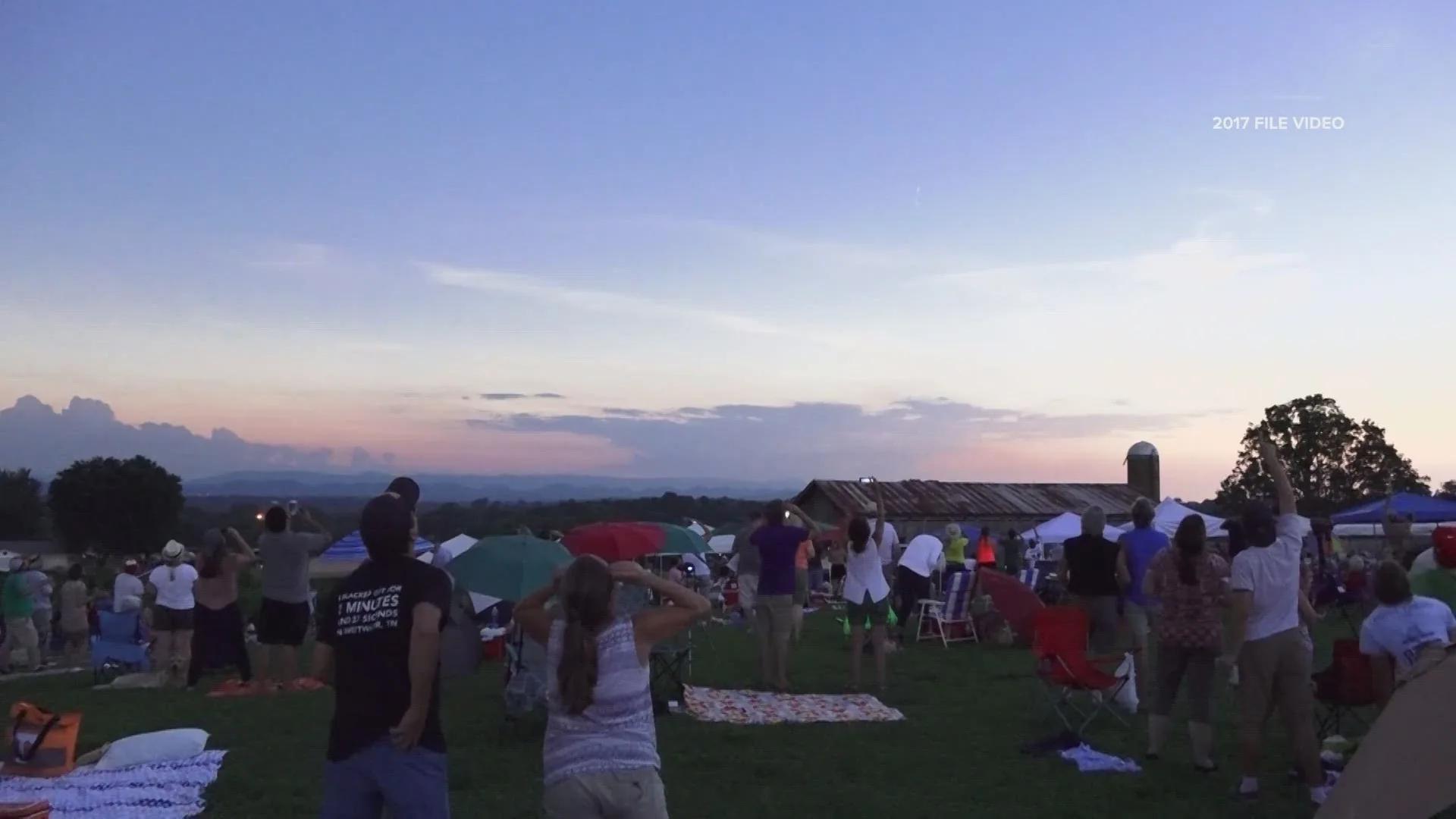
A phone is excellent for the human-scale story: the crowd going quiet, the light turning strange, crescent shadows under leaves, a wide shot of the horizon darkening, or your family reacting when totality hits. Astronomy.com makes this point well: the phone may not capture intricate solar detail, but it can capture the impact of the eclipse on your world.
That is why phones and eclipses: what works, what risks your eyes and camera is really a story about expectations. What works:
- wide photos of the landscape and sky
- video of people reacting
- shadow effects and changing ambient light
- HDR scenes before and after maximum eclipse
- low-light atmosphere during totality
- quick sharing and easy handheld documentation
What usually does not work well:
- extreme close-ups of the solar disk without specialized gear
- heavy digital zoom
- long unsteady handheld shots at high magnification
- improvised filter experiments
- trying to frame the Sun by naked-eye glances
For many readers, the smartest plan is to let the phone record the scene and let your own memory handle the wonder.

The biggest mistakes people make
So, what are common mistakes in eclipse photography? The list is surprisingly consistent from one eclipse to the next.
First: using no solar filter for direct solar shots during partial phases. That is the classic error.
Second: assuming dark materials are safe because they look dark. They are not. A proper solar filter is not just “very tinted.” It is designed for solar viewing or imaging.
Third: confusing eye protection with camera filtration. Eclipse glasses protect your eyes when used correctly for direct viewing. They are not a universal accessory for binoculars, telescopes, or camera lenses. NASA specifically warns not to look through optical devices while wearing eclipse glasses, because concentrated sunlight can burn through the filter and cause severe injury.
Fourth: trying to build a DIY camera filter from random materials. We do not recommend that. This article has a no_diy_filter_endorsement reason behind it: a homemade holder for a known safe solar material is one thing in expert hands, but casual readers often hear “DIY” and translate it into “anything dark enough will do.” That is how people end up trusting unsafe materials.
Fifth: spending the whole event fighting the camera instead of experiencing the eclipse. During totality, especially, seconds matter. If you are in the path of totality, you do not want to spend the best minute or two of the day buried in menus.
Sixth: not understanding the eclipse type. Readers often ask which type of eclipse is safe to look at with your eyes? The answer is precise: only the brief total phase of a total solar eclipse is safe to view without solar viewers, and only when the Sun’s bright face is completely covered. Partial and annular eclipses are never safe to view unfiltered.
What to skip completely
Some shortcuts are not worth “testing.” Skip them.
Skip smoked glass, exposed film, CDs, stacked sunglasses, emergency blankets, tinted plastic, X-ray film, and random online hacks. Skip any filter that does not have a trustworthy safety basis for solar viewing or imaging. Skip the idea that your phone screen somehow makes direct solar aiming automatically safe.
Skip attaching your phone to binoculars or a telescope unless you know exactly how the solar filter is mounted and whether it is designed for that use. The front of the optics must be filtered correctly. Anything else can become dangerous fast.
Skip the assumption that because a lunar eclipse is safe to photograph, a solar eclipse must be similar. It is not. If you are wondering is it safe to take a picture of a lunar eclipse? yes — a lunar eclipse is simply the darkened Moon, and it does not pose the same eye-safety problem. A solar eclipse is a direct-Sun event.
And skip the idea that one dramatic close-up is the only photo worth taking. For most people, the better souvenir is the scene: the people, the shadows, the sky, the sound.
If you want a direct Sun shot, here is the safe version
If your goal is a direct image of the Sun on your phone, keep the setup simple and conservative.
Use a proper solar filter over the phone camera optics if you are photographing the partial phases directly. Keep sessions short. Check framing on the screen rather than by looking around the phone at the Sun. Use a tripod or brace the phone if possible. Lower exposure if your camera app allows it. If your phone has optical zoom, that is better than digital zoom, but modest expectations still matter.
Do a test run before eclipse day. Practice exposure, focus lock, timer use, and how the filter sits over the lens. You do not want your first attempt to happen during the real event.
And if you are in the path of totality, remember the timing rule: filters are for the partial phases. During totality itself, the bright solar surface is covered. That is the brief exception for direct viewing with your eyes. But the moment even a tiny bright bead of Sun returns, protection goes back on immediately. Our eclipse phases guide walks through that sequence clearly.
The 2026 reality check: plan the eclipse first, then the photo
A lot of readers looking for an eclipse smartphone photo safety 2026 guide are really asking two questions at once: will my phone work, and where should I be?
For the August 12, 2026 total solar eclipse, those questions connect. In Spain, for example, being on the centerline versus near the edge of the path can mean a meaningful difference in totality duration — the kind of difference you feel when you are deciding whether to spend totality watching, photographing, or trying to do both. Cities such as Zaragoza and Palma are widely discussed as major totality locations, while places outside the path will see only a partial eclipse. That is not a cosmetic difference; it changes the entire safety and photography plan.
This is why best places and timing for eclipse smartphone photo safety is not really about the phone first. It is about knowing whether your location gets totality, how long it lasts there, and whether you will be dealing with a brief dramatic darkening or a partial event that never becomes safe to view unfiltered. Start with our August 12, 2026 total solar eclipse planning guide and, if Spain is your focus, our 2026 totality in Spain guide.
If you are not sure whether your town is inside the path, use the Helioclipse Eclipse Explorer / 3D map. That one step will answer more safety questions than any camera tip thread.

What about eclipse glasses, labels, and “NASA approved” claims?
This is where shopping language gets messy fast. People ask things like are eclipse glasses usa legit? or look for phrases such as eclipse glasses nasa approved and nasa certified solar eclipse glasses. The important correction is that NASA does not approve a particular consumer brand of eclipse viewers. NASA’s own safety page says that safe viewers ought to comply with ISO 12312-2, but NASA does not endorse one brand as “the official one.”
So when you shop, focus on the standard and the seller’s trustworthiness, not on vague patriotic wording or borrowed authority. Phrases like approved solar eclipse glasses, solar eclipse glasses iso 12312-2 certified, and eclipse viewing glasses are useful only if the product and seller can back them up credibly.
That is also why we tell readers to inspect viewers before use and to be skeptical of damaged, flimsy, or suspiciously generic stock. If you want a fuller checklist, read our guide to ISO 12312-2 and eclipse viewers and our post on fake and low-quality eclipse glasses.
Symptoms, treatment, and the questions people ask too late
Some of the most urgent searches happen after the event: solar eclipse eye damage symptoms, solar eclipse eye damage treatment, and can eclipse blindness be cured.
The first thing to say is that suspected solar eye injury is a medical issue, not a home-remedy problem. Symptoms can include blurred vision, distorted central vision, blind spots, altered color perception, or persistent visual changes after looking at the Sun. Not everyone feels pain, which is part of what makes solar retinal injury so deceptive.
As for solar eclipse eye damage treatment, there is no quick consumer fix you should rely on at home. If you think you may have injured your eyes, contact an eye-care professional promptly. And to the blunt question can eclipse blindness be cured, the honest answer is that recovery is variable and prevention is vastly better than hoping for treatment afterward.
Readers also sometimes ask what are the symptoms of cell phone damage to the eyes? In eclipse context, the phone itself is usually not the direct cause. The real hazard is unsafe solar viewing behavior around the phone — peeking at the Sun while framing, assuming the device makes it safe, or using inadequate protection.
The best phone strategy for most people
If you want the most reliable, least stressful plan, here it is.
Use certified viewers for direct viewing when required. Keep your phone for wide shots, reaction video, and environmental details. If you attempt a direct solar image, use proper filtration and test beforehand. Do not improvise. Do not spend the whole event chasing a tiny overexposed disk.
In other words, make your goal a memory, not a technical stunt.
That is the version of eclipse phone safe that actually holds up in the field. Safe does not mean fearless. It means you know what the phone can do, what it cannot do, and what is not worth risking.
Experts issue warning about risk of damage to cameras, eyes ...
CBS Chicago
Frequently asked questions
Can I safely use my phone to photograph a solar eclipse?
Yes, you can use a phone to document an eclipse, but only for the right kind of shots. It works well for wide scenes, changing light, shadow patterns, and short videos, but it is not a substitute for safe viewing protection and it is not meant to turn your phone into a telescope.
How can I tell whether eclipse glasses are safe to use?
Use only proper solar viewing protection and do not rely on ordinary sunglasses, tinted plastic, smoked glass, or other improvised materials. The excerpt says a dark-looking material does not become a solar filter just because it looks dark, so the key is whether it is intended for safe solar viewing.
What are the biggest mistakes people make when trying to photograph an eclipse?
Common mistakes include zooming digitally until the image breaks down, pointing the phone at the Sun for too long, taping on a homemade filter, and staring upward while framing the shot. The article also warns that a phone screen and ordinary sunglasses do not make the Sun safe.
What is the safest way to protect my eyes during a solar eclipse?
Do not look directly at the uneclipsed or partially eclipsed Sun without proper solar viewing protection. The excerpt says you should start with safe viewing first and remember that phones, screens, and sunglasses are not substitutes for real protection.
What should I know if I think I may have eye damage after viewing an eclipse?
The excerpt does not describe specific symptoms, so it does not support listing them. What it does make clear is that looking at the Sun without proper protection can put your eyes at risk, so if you think you may have been exposed, treat that as a serious safety issue and seek appropriate medical advice.
On-site next steps
- Check whether your location gets totality or only a partial eclipse with the Helioclipse Eclipse Explorer / 3D map.
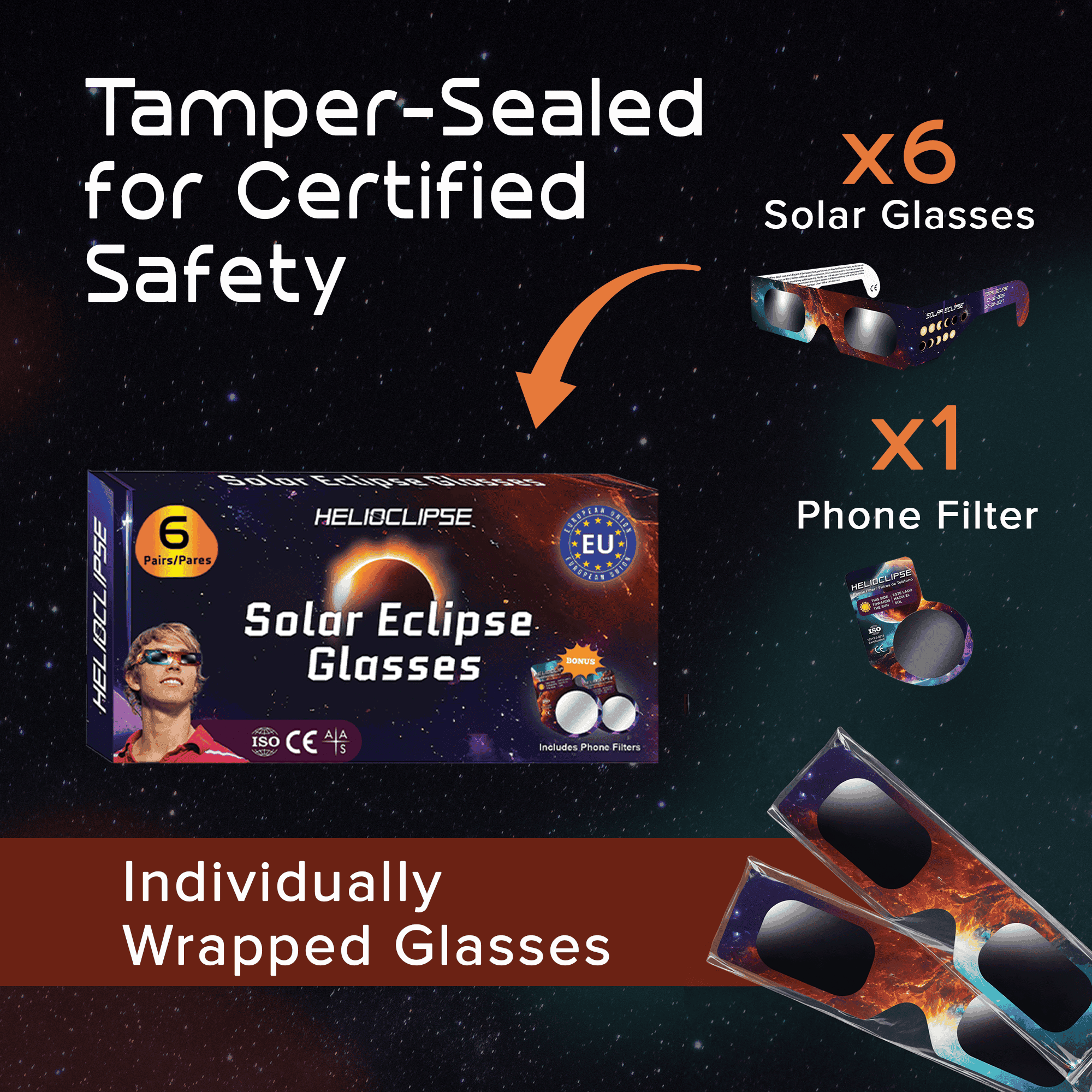
- If you still need viewers for your group, shop Helioclipse solar eclipse glasses early so you are not scrambling close to eclipse day.
- For more planning and safety reading, browse the Helioclipse blog.
Sources & further reading
- Can you take eclipse photos with your phone? Yes but...
- How to photograph a solar eclipse with a smartphone — 7 tips from an expert
- Use Your Smartphone to Photograph the Solar Eclipse
- Ask Astro: Why aren’t solar eclipse photos taken using a Hydrogen-alpha filter?
- Eclipse Viewing Safety — NASA Science
- Solar Eclipse Eye Safety — American Astronomical Society technical report (PDF)
- Astrophotography with your smartphone — NASA
- How to Safely View the Eclipse — NASA flyer (PDF)
- Eclipse Essentials / Safety — NASA (PDF)