A practical eclipse day checklist (gear, timing, and backups)
A great eclipse day usually looks calm from the outside. People arrive early, know whether they are in totality or only a partial eclipse, have their viewers ready, and do not spend the best minutes of the event digging through a bag for missing glasses or a dead phone cable. That is what this eclipse viewing checklist is for: fewer avoidable mistakes, more time actually watching the sky.
If you only do one thing before eclipse day, check your exact location on the Helioclipse Eclipse Explorer / 3D map. That answers the most important planning question: are you inside the path of totality, near the edge, or outside it entirely? Everything else in your plan—when glasses stay on, whether totality happens at all, how much time you have, and whether moving a short distance could change your experience—depends on that.
We also want this to be an actionable checklist grounded in timing and safety eclipse planning, not a vague packing list. The right hat and water matter, yes, but the biggest difference-maker is knowing what kind of eclipse you are actually about to see.
First: know what kind of eclipse you are seeing
Before you think about cameras, chairs, or snacks, sort out the geometry. A total solar eclipse and a partial solar eclipse are not the same event with different levels of excitement; they have different viewing rules.
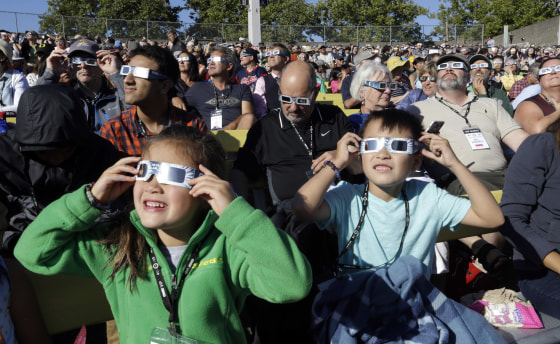
If you are inside the path of totality, there is a brief interval when the Moon completely covers the Sun’s bright face. Only then can you remove certified viewers and look directly at the eclipsed Sun with your unaided eyes. If you are outside that path—even if the Sun is 99% covered—there is no safe glasses-off moment. NASA and the American Astronomical Society are both very clear on this point.
That is why “where am I on the path?” belongs at the top of every eclipse viewing 2026 plan, every eclipse viewing 2025 reminder, and frankly every eclipse checklist 2024-style last-minute note people pass around before a big event. The map is not a bonus. It is the plan.
For a deeper walkthrough of the glasses-on versus glasses-off transition, see our guide to when glasses on, when glasses off: eclipse phases explained for first-time viewers.
Your non-negotiable gear
Here is the short version: if an item protects your eyes, confirms your timing, or keeps you functional outdoors for several hours, it is essential.
1. Certified solar viewers in good condition
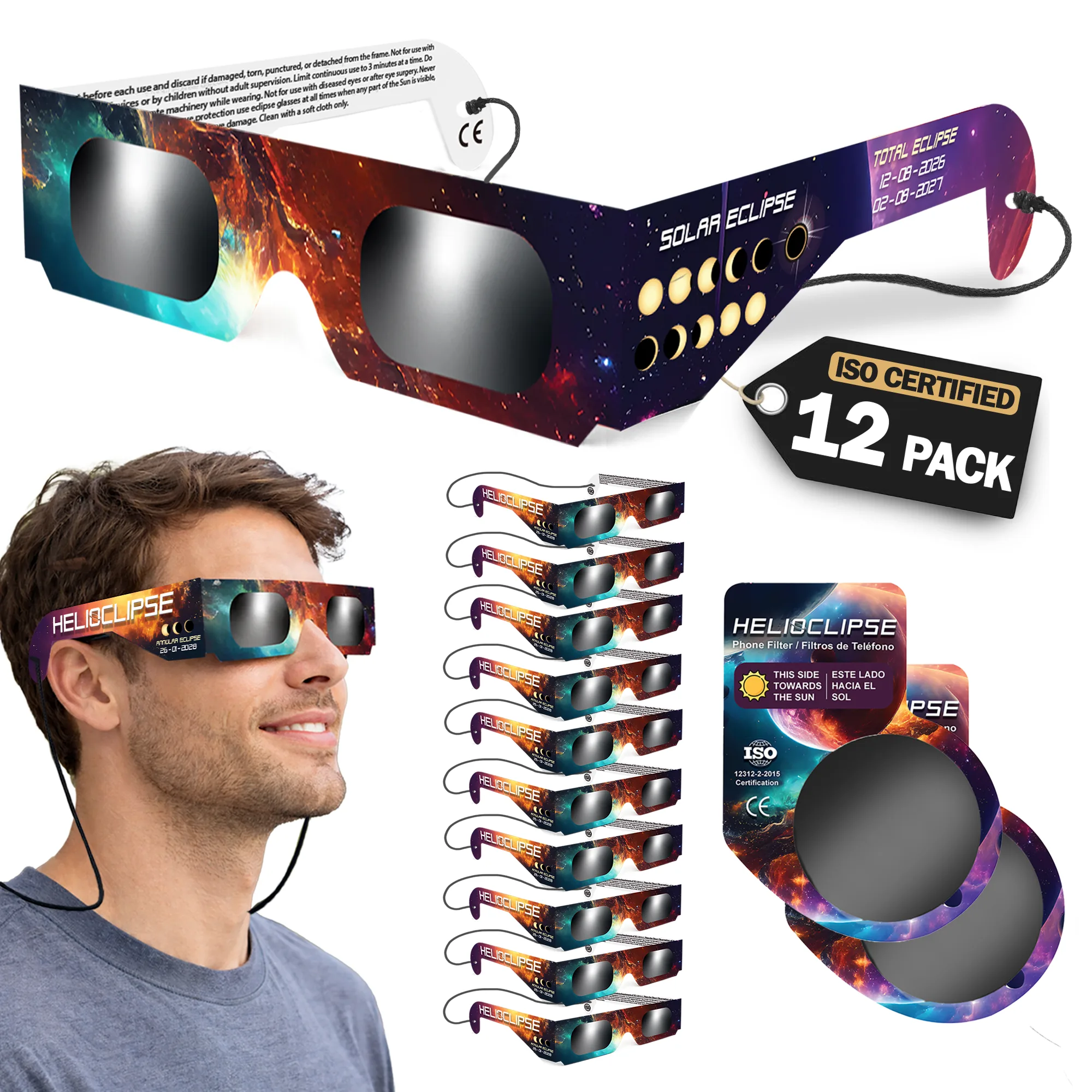
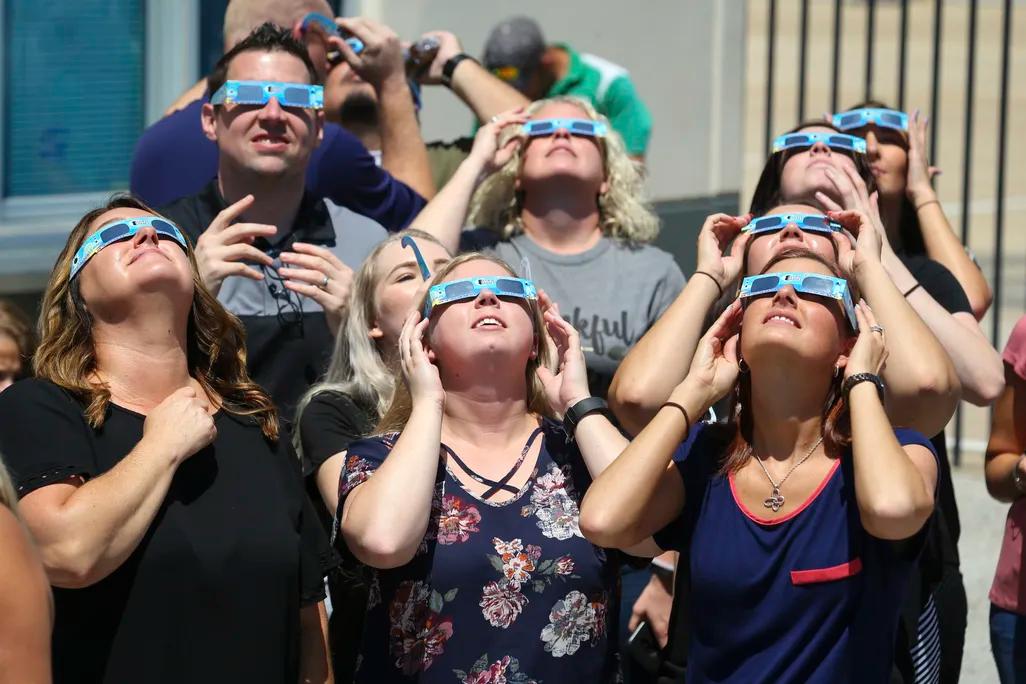
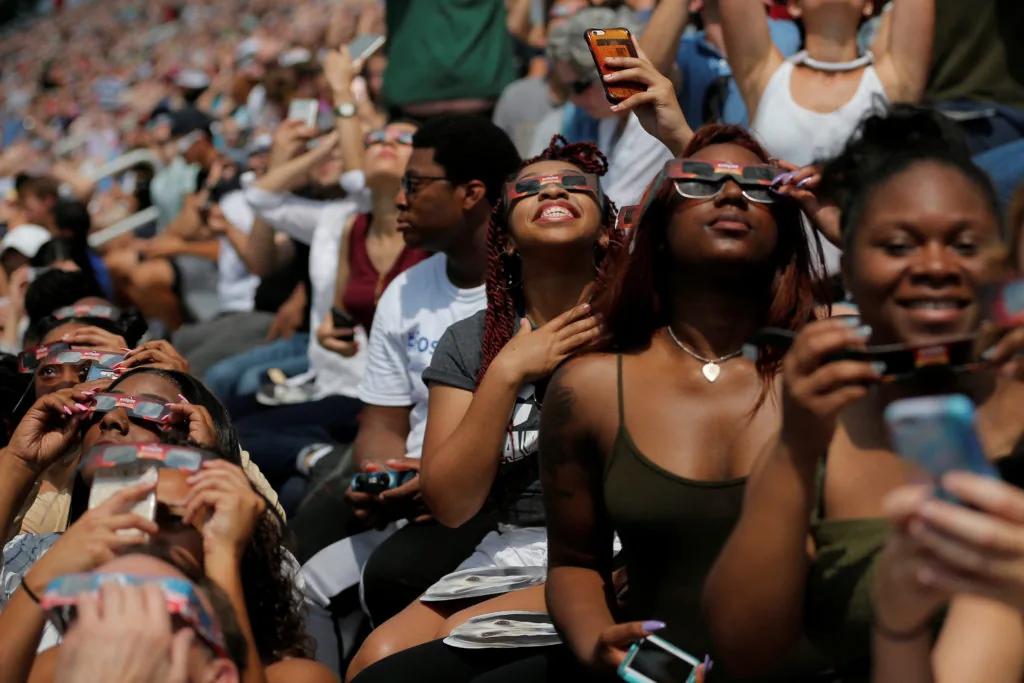
Bring eclipse glasses or handheld viewers that conform to ISO 12312-2, and inspect them before you leave. If the filters are scratched, punctured, torn, coming loose, or otherwise damaged, do not use them. Ordinary sunglasses are not a substitute.
This is also where packaging language can confuse people. Phrases like approved solar eclipse glasses, eclipse glasses nasa approved, and solar eclipse glasses iso 12312-2 certified get thrown around online, but NASA does not approve a particular brand of viewers. What matters is that your viewers genuinely conform to the ISO 12312-2 standard and come from a source you trust. If you need a fresh pair for your group, our shop eclipse glasses page is the cleanest place to start.
A second useful reality check: put the viewers on indoors. You should not be able to see normal room details through them, only perhaps very bright lights appearing faint. That does not prove they are safe, but it can help you reject obviously bad ones.
2. A backup indirect-viewing method
Bring a simple pinhole projector, index cards, or even just a kitchen colander if you want an easy group demo. Indirect viewing is especially good for kids, for sharing with a crowd, or for the moment you realize someone forgot their glasses in the car.
Just remember the rule: projection means the Sun is behind you and you look at the projected image, not through the hole.
3. A timing device you trust
Your phone is fine—if it is charged, if the battery survives the heat, and if you already know your viewing location. Download what you need in advance. Cell networks can bog down badly around major eclipses, especially in small towns and popular pull-offs.
If you are traveling for totality, save your route offline, screenshot your eclipse timing, and write down one or two key numbers on paper. The best eclipse viewing tips are often boring in advance and priceless later.
4. Sun and weather protection
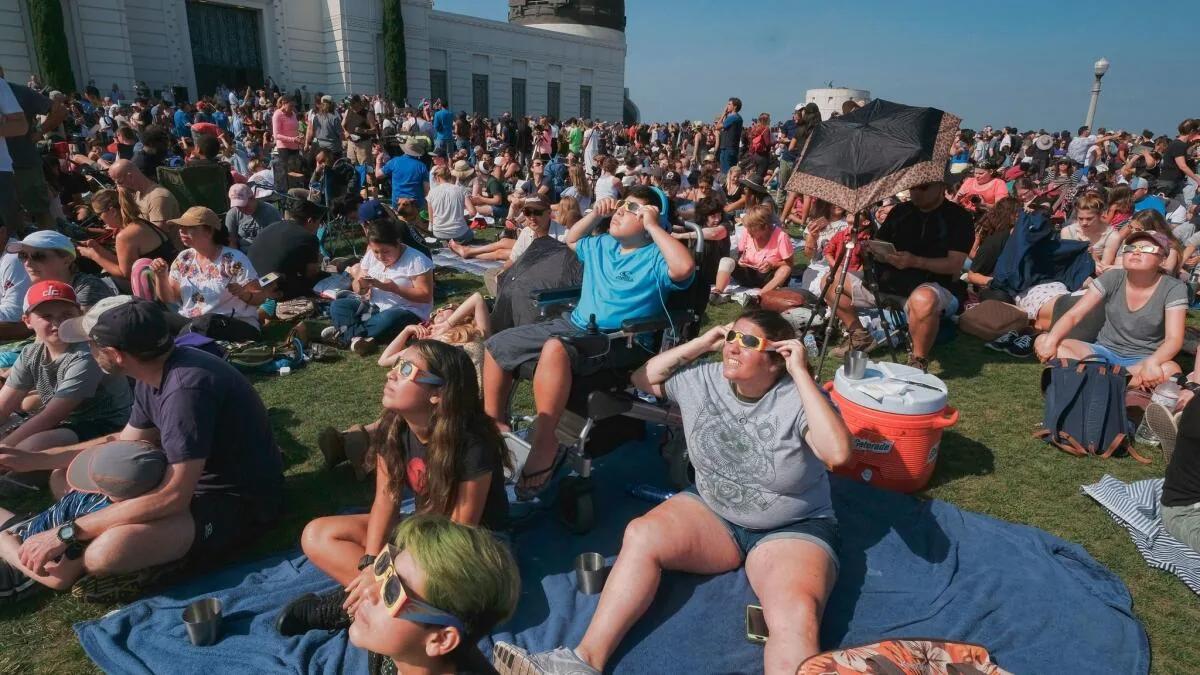
You may be outside for three to five hours, sometimes longer. Pack water, sunscreen, a hat, and layers. Even on a day centered on the Sun, people routinely get more skin exposure than they expected because they arrive early and stay through the final partial phases.
A folding chair or blanket matters more than many first-timers think. So does shade while you wait.
5. Food, medication, and the unglamorous basics
Snacks, refillable water, any medications you need, tissues, wipes, and a small trash bag all belong in the bag before camera accessories do. If you are heading to a rural site or a crowded event, assume lines will be longer and services thinner than usual.
The timing checklist that prevents the classic mistakes
Most eclipse-day frustration comes from timing errors, not astronomy errors. People leave too late, arrive without checking whether they are actually in totality, or spend the final minutes before maximum eclipse fiddling with gear.
Use this sequence.
The day before
- Confirm your exact viewing location on the Helioclipse map.
- Check whether you are in totality, on the edge, or outside it.
- Note the date and broad local timing window: morning, midday, afternoon, or near sunset.
- Charge phones, battery packs, and any camera batteries.
- Put viewers, hats, water, and snacks in one bag.
- Fill the car with fuel or charge it fully if you are driving.
- Download maps and save directions offline.
The morning of the eclipse
- Recheck weather and cloud trends.
- Reconfirm your route and any backup site.
- Leave earlier than feels necessary.
- Keep your viewers somewhere you can reach in seconds, not buried under a jacket.
- If you are with family or friends, agree on a meeting point in case mobile service fails.
One hour before first contact
- Be at your site.
- Identify where the Sun will be in the sky and make sure trees, buildings, ridges, or cliffs will not block it later.
- If the eclipse happens late in the day, this matters even more. A low Sun can turn a “perfect” location into a useless one.
- Do a final gear check: viewers, water, timing, shade, and any projection setup.
During the partial phases
- Use certified viewers whenever any bright part of the Sun is visible.
- Do not stare continuously just because you can. The eclipse changes slowly; short looks every few minutes are enough to notice the Moon’s motion.
- Look around, too. Crescent-shaped projections under trees and changing light on the landscape are part of the experience.
If you are in totality
- Keep viewers on until the Sun’s bright face is completely gone.
- When totality begins and you can no longer see any bright Sun through your viewers, remove them and look up.
- The moment bright sunlight reappears, put viewers back on.
After maximum eclipse
- Stay put if traffic will be ugly.
- Watch the final partial phases if you can.
- Eat, rehydrate, and let the roads calm down before joining the rush.
That sequence is the heart of any actionable checklist grounded in timing and safety eclipse planning guide. It is also the simplest answer to people looking for an eclipse viewing checklist 2026 guide or a solar eclipse viewing checklist 2026 guide that does more than say “bring glasses.”
If you are traveling for totality, add these backup layers
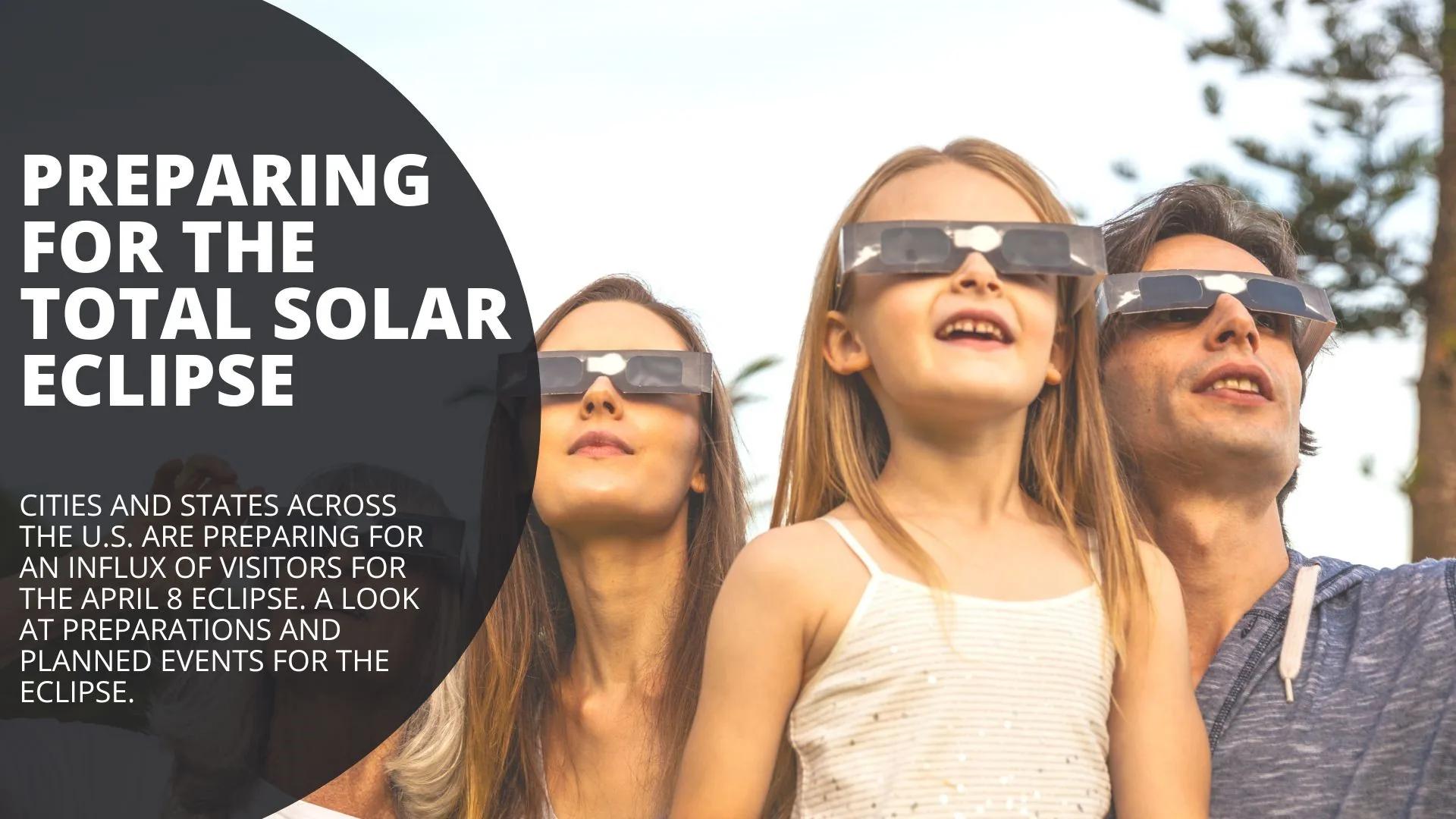
Travel changes the checklist because the eclipse is short but the logistics are not. NASA’s eclipse planning guidance makes this point well: the event itself may last a few hours from first contact to last, but the travel day can easily become an all-day operation.
Bring more water than you think you need. Top off fuel early. Expect food lines. Assume mobile data may become unreliable. If you are heading to a small town, a scenic overlook, or a narrow coastal route, build in the possibility that everyone else had the same idea.
This is where a best places and timing for eclipse viewing checklist becomes more than a search phrase. “Best place” is not just the centerline on a map. It is the place where you can actually arrive, see the Sun clearly, and still have options if clouds or traffic force a change.
For a bigger travel strategy, including crowds and route planning, our guide to eclipse travel without the chaos: routes, crowds, and backup plans for 2026 goes deeper.
Weather backup: plan your second-best site before you need it
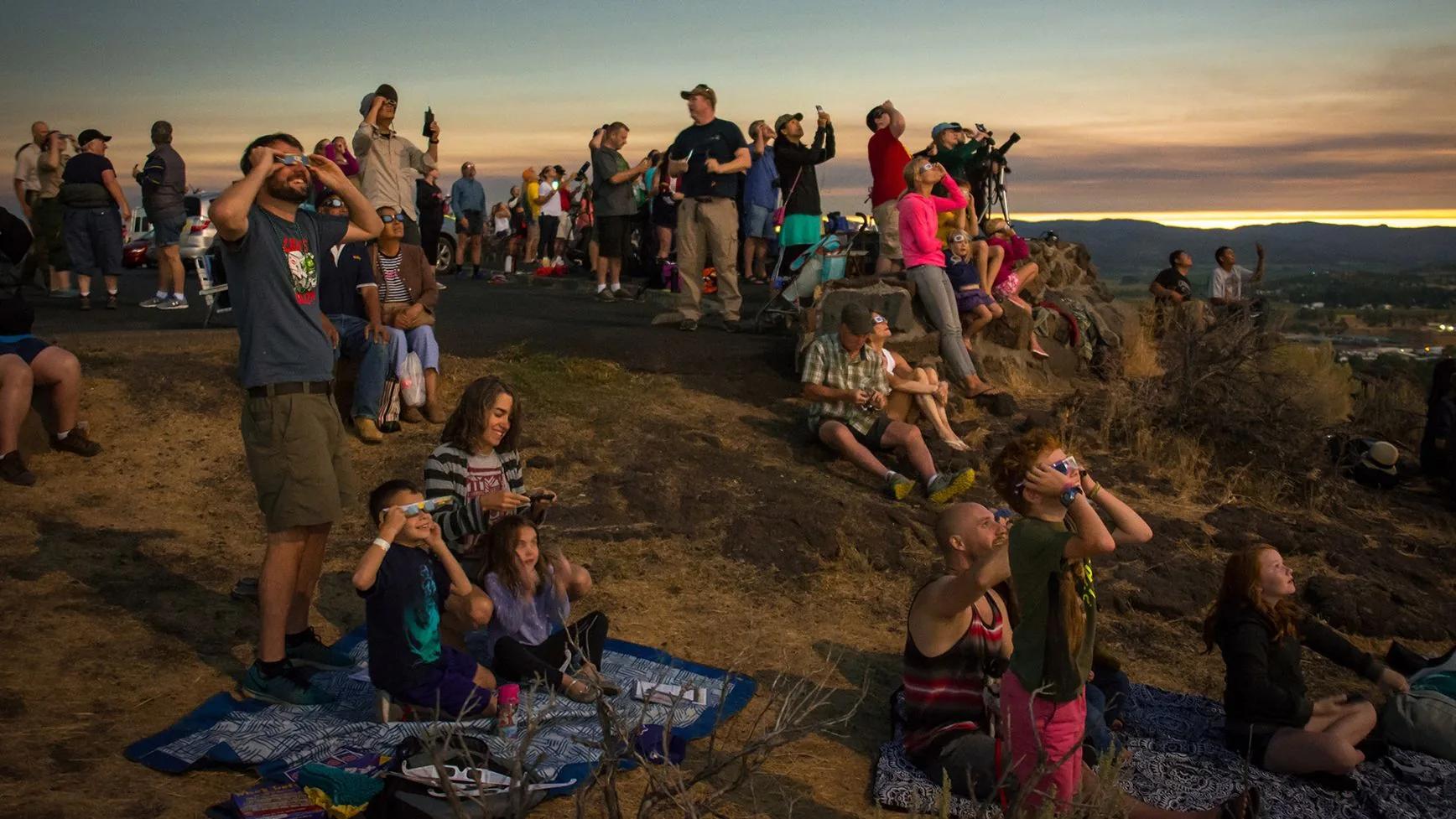
Clouds are the reason smart eclipse chasers talk about Plan A, Plan B, and sometimes Plan C.
You do not need ten backup sites. You do need one realistic alternative and a rule for when to switch. That might mean driving 30 to 90 minutes if morning cloud trends look bad, or choosing a site with multiple road options instead of one dramatic but isolated viewpoint.
The best backup site is usually not the prettiest one. It is the one with a clear horizon in the right direction, enough parking or open space, and a plausible escape route if conditions change.
For 2026, this matters a lot in places where the eclipse comes late in the day. In Spain, for example, the August 12, 2026 total solar eclipse reaches Galicia around 7:30 p.m. CEST and then crosses northern Spain toward the Mediterranean. Sources such as Space.com note that the eclipse altitude changes dramatically across the country: in the northwest the Sun is higher but cloud risk can be greater, while farther east the sky may be statistically clearer but the Sun sits much lower, sometimes only a few degrees above the horizon near the coast. That means a beach with a clean western view can outperform a scenic inland site blocked by hills.
A few concrete examples make the point. In Iceland, Reykjavik gets about 59 seconds of totality, while Snæfellsjökull gets about 2 minutes 5 seconds and Látrabjarg about 2 minutes 14 seconds. In Spain, Madrid is outside totality and sees a very deep partial eclipse, while parts of northern Spain inside the path get around 1 minute 50 seconds or more. Those are not small differences. They are the difference between seeing the corona and not seeing it at all.
That is why your eclipse viewing chart should include more than contact times. Add horizon notes, likely traffic choke points, and one weather-driven relocation option.
If weather is your main worry, read cloud cover and eclipse day: how to read the sky and when to move.
Camera gear: keep it simple unless you have practiced
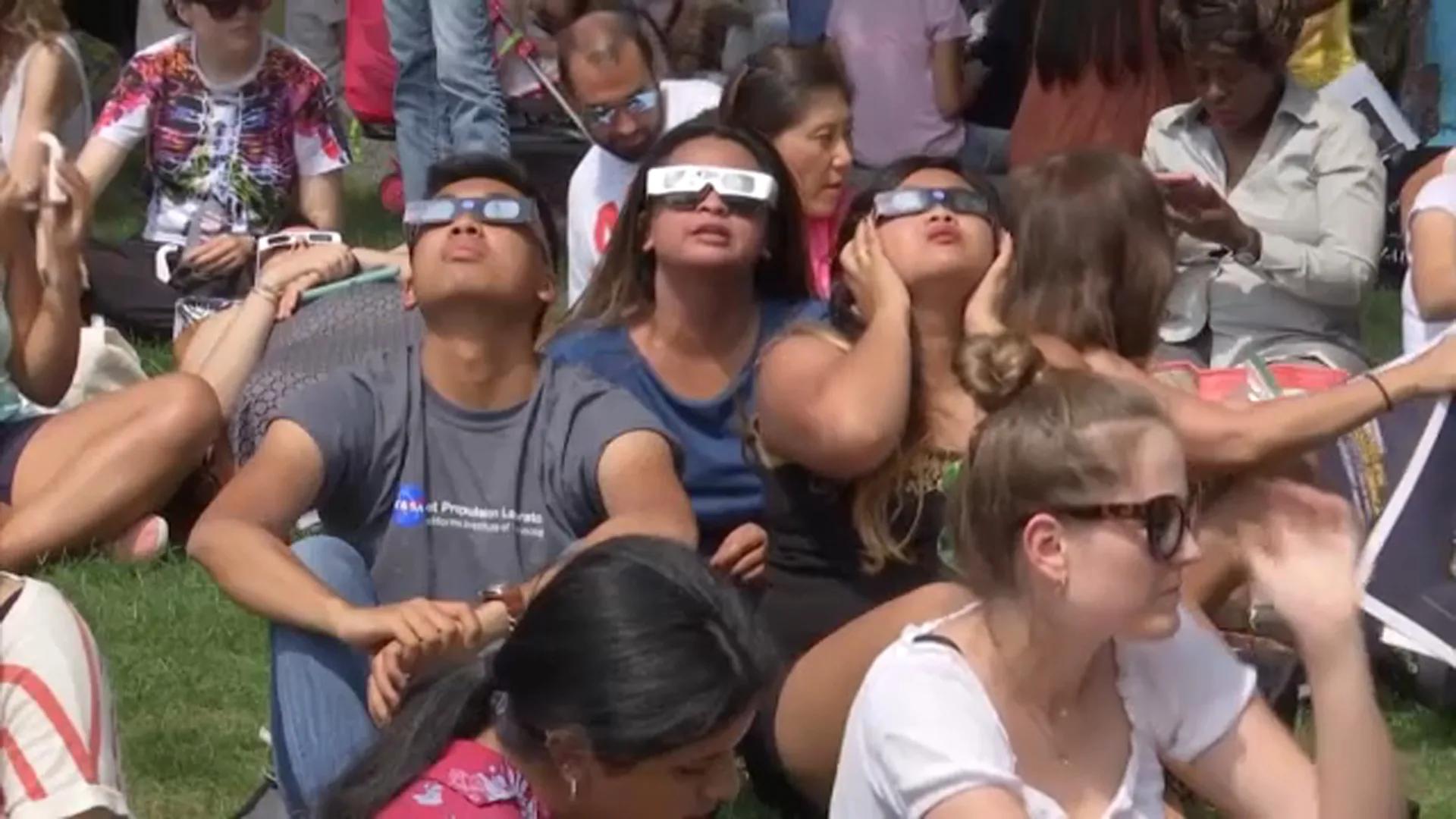
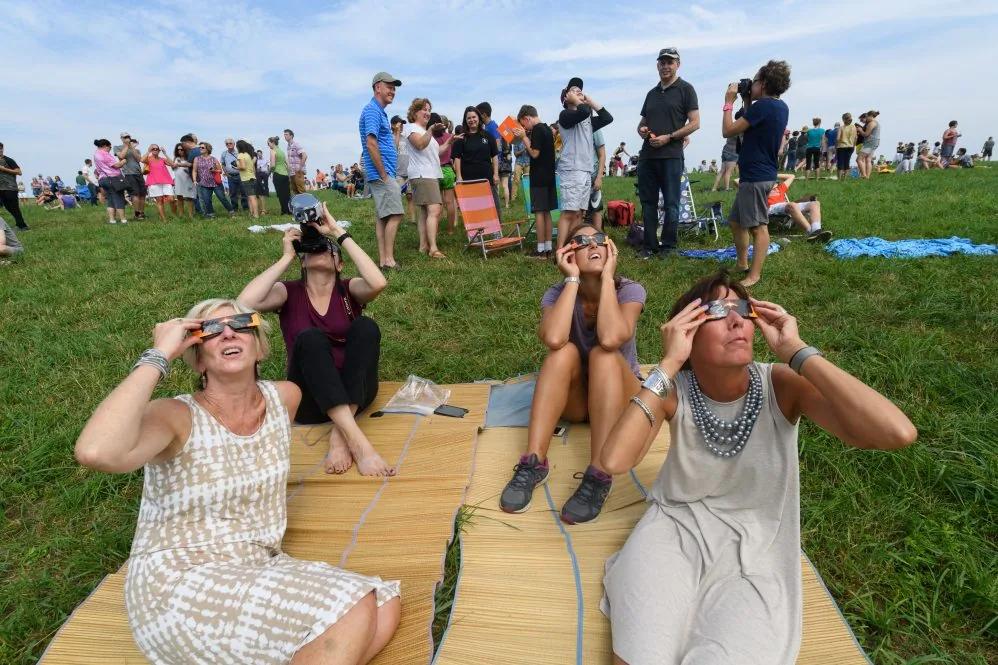
A lot of people miss the emotional peak of an eclipse because they are trying to run a tiny photo studio under time pressure.
If you have never photographed the Sun before, the safest and smartest plan is simple: use your eyes, maybe take a few quick wide shots of the scene, and let professionals handle the close-ups. The corona is unforgettable in person. A blurry overexposed phone image is not.
If you do bring optics, remember the hard rule from NASA and the AAS: do not look at the Sun through an unfiltered camera, telescope, or binoculars. And do not use eclipse glasses in front of magnifying optics as a workaround. Solar filters for optics must be secured over the front of the device.
For most first-time viewers, the best setup is one phone photo of the crowd, one landscape shot of the weird light, and then the phone goes away.
What families and groups forget most often
The astronomy part is memorable. The group-management part is what usually falls apart.
If you are bringing children, pack for a long outdoor wait, not just the peak moment. Kids do not need to stare at the Sun every minute to enjoy eclipse day. Pinhole projections, shadow games, snacks, and short check-ins with viewers work better than trying to force three hours of constant attention.
If you are meeting friends, choose a physical meeting point and a time in advance. “Text me when you get here” is not a plan when thousands of people are leaning on the same towers.
If you are sharing viewers, that is fine during the partial phases. The eclipse changes slowly enough that not everyone needs their own pair every second. But if you are in the path of totality, make sure everyone understands the transition rules before the exciting part begins.
This is also a good place to sanity-check your gear source. If you are unsure about what you bought, read our guide on ISO 12312-2 and eclipse viewers: what the standard means for your family and our piece on fake and low-quality eclipse glasses: how to sanity-check what you are about to trust.
A compact eclipse day packing list
If you want one grab-and-go version, use this.
Essential
- Certified eclipse viewers in good condition
- Backup pinhole or projection method
- Phone plus battery pack
- Offline map or printed directions
- Water
- Hat and sunscreen
- Snacks
- Any medications you need
Strongly recommended
- Folding chair or blanket
- Light layers or jacket
- Paper notes with eclipse timing
- Sunglasses for everything except the Sun
- Wet-weather layer if the forecast is mixed
- Small first-aid basics
For travel days
- Full tank of fuel or full charge
- Extra water kept in the car
- Cooler or extra food
- Printed contact info
- Backup viewing site
- Post-eclipse delay plan so you are not forced into immediate traffic
That is the practical core of an eclipse check list. Not glamorous, but very effective.
What not to do
Some mistakes are common enough to deserve their own section.
Do not assume 99% partial is “basically total.” It is not. If you are outside totality, viewers stay on the whole time.
Do not trust ordinary sunglasses, smoked glass, exposed film, or improvised dark materials. They are not safe solar filters.
Do not use eclipse glasses with binoculars, telescopes, or camera lenses. Magnifying optics need front-mounted solar filters designed for that purpose.
Do not arrive at a site without checking the Sun’s altitude and direction. A low western eclipse can disappear behind a ridge, hotel, or tree line just when things get interesting.
Do not plan to leave the instant maximum eclipse ends unless you truly have to. Some of the worst traffic starts exactly then.
And do not wait until the last week to buy viewers if you are organizing for a family, school, or friend group. If you need eclipse viewing glasses for several people, order early enough that you can inspect them calmly instead of panic-buying.
Why this matters more for 2026 than many people realize
For readers planning eclipse viewing 2026, the stakes are unusually high because geography matters so much. The August 12, 2026 total solar eclipse crosses remote Arctic regions, Iceland, a tiny part of Portugal, and northern Spain before heading into the Mediterranean. At greatest eclipse, totality lasts about 2 minutes 18 seconds, but your own experience can range from more than two minutes in some locations to no totality at all just outside the path.
That is why best viewing 2026 eclipse advice can sound contradictory until you break it into real constraints: path position, cloud risk, Sun altitude, horizon quality, and transport. A centerline location with a blocked horizon is not “best.” A famous scenic site with one road in and out may not be “best” either. The best site is the one that matches the sky, the path, and your ability to get there and stay there.
If Spain is on your radar, our August 12, 2026 total solar eclipse planning guide and 2026 totality in Spain: path basics, timing, and what “on the centerline” really means are the next reads.
And yes, some readers will arrive here looking for phrases like actionable checklist grounded in timing and safety eclipse planning not or solar eclipse 2026 interactive map because they are trying to separate useful planning from internet noise. Fair enough. The clean answer is still the same: verify your path position, verify your eye protection, and build one weather backup.
Solar Eclipse Timer & "Manual" Eclipse Photography | 2024 ...
The Astro Imaging Channel
Frequently asked questions
Can I make my own eclipse glasses at home?
No. The excerpt says to bring eclipse glasses or handheld viewers that conform to ISO 12312-2, and to inspect them before use; it also says ordinary sunglasses are not a substitute. If the filters are scratched, punctured, torn, or coming loose, do not use them.
What is the safest way to watch a solar eclipse?
The safest way depends on where you are on the eclipse path. If you are inside the path of totality, you can remove certified viewers only during the brief interval when the Moon completely covers the Sun’s bright face; outside that path, even at 99% coverage, there is no safe glasses-off moment.
What should I bring for eclipse viewing?
At minimum, bring certified solar viewers in good condition and a way to confirm your timing, since the article says those are non-negotiable. It also notes that practical outdoor items like a hat and water matter, but the most important planning step is knowing your exact location and what kind of eclipse you will see.
Does a solar eclipse happen every 33 years?
The excerpt does not support that claim. It focuses instead on eclipse planning by location and timing, explaining that whether you are inside the path of totality or outside it determines what you can safely see and when.
Is there anything special I should do during an eclipse for spiritual reasons?
The excerpt does not address spiritual practices. Its guidance is practical and safety-focused: check your exact location, understand whether you are in totality or a partial eclipse, and follow the glasses-on versus glasses-off rules.
On-site next steps
- Check your exact location on the Helioclipse Eclipse Explorer / 3D map to confirm whether you are in totality, near the edge, or outside the path.
- If you still need viewers for your group, shop Helioclipse solar eclipse glasses early so you can inspect and pack them before the rush.
- For more planning help, browse the Helioclipse blog for safety, weather, travel, and eclipse-phase guides.
Sources & further reading
- What to Expect: A Solar Eclipse Guide
- How to View a Solar Eclipse Safely
- How Can You Tell If Your Eclipse Glasses or Handheld Solar Viewers Are Safe?
- Indirect Solar Viewing: Pinhole & Optical Projection
- Where to See the Total Solar Eclipse on Aug. 12, 2026
- Eclipse Viewing Safety
- Types of Solar Eclipses
- About the ISO 12312-2 Standard for Solar Viewers
- How to Safely See a Solar Eclipse
- Eclipse Day Checklist