Pinhole projection and indirect viewing: safe ways to share the eclipse with a crowd
A solar eclipse can turn a playground, schoolyard, museum lawn, or family picnic into one of those rare moments when everyone looks up together—carefully. If you are planning for 2026, this pinhole projector solar eclipse safe viewing 2026 guide is the practical version: what works, what does not, and how to let a crowd share the event without turning safety into guesswork.
The big idea is simple. You do not need every person to stare directly at the Sun the whole time. In fact, for groups, indirect viewing is often the calmest and safest approach. A pinhole projector for solar eclipse viewing lets people watch the Sun’s changing shape on a surface instead of looking at the Sun itself. That makes it great for classrooms, parks, and family gatherings—especially during the long partial phases.
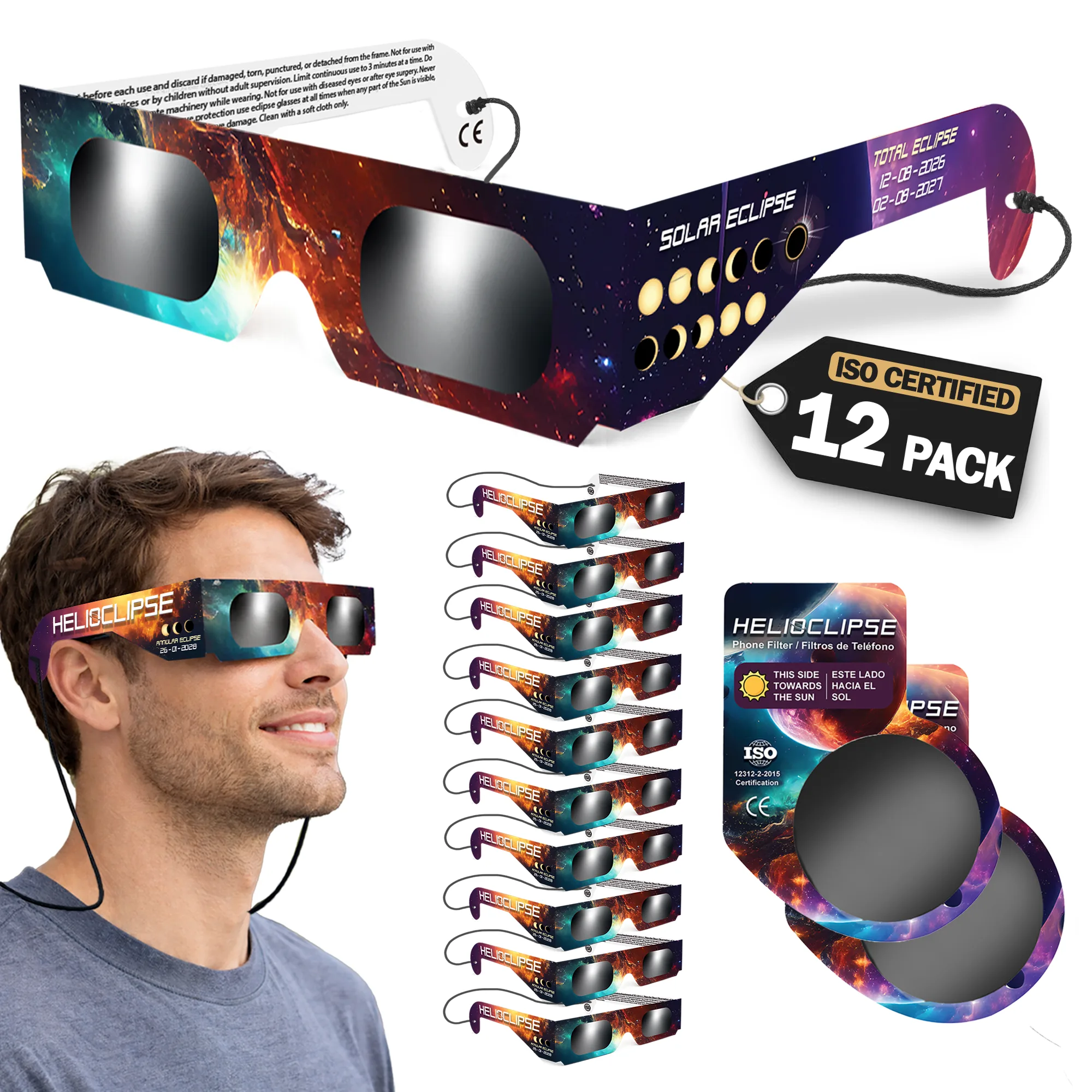
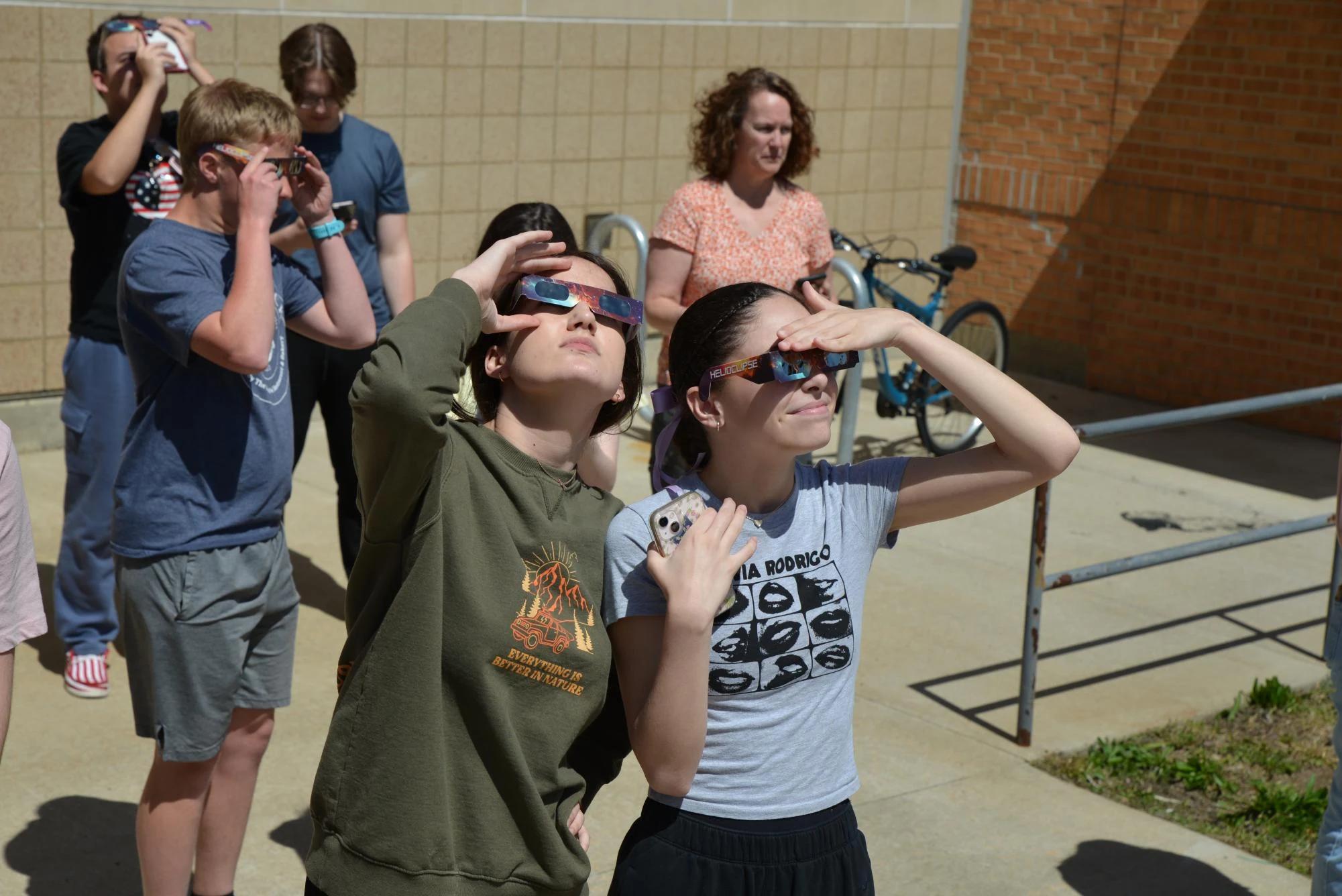
If you are also planning direct viewing, keep the rules separate in your mind. Indirect methods are excellent for sharing the experience, but they do not replace certified viewers when people want to look at the Sun itself. For that, use solar eclipse glasses that meet ISO 12312-2, and make sure everyone understands the difference between partial phases and totality. If you want that timing explained clearly, our guide to when glasses on, when glasses off is the right companion.
What pinhole projection actually is—and what it is not
Pinhole projection for solar eclipse viewing is an indirect method. Sunlight passes through a small opening and forms an image on another surface: a card, a wall, a sheet of paper, or even the ground. You look at the projected image, not at the Sun.
That distinction matters because people often hear “pinhole” and imagine peeking through a tiny hole like a homemade viewer. That is exactly the wrong instinct. A pinhole projector safe for eclipse use means the Sun is behind you, the light goes through the hole, and the image lands somewhere else. You never look through the pinhole itself.
The American Astronomical Society is very explicit about this: pinhole projection does not mean looking at the Sun through a pinhole. NASA gives the same basic advice. If you remember only one sentence from this article, make it this one: project the Sun, don’t peer at it.
That is why a colander, a straw hat, crossed fingers, or gaps between leaves can suddenly become eclipse tools. Each tiny opening acts like a little projector. During the partial phases, those little spots of light stop being round and turn into crescents. It is one of the most delightful low-tech things in eclipse watching, because the ground itself starts showing you the geometry of the event.
Which is the safest way to view a solar eclipse?
The honest answer depends on whether you mean direct or indirect viewing.
If your group wants the lowest-risk, easiest-to-supervise shared experience during the partial phases, indirect projection is hard to beat. For a mixed crowd of children, grandparents, distracted friends, and people who have never seen an eclipse before, a pinhole projector solar eclipse safe viewing setup is wonderfully forgiving. Nobody has to fit glasses correctly for every second. Nobody is tempted to lift a viewer too early. Everyone can gather around the same projected image.
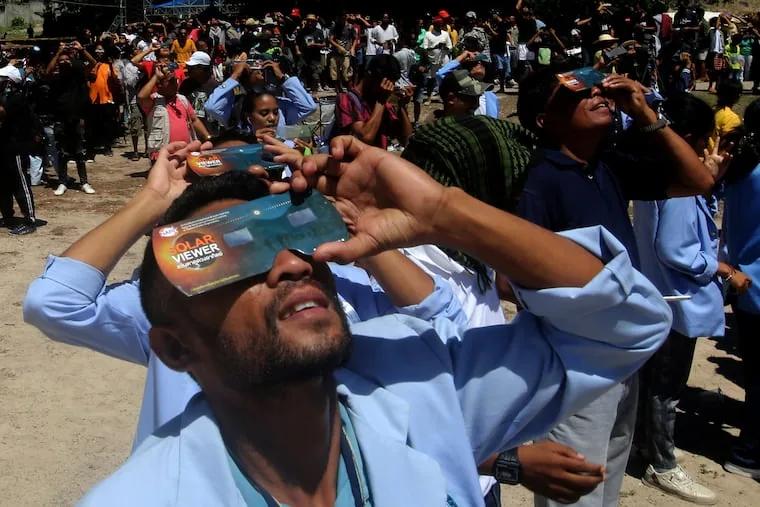
But if someone wants to look directly at the Sun, then the answer changes. The only safe way to look directly at the uneclipsed or partially eclipsed Sun is through a proper solar filter or certified viewer that conforms to ISO 12312-2. That means real eclipse glasses or a handheld solar eclipse viewer—not ordinary sunglasses.
So when people ask, which is the safest way to view a solar eclipse? for a crowd, we usually split it into two use cases:
- For shared group viewing of the partial phases: indirect projection is often the safest and easiest.
- For direct personal viewing: certified eclipse glasses or other proper solar filters are required.
Those two answers are not in conflict. They are complementary. The best public events often use both: projection for the group, certified viewers for short direct looks, and clear supervision so nobody improvises.
Why pinhole projection works so well for schools, families, and public events
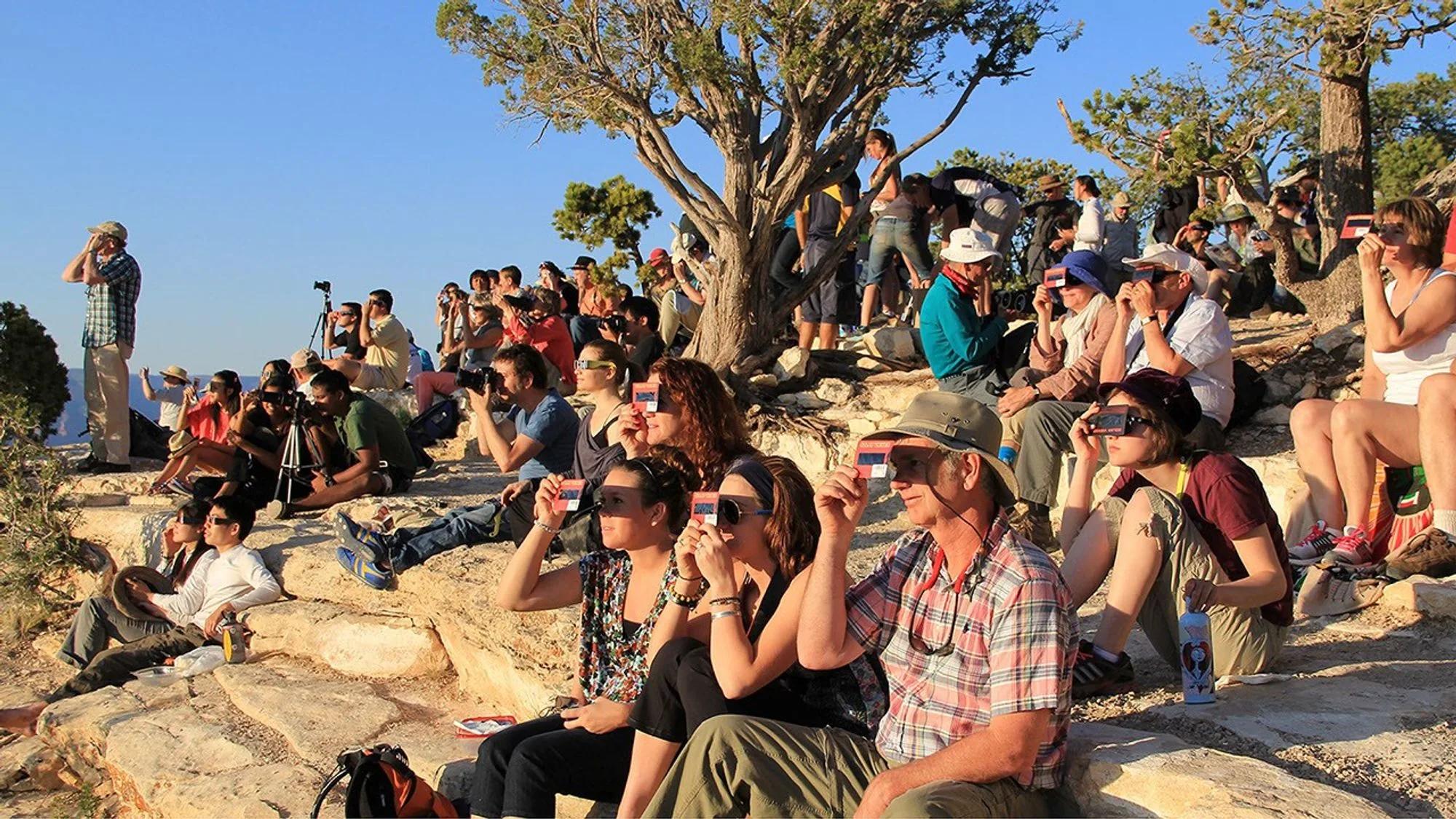
A crowd changes the safety problem. With one careful adult and one pair of viewers, you can manage direct viewing pretty easily. With 30 children, a school assembly, or a public park event, the challenge is not just eye safety in theory—it is attention, timing, excitement, and human behavior.
That is where pinhole projection and indirect viewing: safe ways to share the eclipse with a crowd really earns its place. A projected image gives everyone something to gather around. It slows the experience down. It turns the eclipse into a conversation instead of a line of people taking turns with gear.
It also helps people notice things they might otherwise miss. The partial phases move slowly enough that you do not need to stare continuously. A projected crescent changing shape every few minutes is easier for many first-time viewers to understand than a quick glance through glasses. For younger kids especially, the “tiny Suns on the ground” effect under trees or through a colander can be more memorable than the formal explanation.
For event organizers, indirect viewing has practical advantages too:
- it works for many people at once
- it reduces the chance that someone looks up unprotected out of curiosity
- it is inexpensive
- it is easy to duplicate across several stations
- it creates a visible focal point for teaching
NASA’s crowd-planning advice for Sun events also points toward basics that matter more than people expect: enough open sky, shade breaks, water, volunteers, and a plan for where the Sun will be in the sky at your event time. Those details are not glamorous, but they are what make a school-friendly layout actually work.
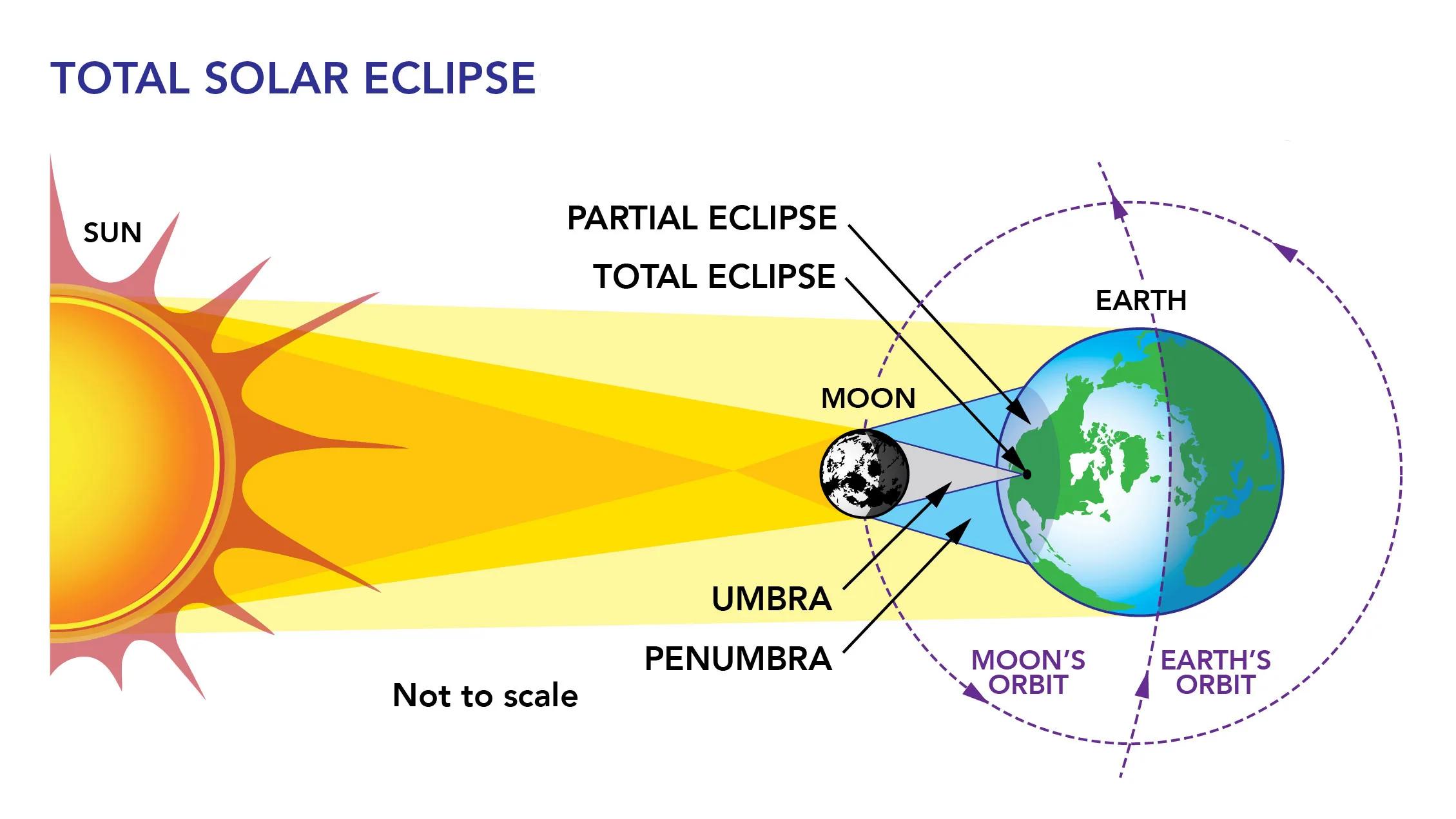
How to make a pinhole projector for solar eclipse viewing
If you are wondering how to make a pinhole projector for solar eclipse day, keep it simple. The goal is not to build a perfect optical instrument. The goal is to create a small, clean opening and a surface where the image can land.
The simplest version
Take an index card or stiff piece of paper and make one small round hole in it. Stand with your back to the Sun. Hold the card so sunlight passes through the hole onto a second white card, a sheet of paper, or a light-colored surface a short distance away. Adjust the distance until the image looks as sharp as possible.
That is the core method. It is cheap, fast, and easy to repeat for a whole class.
The box version
A cereal box or shoe box can make the setup easier to control, especially for children. NASA’s box projector instructions are popular for a reason: the box blocks stray light and makes the projected image easier to see. But the same rule still applies—this is a projector, not a peephole toy. Follow the design that sends the image onto an interior surface for viewing, rather than encouraging anyone to look at the Sun through an opening.
Everyday-object version
Some of the best demonstrations are barely “devices” at all:
- a kitchen colander
- a perforated spoon
- a straw hat
- crossed fingers making a grid
- leafy tree shadows on the ground
These are excellent for a crowd because they produce many little images at once. A colander can scatter dozens of crescents onto the pavement. A tree can turn an entire patch of ground into a live eclipse display.
If you are building stations for a school or neighborhood event, make several. One polished projector is good; six simple ones are better.
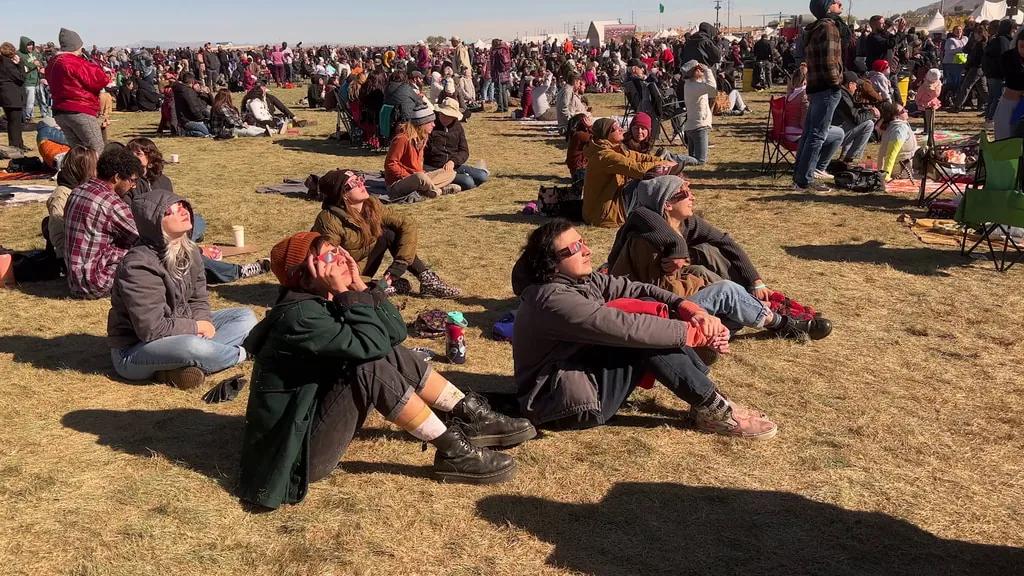
What you will actually see during the eclipse
During the partial phases, the projected image starts as a bright round dot and gradually becomes a bite-shaped disk, then a thinner crescent, then thickens again as the eclipse passes. That changing shape is the whole point: the projector is showing the Sun’s visible shape, not a dramatic high-detail photograph.
Set expectations correctly and people love it. Mis-sell it as a telescope view and they will be disappointed.
A pinhole projector to watch solar eclipse phases is best for:
- seeing the Sun’s shape change safely
- comparing the eclipse every few minutes
- showing many people at once
- helping children understand what is happening
It is not best for:
- fine detail on the solar disk
- seeing totality itself
- replacing direct-viewing rules for optics
That last point matters. During totality in the narrow path of a total solar eclipse, the projected image becomes too faint to be useful. If you are actually inside totality, the unforgettable part is the sky darkening, the corona appearing, the temperature drop, the crowd reaction, and the sudden sense that daytime has broken. Projection is mainly a partial-phase tool.
If you are outside totality and seeing only a partial eclipse, then projection remains useful throughout the event—but there is never a moment when it becomes safe to look directly at the Sun without proper protection. That distinction is worth drilling into before 2026. Our broader August 12, 2026 planning guide can help you figure out whether your location is inside the path of totality or not.
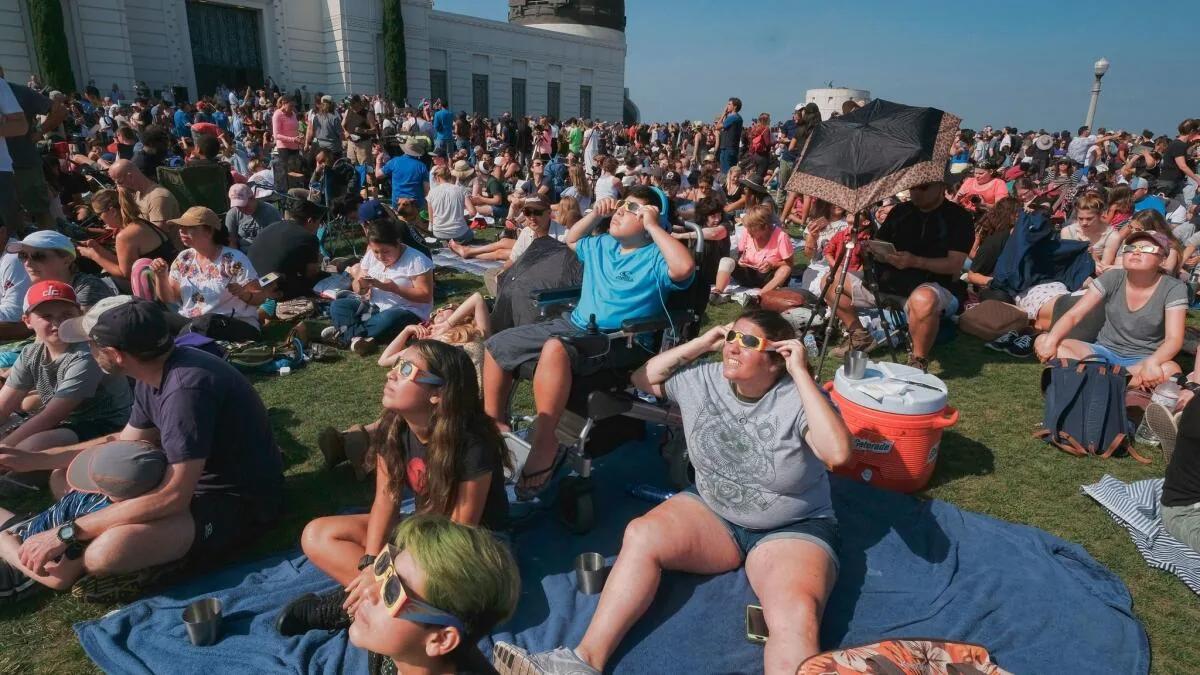
The line you should never blur: projection is not a DIY filter hack
This is where many well-meaning eclipse plans go wrong. People hear that projection is safe and then assume any homemade workaround involving binoculars, cameras, or telescopes must also be fine. It is not.
AAS guidance is blunt here: it is never safe to look directly at the Sun through a telescope, binoculars, or camera lens without a proper solar filter, except during the brief total phase of a total solar eclipse when the Sun’s bright face is completely covered—and even then, different rules apply depending on the instrument. For ordinary eclipse planning, the safe rule is simpler: no unfiltered optics.
That means:
- no sunglasses taped over binoculars
- no smoked glass
- no exposed film
- no improvised dark plastic
- no filter attached only at the eyepiece end
- no looking through binoculars while wearing eclipse glasses
- no camera experiments with random “dark” material
If someone asks, which device is safe to use for viewing a solar eclipse? the answer is not “whatever looks dark enough.” It is either a certified direct-viewing filter designed for the job, or an indirect method that keeps eyes off the Sun entirely.
Even optical projection with binoculars or a telescope is not a casual DIY activity for unsupervised public use. AAS says that kind of projection should be attempted only by experienced observers using their own equipment and supervising it continuously. The reason is obvious once you picture a crowded event: one curious person can step into the beam or look through the instrument at exactly the wrong moment.
So yes, pinhole projector safety is real—but only when you keep it in its lane. Safe indirect viewing is not permission to improvise with magnifying optics.
Do you still need solar eclipse glasses?
Often, yes.
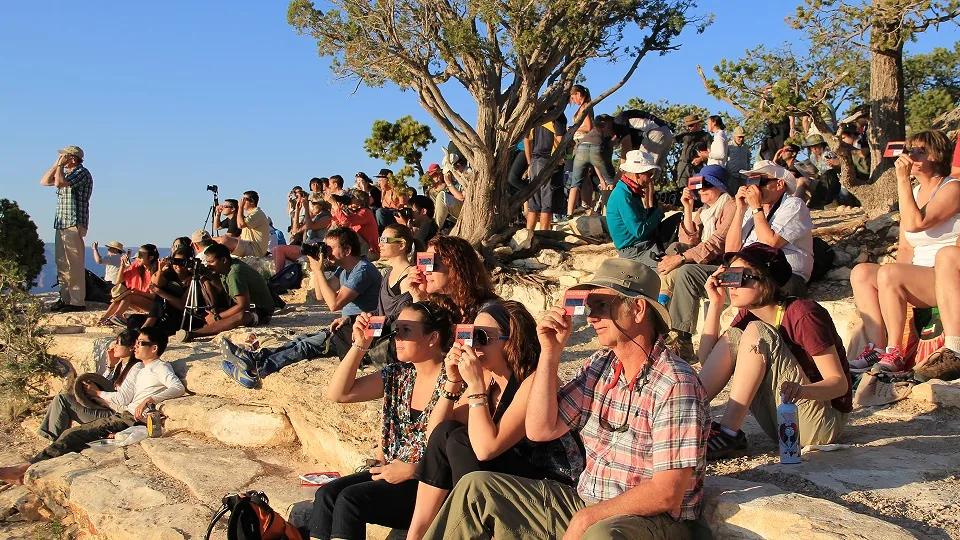
A projected image is fantastic for teaching and sharing, but many people will still want the emotional experience of looking up and seeing the eclipsed Sun directly. For that, they need proper solar eclipse glasses or a handheld viewer that meets ISO 12312-2.
This is also where buying language gets messy online. You will see phrases like approved solar eclipse glasses, eclipse viewing glasses, solar eclipse glasses iso 12312-2 certified, and even eclipse glasses nasa approved. The useful part of those phrases is the standards question: you want viewers that genuinely conform to ISO 12312-2 and come from a trustworthy source. The misleading part is that “NASA approved” is often used loosely in shopping language. NASA does not run a consumer approval badge program for random marketplace listings.
What we recommend is straightforward: buy from a source you trust, inspect the viewers before use, supervise children, and do not use damaged filters. If you want a deeper explanation of the standard itself, read our guide to ISO 12312-2 eclipse viewers. If you are worried about bad listings or questionable packaging, our article on fake and low-quality eclipse glasses is worth reading before you order.
For families, teachers, and organizers, the sweet spot is often a mix: projection stations for group learning, plus certified viewers for short direct looks. That way nobody feels left out, and nobody has to rely on a single method for the whole event.
A practical crowd plan that works
If you are hosting a school, library, camp, or neighborhood watch party, think in stations rather than one grand setup.
Station 1: projection for everyone
Use several simple pinhole stations, plus one “found object” station with a colander, spoon, or leaf-shadow demo. Put white paper or poster board on the ground or on tables to make the crescents easier to see.
Station 2: direct viewing with supervision
Have a volunteer manage a small pool of certified viewers. AAS notes that people do not need to watch continuously; a brief look every few minutes is enough to notice the Moon’s motion. That makes sharing realistic.
Station 3: explanation and timing
Use a printed schedule or a phone with your local eclipse timing. Better yet, have people check the Helioclipse Eclipse Explorer / 3D map ahead of time so they know whether they are in totality, near the edge, or seeing only a partial eclipse. That one planning step prevents a lot of confusion on the day.
Station 4: comfort and backup
Shade, water, hats, sunscreen, and a cloud backup matter. NASA’s event guidance is refreshingly practical on this point. If clouds win, you still want the gathering to feel worthwhile.
This is also the right place to say something that saves disappointment: the best places and timing for pinhole projector solar eclipse safe viewing are simply places with an unobstructed view of the Sun during your local eclipse window. You do not need a mountaintop or expensive gear. You need open sky, a safe setup, and people who know the rules.
Common mistakes to stop before eclipse day
The easiest way to run a safe event is to decide in advance what is not allowed.
Do not let people freestyle with optics. Do not let children invent their own “viewers.” Do not assume very dark sunglasses are close enough. Do not tell people that projection means they can glance through the hole. Do not put an unsupervised telescope in a public crowd unless it is being operated by someone experienced and equipped correctly.
Also, do not let indirect viewing create confusion about totality. If your location is outside the path of totality, there is no safe glasses-off moment for direct viewing. If your location is inside totality, that glasses-off moment applies only when the Sun’s bright face is completely covered, and only for unaided viewing. That is why we keep recommending clear timing tools and simple rules.
One more modern confusion point: you may run into searches for a pinhole projector solar eclipse safe viewing 2026 guide pdf or a pinhole projector solar eclipse safe viewing 2026 guide google result. Fine—people want something printable or easy to share. But a printable handout is only useful if it preserves the real safety message: indirect means projected image, not direct peeking, and no DIY filter hacks on optics.
Can a pinhole projector replace the emotional part of the eclipse?
No—and it does not need to.
Projection is not the whole eclipse experience. It is one part of it, and a very good one. It lets a crowd participate safely. It gives children a concrete way to see the Moon’s progress. It turns ordinary shadows into science. It buys you calm in the busiest part of event management.
But if you are in the path of totality, the emotional peak is still totality itself: the sudden darkness, the horizon glow, the corona, the collective gasp. If you are outside totality, the emotional peak may be different—the strange light, the shared anticipation, the realization that the Sun’s shape is visibly changing above you. Indirect viewing helps people notice those things together.
That is why we like a blended plan. Use projection to teach. Use certified viewers to let people connect directly and safely. Use the map to make sure everyone understands what kind of eclipse they are actually getting.
How to Make a Box Pinhole Projector
NASA Goddard
Frequently asked questions
What is the safest way for a group to watch a solar eclipse?
For a crowd, indirect viewing is often the calmest and safest option. A pinhole projector lets people watch the Sun’s changing shape on a surface instead of looking at the Sun itself, which works well for classrooms, parks, and family gatherings during the partial phases.
Can a pinhole camera be used to view an eclipse safely?
Yes, if it is used as an indirect projector rather than something you look through. The Sun should be behind you, light should pass through the small opening, and the image should appear on a separate surface; you should never peer at the Sun through the hole.
How do you make a simple pinhole projector for eclipse viewing?
Use a small opening that lets sunlight pass onto a surface such as a card, wall, sheet of paper, or the ground. The article notes that everyday objects with tiny openings, like a colander or gaps between leaves, can also act as projectors and create crescent-shaped images during the partial phases.
Will this guide tell me where the 2026 eclipse will be visible?
No, the excerpt does not give visibility locations for 2026. It focuses on safe viewing methods and explains how to share the event with a crowd, so you would need a separate source for path and location details.
What should I understand before using a pinhole projector to watch the eclipse?
A pinhole projector is an indirect viewing method, not a way to look at the Sun directly. The key rule is to project the Sun, not peer at it, and to keep direct-viewing rules separate by using certified eclipse glasses when people want to look at the Sun itself.
On-site next steps
- Explore your location in the Helioclipse Eclipse Explorer / 3D map so you know whether you will see a partial eclipse or totality, and when.
- Browse the Helioclipse blog hub for more safety guides, planning articles, and first-timer explainers.
- If your group also wants direct viewing, get solar eclipse glasses early so you have time to inspect them and practice before eclipse day.
Sources & further reading
- Indirect Solar Viewing: Pinhole & Optical Projection
- How to Make a Box Pinhole Projector Video (Multilingual)
- Host a Sun Party
- How to observe the Sun safely during a solar eclipse
- Low-Tech Eclipse Viewing
- Eclipses - NASA Science
- Solar Filters for Optics: Telescopes, Binoculars & Cameras
- Solar Eclipse Eye Safety (PDF)
- An Observer’s Guide to Viewing the Eclipse (PDF)
- How to view a solar eclipse safely