Zaragoza in 2026: one city, one eclipse—inland heat, wide skies, and practical August truth
If you want a city-based plan for the August 12, 2026 total eclipse without pretending every Spanish destination is interchangeable, Zaragoza deserves its own guide. The total solar eclipse 2026 Zaragoza Spain story is not coastal drama or mountain silhouettes. It is an inland city on the Ebro, broad sky in many directions, summer heat that can wear you down before the Moon ever touches the Sun, and a low western Sun that makes your exact viewing spot matter more than your hotel postcode.
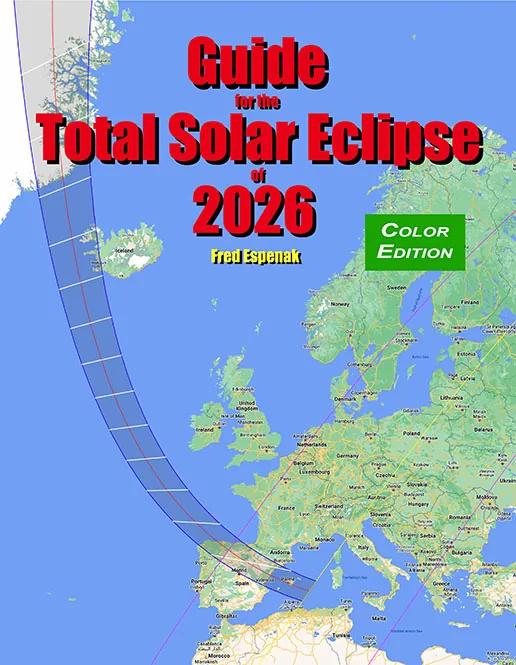
For the zaragoza 2026 eclipse, the headline number is simple and worth remembering: Zaragoza is inside totality, with about 1 minute 23 seconds of totality around 8:28 p.m. CEST according to Space.com’s city-level roundup. That is enough time for the real thing—corona, sudden dusk, temperature drop, horizon glow—but not enough time to improvise badly. Use our Eclipse Explorer / 3D map early, not the night before, because this is exactly the kind of city where a pin dropped a few blocks apart can change your horizon, your tree cover, and your stress level.
And yes, the phrase zaragoza in 2026: one city, one eclipse—inland heat, wide skies, captures the mood—but the practical truth matters more than the poetry. Zaragoza should reward careful planners. It can also punish lazy ones.

Why Zaragoza is a serious eclipse city, not a lucky afterthought
The zaragoza eclipse 2026 matters because Zaragoza is not merely near the event. It is in the path of totality on August 12, 2026, the date NASA lists for the total solar eclipse visible from Spain. If you are outside that narrow path, you do not get totality at all. You get a deep partial eclipse, which can be impressive, but it is not the same phenomenon. That distinction is the whole game, and if you want a refresher on why 99% is still not total, our guide to /en/blog/2026-total-solar-eclipse-spain-path is worth reading alongside this city guide.
Zaragoza also sits in a useful middle ground for eclipse planning. It is a large, connected city—Space.com cites a population around 666,000—so you are not trying to build your entire trip around a tiny village with almost no services. But it is still a city where the eclipse experience will be shaped by local urban reality: parks with trees, apartment blocks, bridges, ring roads, heat radiating off pavement, and a western sky that may look open on a map but feel much tighter when you are standing on the ground.
That is why zaragoza total eclipse 2026 is a better planning problem than a generic “best place in Spain” list. You can build a real plan here. You just need to build the right one.
The numbers that define eclipse day in Zaragoza
For zaragoza spain 2026 eclipse planning, start with the non-negotiables:
- Date: August 12, 2026
- Type: total solar eclipse
- Location status: Zaragoza is inside the path of totality
- Approximate totality time: about 8:28 p.m. CEST
- Approximate totality duration in Zaragoza: about 1 minute 23 seconds
- Sun position: low in the western sky, late in the day
Those numbers tell you almost everything important about the city’s eclipse personality. This is not a high-noon eclipse where almost any open patch works. The Sun will be low enough that sight lines become a first-order problem. Space.com notes that in Spain the eclipsed Sun is generally low, and another Space.com planning piece warns that terrain and horizon obstructions can ruin an otherwise excellent location. In Zaragoza, that means you should think less about “what neighborhood sounds nice” and more about “what exact place gives me a clean west to west-northwest view?”
If you are comparing Zaragoza with other Spanish cities, the city’s roughly 1 minute 23 seconds of totality is solid but not the absolute longest available in Spain. That is fine. Chasing an extra handful of seconds is not always smarter than choosing a city where you can actually manage logistics, arrive rested, and avoid a blocked horizon. A calm, well-scouted Zaragoza plan beats a chaotic last-minute move for theoretical gains.
This is also where people start searching phrases like total solar eclipse 2026 map time, total solar eclipse 2026 path, and solar eclipse 2026 interactive map. In Zaragoza, those are not abstract planning tools. They are how you verify whether your chosen rooftop, riverside path, sports ground, or open edge-of-city site actually gives you the Sun when it matters.
What Zaragoza will actually feel like during totality
A lot of eclipse writing gets vague right when readers most want a concrete picture. So let’s keep this city-specific.
In Zaragoza, the partial phases will begin while the city is still in full late-summer evening brightness. The light will slowly sharpen and flatten. Shadows will look stranger before many people consciously notice the Sun changing shape. Heat stored in stone, pavement, and walls will still be part of the experience. Then, if your western view is clear and you are truly inside totality, the last bright sliver disappears and the scene changes fast: the sky darkens toward twilight, the horizon can glow in multiple directions, and the corona appears where the ordinary Sun had been too bright to study.
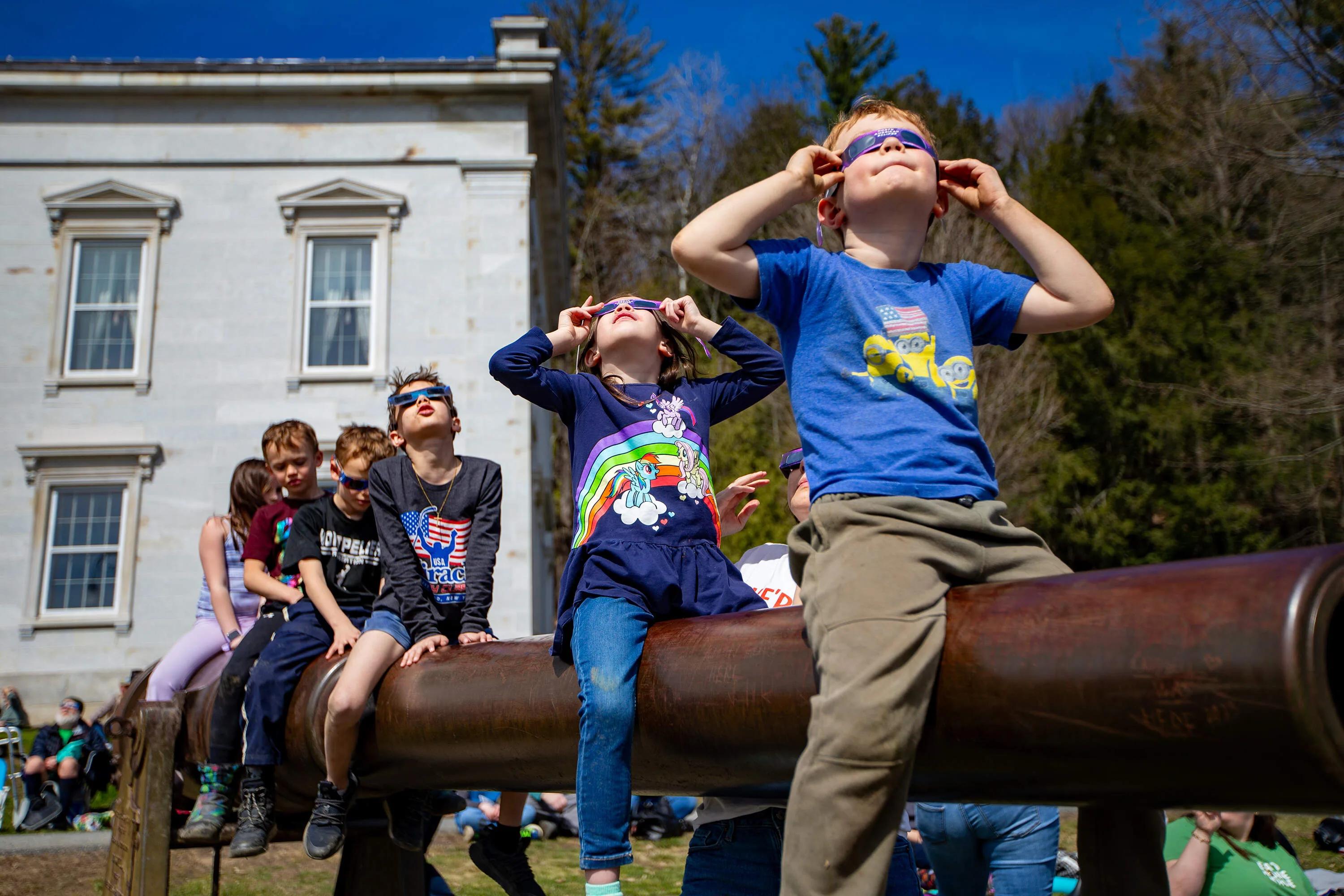
Because totality in Zaragoza is short, the emotional rhythm is intense. You do not get a long, leisurely dark interval. You get a rapid transition from ordinary summer evening to something unmistakably alien and back again. That is one reason families and first-time viewers should rehearse the basics in advance, especially when glasses come off and go back on. If you want that sequence explained clearly, read /en/blog/eclipse-phases-when-to-use-solar-glasses before eclipse week.
One especially Zaragoza detail from Space.com’s city roundup: unlike places farther west, the city may offer the sight of a partially eclipsed sunset soon after totality. That does not mean every location in the municipality will frame it beautifully. It means the late timing adds drama if your horizon stays open. In a city article, that is exactly the kind of detail worth caring about.

Wide skies are real here—but city sight lines are not automatic
The selling point of Zaragoza is easy to understand. It sits on the Ebro plain, and inland plains can offer the kind of broad sky that eclipse chasers love. The risk is assuming that “plain” means “everywhere in the city is fine.” It does not.
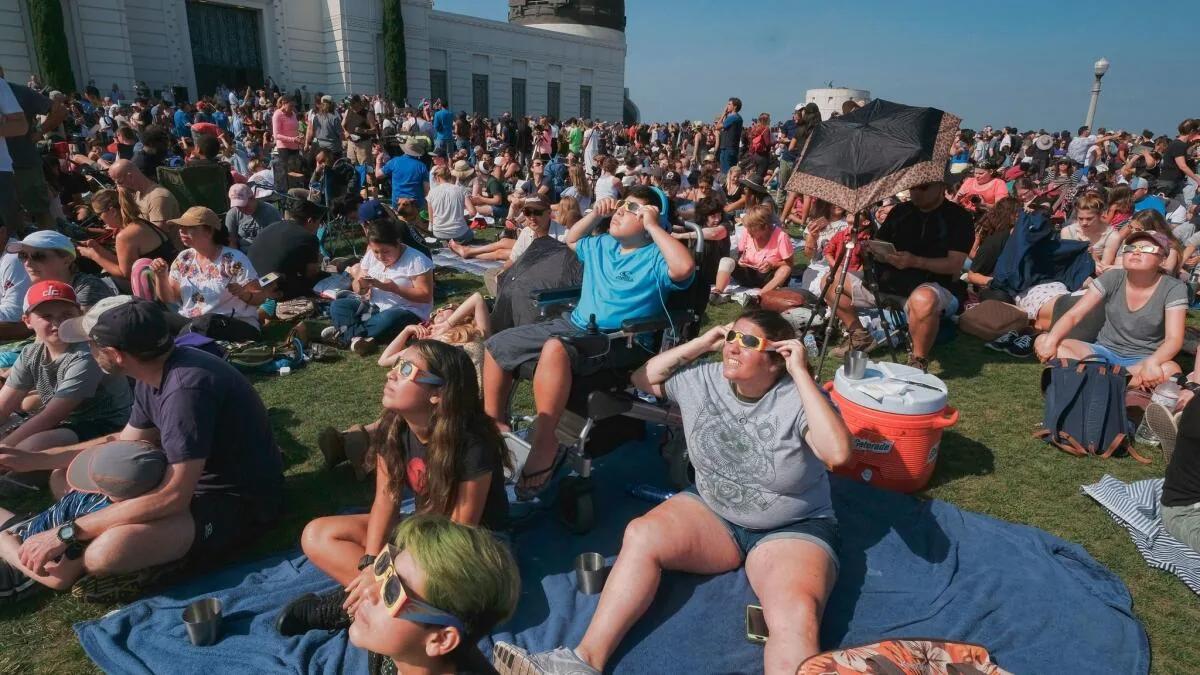
The best Zaragoza plan is usually not the prettiest plaza or the most central tourist stop. It is the place where you can stand comfortably for a long partial phase, keep children or friends together, and see low to the west without a row of trees, decorative lighting, apartment blocks, or elevated road infrastructure cutting into the final degrees above the horizon.
That means urban tree cover matters. In August, shade is welcome all afternoon, but the same trees that make a park comfortable at 6 p.m. can become your enemy at 8:28 p.m. if they sit in the wrong direction. A site can be pleasant and still be wrong.
When you scout Zaragoza, ask four blunt questions:
- Can I see low to the west-westnorthwest from where I will actually stand?
- Will trees or buildings eat the last few degrees of altitude?
- Can I stay here for hours with water, shade, and toilets nearby?
- Can I leave without immediately joining a traffic knot?
That is the city version of eclipse wisdom. Not glamorous, but very effective.
Inland heat is not background scenery. It is part of the plan.
The zaragoza spain eclipse 2026 conversation should be honest about August. Zaragoza in mid-August can be hot, dry, and draining even before you add crowds, waiting, and excitement. NASA’s eclipse safety page reminds people that for a long outdoor event, sun exposure and heat are real hazards in their own right. That advice matters here.
The trap is obvious: because the eclipse itself happens late, people assume the day will be easy. But if you spend hours outdoors scouting, holding a place, walking across open pavement, or sitting in a treeless viewing area, you can arrive at totality tired, dehydrated, irritable, and less careful than you should be.
A good Zaragoza eclipse kit is therefore not just glasses and a phone. It is:
- water you actually plan to finish
- salty snacks or a simple meal
- a hat and sunscreen
- a light layer for sun, not just for cool weather
- a small sit pad or folding seat if you will wait a long time
- a backup shade strategy before the eclipse begins
- a paper note of your chosen site and meetup point in case mobile networks get messy
This is also where we tell readers to plan together. If you are traveling with children, older relatives, or friends who are new to eclipses, assign jobs early: one person handles water, one handles timing, one handles glasses, one handles the route. A once-in-years event goes better when nobody is pretending logistics will magically solve themselves.
Haze, dust, and late-day convection: the honest Zaragoza weather risks
Zaragoza’s weather case for August 12, 2026 is attractive by European eclipse standards. Space.com cites about a 19% chance of clouds for Zaragoza, which is one reason Spain is drawing so much attention. But “better odds” is not the same as “guaranteed clean sky.”
For this city, the honest risks are not only thick cloud decks. They also include haze, dust, and late-day atmospheric messiness that can soften contrast near the horizon. The eclipse happens late, with the Sun low. That means even modest murk can matter more than it would at higher altitude. You may still see totality through thin haze, but the visual crispness of the partial phases, the sharpness of the shrinking crescent, and the drama of the final seconds can all be dulled.
Then there is convection. On hot inland summer days, the atmosphere can become more turbulent later in the afternoon. Even if you are not a photographer, you may notice the low Sun looking less steady and more washed out than it did earlier. That does not mean the eclipse is ruined. It means Zaragoza rewards realistic expectations. Wide skies help. Perfect transparency is not promised.
We are deliberately not turning this into a full calima explainer, because that deserves its own article. But the planning takeaway is simple: in Zaragoza, do not just check a generic cloud icon. Check same-day satellite imagery, local forecasts, and the live sky. If you need a broader framework for deciding whether to stay put or move, our guide to /en/blog/eclipse-day-weather-clouds-mobility is the right companion piece.
Should you stay in the city or move to the edge?
For a single-city guide, this is the most useful question.
The answer is: stay within Zaragoza’s planning frame, but do not assume the historic center is automatically your best observing site. A city-center hotel can be a great base and a mediocre eclipse location. The right move for many readers will be to sleep in Zaragoza, eat in Zaragoza, and watch from a carefully chosen open area within the municipality or its immediate urban fabric where the western horizon is cleaner.
That does not require a dramatic relocation. It requires discipline. If your first choice is a picturesque old-stone setting with narrow streets and beautiful facades, ask whether those facades are about to block the Sun. If your first choice is a leafy park, ask whether the trees are exactly where you do not want them. If your first choice is “somewhere by the river,” ask whether embankments, bridges, or riverside vegetation interfere with the final approach to totality.
The best places and timing for total solar eclipse 2026 Zaragoza Spain are therefore not defined by postcard value alone. They are defined by a clean low-west view, manageable access, and enough comfort that you are not making bad decisions by 8 p.m.
Crowds, roads, and the very real August pressure on Aragón
You do not need invented hotel panic to understand the pressure here. Multiple travel-oriented eclipse pieces point to Spain as the main magnet for 2026 observers because of access and weather odds, and they also warn that August is peak holiday season. That matters for Zaragoza even if we refuse to make up room rates or pretend we know exactly which district will sell out first.
The practical truth is easier to defend: Aragón will attract eclipse travelers, and Zaragoza is one of the most obvious urban bases in the region. That means transport friction is likely even if the city remains more manageable than smaller path towns.
Space.com’s eclipse-chaser advice for Spain is blunt on one point we strongly agree with: do not assume you will glide out immediately after the eclipse. In a city like Zaragoza, plenty of people may try to reposition late, arrive late, or leave all at once after totality. If you are driving, fuel up early and assume the post-eclipse road mood will be worse than a normal summer evening. If you are on foot, choose a site you can exit calmly. If you are meeting friends, set the reunion point before the partial phases begin.
This is also why the phrase total solar eclipse 2026 cruise belongs in a Zaragoza article only as a contrast, not a recommendation. Some readers will see cruise options in search results and imagine they are somehow simpler. For a Zaragoza-based plan, land wins because you can scout your horizon, manage your supplies, and avoid the uncertainty of a moving platform and marine weather. Different trip, different logic.
Eye safety in Zaragoza: when glasses stay on, and when they come off
Because Zaragoza is inside totality, the safety message needs precision, not slogans.
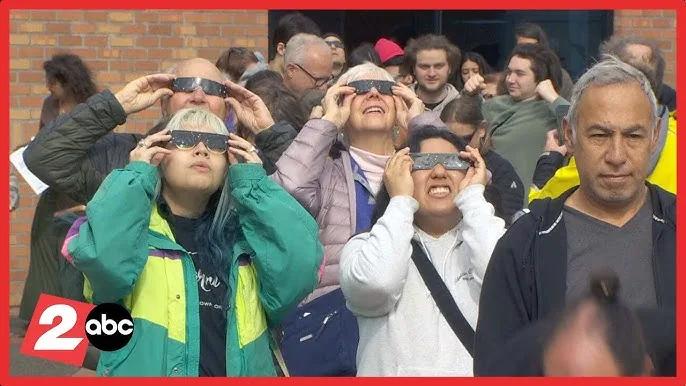
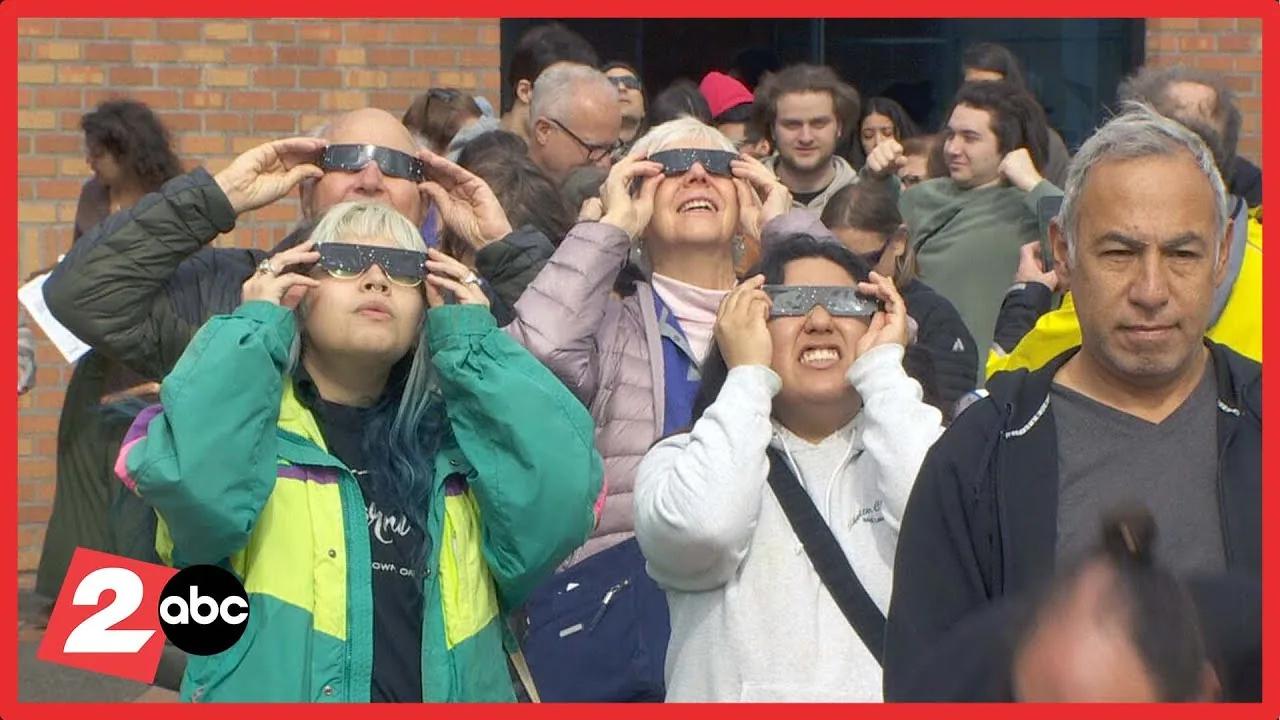
During the partial phases before and after totality, you must use safe solar viewing protection. During totality itself—only while the Moon completely covers the Sun’s bright face—you may look without eclipse glasses. The moment even a tiny bead of bright Sun returns, glasses go back on immediately. NASA is explicit about this, and so are the AAS eclipse safety resources.
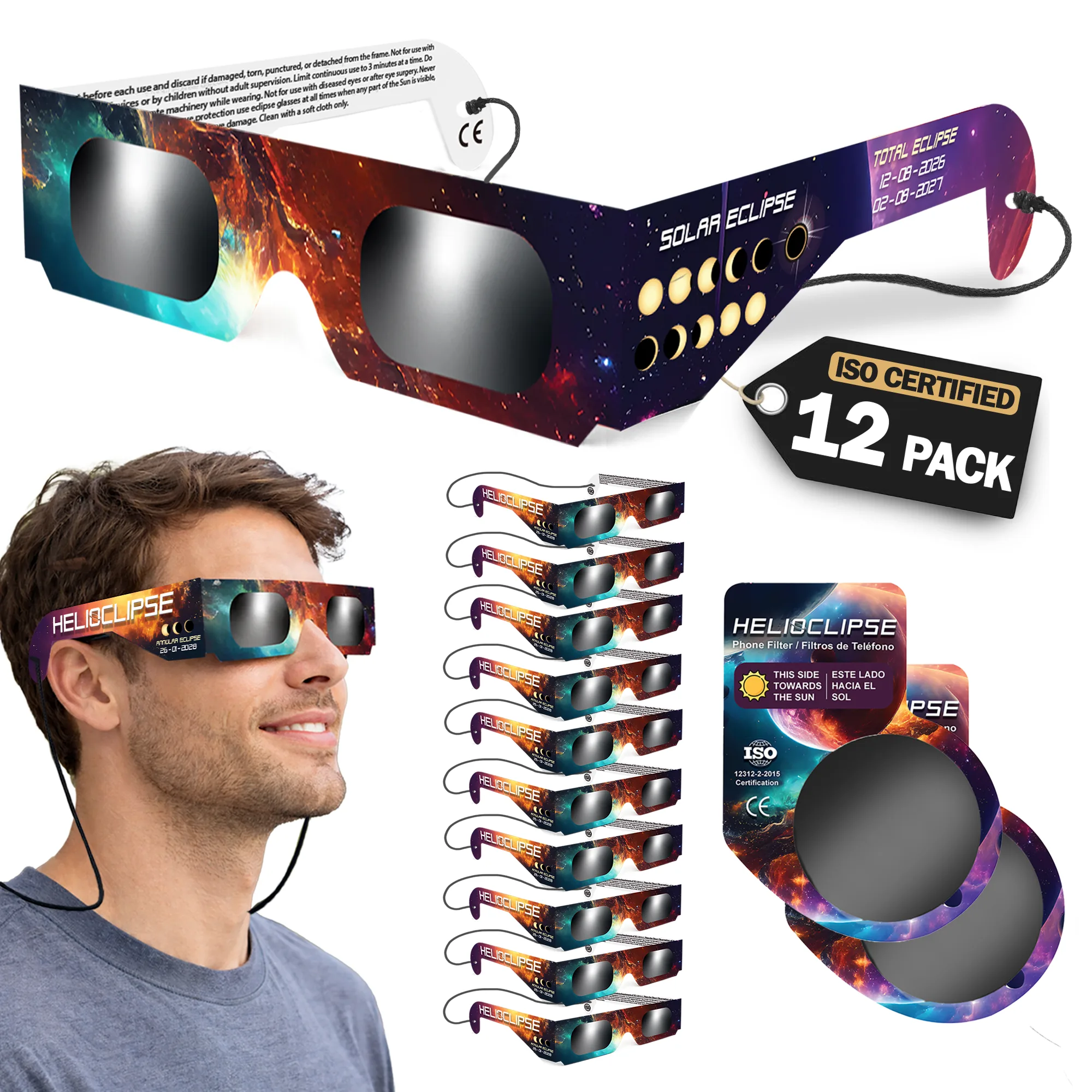
This is where product language gets messy online, so let’s clean it up. Many shoppers look for approved solar eclipse glasses, eclipse viewing glasses, or solar eclipse glasses iso 12312-2 certified. The important standard is ISO 12312-2 for direct viewing of the Sun. Just as important, NASA does not approve specific brands, so phrases like eclipse glasses nasa approved are common marketplace wording, not an official NASA certification program. The AAS explains this well: labeling alone is not enough, and counterfeit or low-quality viewers do exist.
If you need viewers for your group, buy early from a source you trust and inspect them before eclipse day. Torn, scratched, punctured, or loose filters are a no. If you want a deeper explanation of the standard and what to sanity-check before you trust your eyes to a cardboard viewer, read /en/blog/iso-12312-2-eclipse-glasses-explained and then browse our shop eclipse glasses.
One more Zaragoza-specific point: because the Sun will be low and the event will feel dramatic, people are especially tempted to keep looking a beat too long after totality. Do not do that. Decide in advance who in your group is calling “glasses back on.”
A map-first Zaragoza strategy beats a vibes-first Zaragoza strategy
If there is one planning habit we want readers to steal from experienced eclipse chasers, it is this: use a map before you use your imagination.
For total solar eclipse 2026 Zaragoza Spain 2026 guide planning, a city-centered pin is only the beginning. You want to know whether your exact spot is north or south of the centerline, how much totality you gain or lose by shifting within the urban area, and what the Sun’s direction and altitude look like from ground level. That is why a total solar eclipse 2026 Zaragoza Spain 2026 guide map matters more than a generic destination roundup.
Our Eclipse Explorer / 3D map is the right place to do that work. Use it to compare a few candidate Zaragoza pins, then physically scout one or two if you can. In a late-evening eclipse, “looks open on satellite view” is not enough. You want confidence.
And yes, some readers who are already thinking ahead will also search total solar eclipse 2027 or even total solar eclipse 2030 while planning this trip. That is normal eclipse behavior. But Zaragoza on August 12, 2026 is its own event. Treat it as a city problem to solve well, not as a placeholder for some future chase.
A realistic eclipse-day schedule for Zaragoza
You do not need military precision. You do need structure.
The day before
Scout your site if possible. Stand there around the same time of evening and look west. Notice trees, cranes, rooflines, bridge structures, and any slope that changes your horizon. Check how long it takes to reach the site without stress.
Late morning to mid-afternoon
Keep the day easy. Hydrate early, eat properly, and avoid turning the eclipse into an endurance contest. If you are sightseeing, do it lightly. August heat can take more out of you than you think.
Late afternoon
Recheck forecasts and sky conditions. If haze or cloud behavior looks different from expectations, decide whether your Zaragoza site still makes sense. Do not wait until the partial phase is underway to start debating alternatives.
Early evening
Arrive with margin. Settle in. Hand out viewers. Explain the sequence to children and first-timers. If anyone in your group is confused about totality versus partial phases, fix that now, not during the final minute.
During the eclipse
Use viewers during the partial phases. Put phones away for stretches so you actually watch the sky. As totality approaches, pay attention to the changing light and the horizon, not just the Sun itself.
At totality
If the Sun’s bright face is fully gone, glasses can come off briefly for direct viewing of totality. Look up. Then look around. Zaragoza itself will be part of the show—the strange dusk, the altered color, the reaction of the people around you.
Immediately after
The instant bright sunlight reappears, glasses go back on. Then slow down. Do not join a panicked rush unless weather or safety truly demands it.
Why Zaragoza is worth choosing anyway
A city guide should be honest enough to admit tradeoffs. Zaragoza will not give everyone the longest duration in Spain. It will not give everyone a perfectly pristine horizon from every square meter of the municipality. It may be hot, hazy, and crowded.
But it offers something many eclipse travelers actually need: a real city inside totality, with infrastructure, broad inland sky potential, and a late-evening event dramatic enough to stay with you for years. The zaragoza spain eclipse 2026 case is strongest when you stop asking whether it is the single best place in all of Spain and start asking whether it is a smart, defensible, city-based totality plan. For many readers, it absolutely is.
That is the practical August truth. Zaragoza is not effortless. It is plan-able.
Total Solar Eclipse 2026 in Spain: Don't Miss This Moment
Natural Portraits Global
Frequently asked questions
Is Zaragoza one of the best places in Spain to watch the 2026 solar eclipse?
Yes. The excerpt says Zaragoza is inside the path of totality for August 12, 2026, so it offers the real total eclipse rather than just a deep partial. It also notes that the city’s broad sky and inland setting make it a serious planning option, as long as you choose your viewing spot carefully.
Which Spanish cities will actually experience totality in 2026?
The excerpt confirms that Zaragoza is inside totality for the August 12, 2026 eclipse. It does not provide a full list of other cities, so the key point is that only locations within the narrow path get totality at all.
What are the key facts about the 2026 total solar eclipse in Zaragoza?
Zaragoza is expected to get about 1 minute 23 seconds of totality around 8:28 p.m. CEST. The excerpt also emphasizes that the city’s inland heat, low western Sun, and urban features like trees and buildings can affect the view, so exact location matters.
What should I know if I’m planning a Zaragoza eclipse trip in 2026?
Plan early and do not wait until the night before to choose a viewing spot. The excerpt says a few blocks can change your horizon, tree cover, and stress level, and it also warns that summer heat may wear you down before totality begins.
Why does the article focus so much on Zaragoza’s inland setting and wide skies?
Because those details shape the eclipse experience in practical ways. The excerpt says Zaragoza is not a coastal or mountain-view story; it is an inland city where the sky may look open, but the low western Sun and local urban obstacles make your exact spot important.
On-site next steps
- Explore Zaragoza pins in our Eclipse Explorer / 3D map to check exact total solar eclipse 2026 map time, horizon direction, and how your chosen spot sits within the total solar eclipse 2026 path.
- If you are watching any partial phase—and in Zaragoza you will—order your Helioclipse solar eclipse glasses early so your family or group is not scrambling in August.
- For more planning help, browse the Helioclipse blog for safety, weather, and Spain-path guides before eclipse week.
Sources & further reading
- 16 best places to see the 2026 total solar eclipse
- 1 year until the total solar eclipse 2026: Here's what you need to know
- Eclipse chasers share insider tips, travel advice and skywatching secrets for the 2026 total solar eclipse
- Spanish Total Eclipse Adventure 2026
- 2026 Spain 9-Night Total Solar Eclipse Tour
- NASA Science: Future Eclipses
- NASA Science: Types of Solar Eclipses
- NASA Science: Eclipse Viewing Safety
- AAS: About the ISO 12312-2 Standard for Solar Viewers
- AAS: How Can You Tell If Your Eclipse Glasses or Handheld Solar Viewers Are Safe?