Eclipse viewing with kids: simple rules, gear, and calm routines
A solar eclipse can be one of the most memorable things your family ever does together. It can also feel like a lot to manage: bright Sun, excited kids, special glasses, changing light, crowds, and the nagging fear of getting something wrong.
That is exactly why we like a calm, simple approach. The best solar eclipse kids families safety plan is not a complicated one. It is a short set of rules, practiced once or twice ahead of time, with gear you trust and a backup way to watch if your child is too young, too wiggly, or just not interested in keeping glasses on.
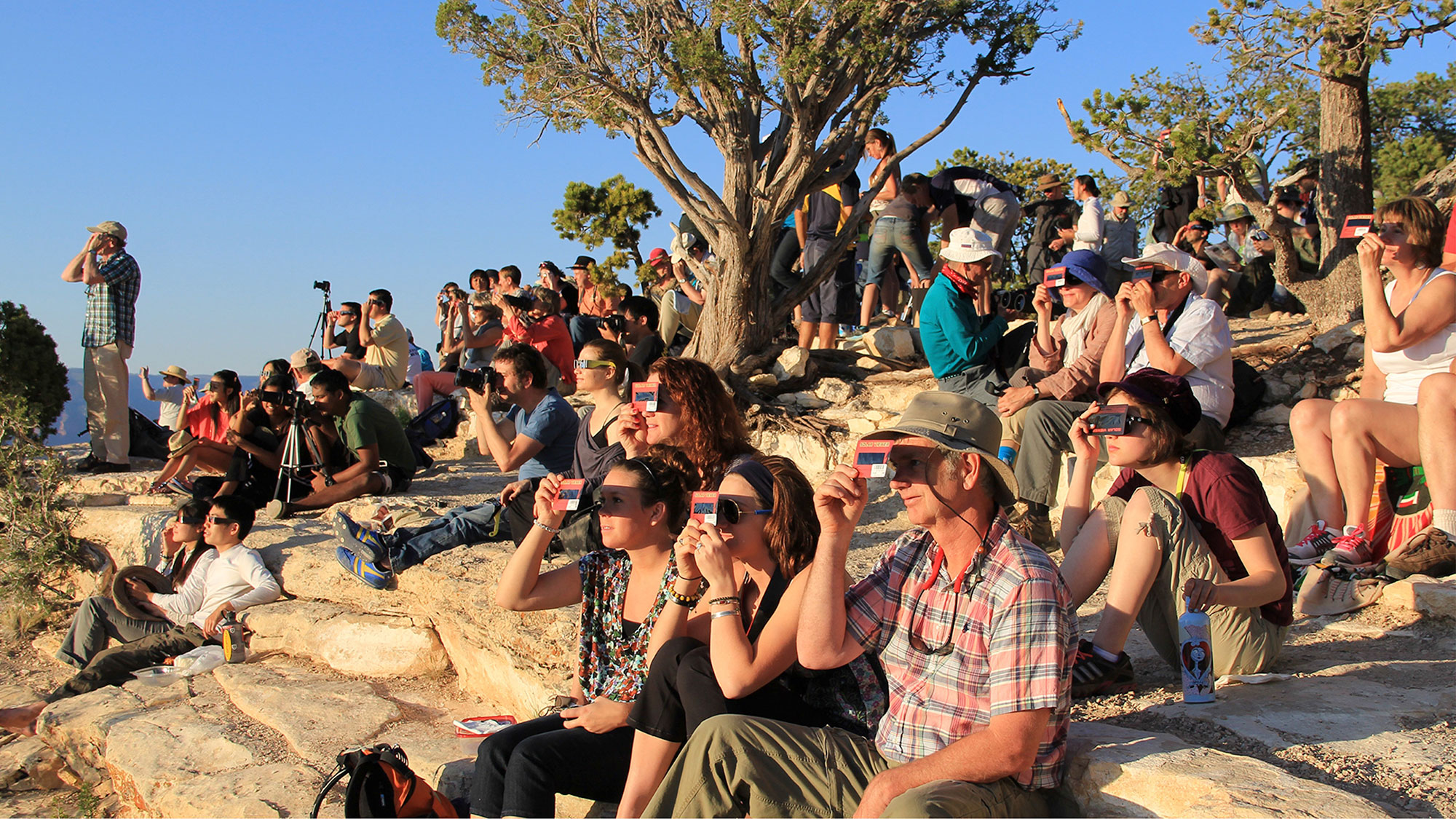
If you are already planning for an upcoming event, start by checking the Helioclipse Eclipse Explorer / 3D map to see whether your location is in totality or only a partial eclipse. That one detail changes the experience a lot, and for first-time families it is worth understanding early. If you still need viewers, our shop eclipse glasses is the straightforward place to get ready before demand spikes.
The tone here is deliberate: family safety messaging from pediatric or astronomy-outreach eclipse planning works best when it lowers stress instead of raising it. Children do not need a scary lecture. They need clear rules, patient supervision, and adults who already know what the plan is.
The big idea: keep the rules few, visible, and boring
For families, eclipse viewing with kids: simple rules, gear, and calm routines is not just a nice title. It is the right strategy.
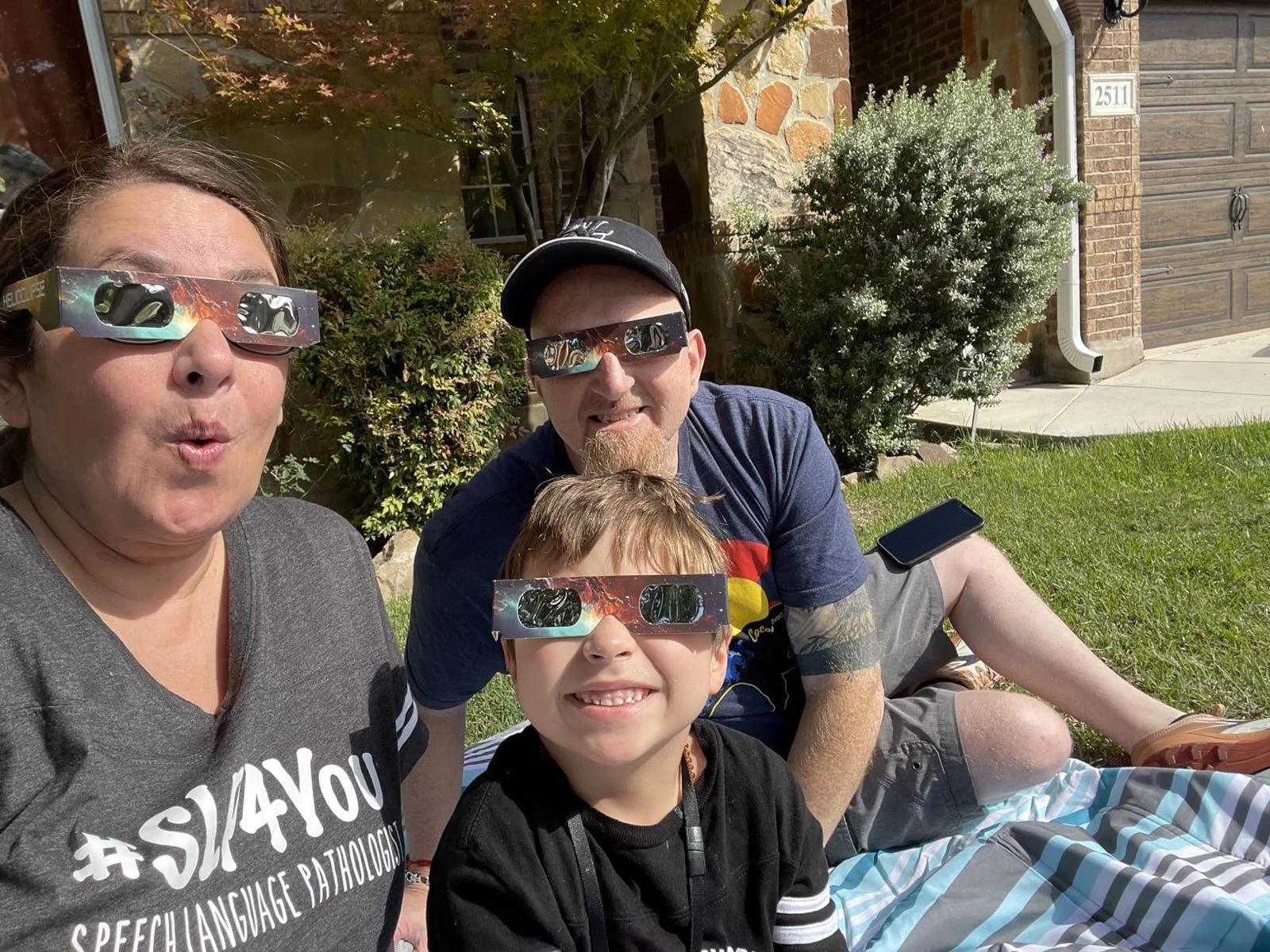
Children usually do better with three or four repeatable rules than with a long explanation delivered five minutes before first contact. We recommend something like this:
- We only look at the Sun with safe eclipse viewers on.
- We put them on before looking up.
- We look away before taking them off.
- If we are not using viewers, we watch the eclipse on the ground or on paper with a projector.
That is enough for many children. You can practice it indoors first: hold the glasses, put them on, face a lamp only after they are on, then look down before removing them. The point is not to simulate the Sun perfectly. The point is to build a routine.
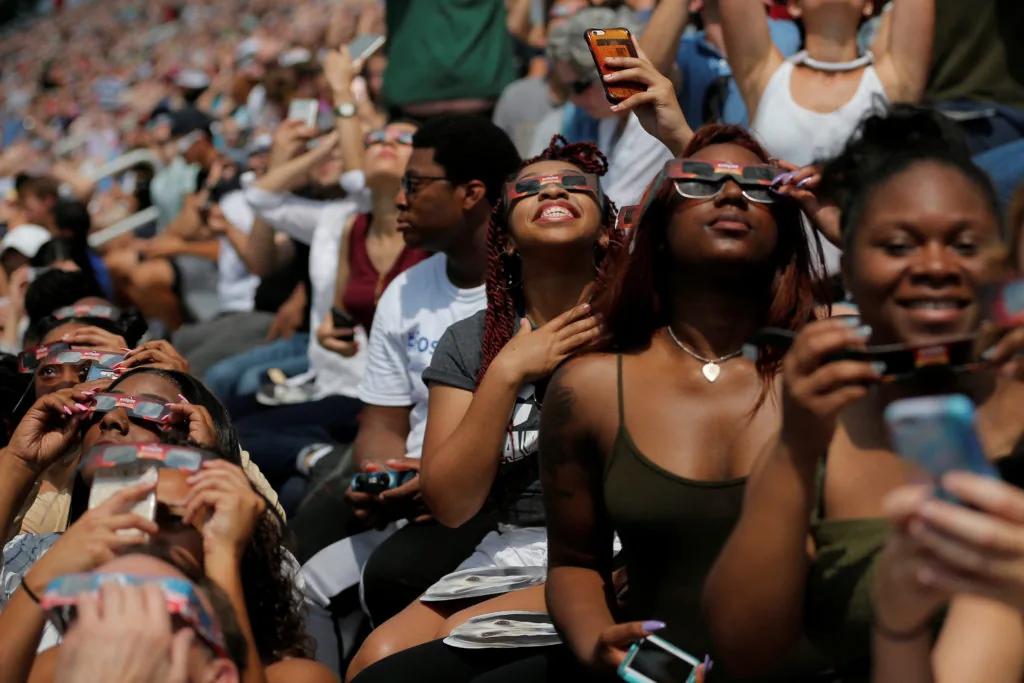
For younger kids, especially preschoolers, the real goal is not independent compliance. It is supervised participation. NASA and the American Astronomical Society both emphasize child supervision, and pediatric guidance does too. If your child is too young to reliably follow the rules, that does not mean eclipse day is ruined. It means you switch to indirect viewing, livestream coverage, or very short, fully supervised glances through properly fitted viewers.
What kids actually need to know
Parents often ask, how to explain eclipse to kids? Keep it concrete.
Try this: the Moon moves between Earth and the Sun and blocks part of the sunlight. If you are in the right place, it can block all of the Sun's bright face for a short time. If you are not in that narrow path, you will still see the Moon take a bite-shaped chunk out of the Sun, but you will not get darkness in the same way.
For very young children, that may be enough. For older kids, you can add that a total eclipse and a partial eclipse have different viewing rules. During a partial eclipse, protection stays on the whole time. During a total solar eclipse, only people inside the path of totality may briefly look without eclipse viewers, and only when the Sun's bright face is completely covered. If that distinction feels stressful, keep the family rule simple and conservative unless you have prepared well. Our guide to when glasses on, when glasses off: eclipse phases explained for first-time viewers can help you decide how much detail your group really needs.
Another common question is how does the eclipse affect kids? In the ordinary sense, it does not harm children emotionally or physically just because it is happening. What affects kids is the environment around it: bright light, heat, waiting, crowds, sensory change, and whether adults are calm. Some children love the weird dimming and the sudden change in shadows. Others find it strange. A child who dislikes transitions may need a heads-up that the light can look odd, birds may quiet down, and adults nearby may cheer.
The one piece of gear that matters most
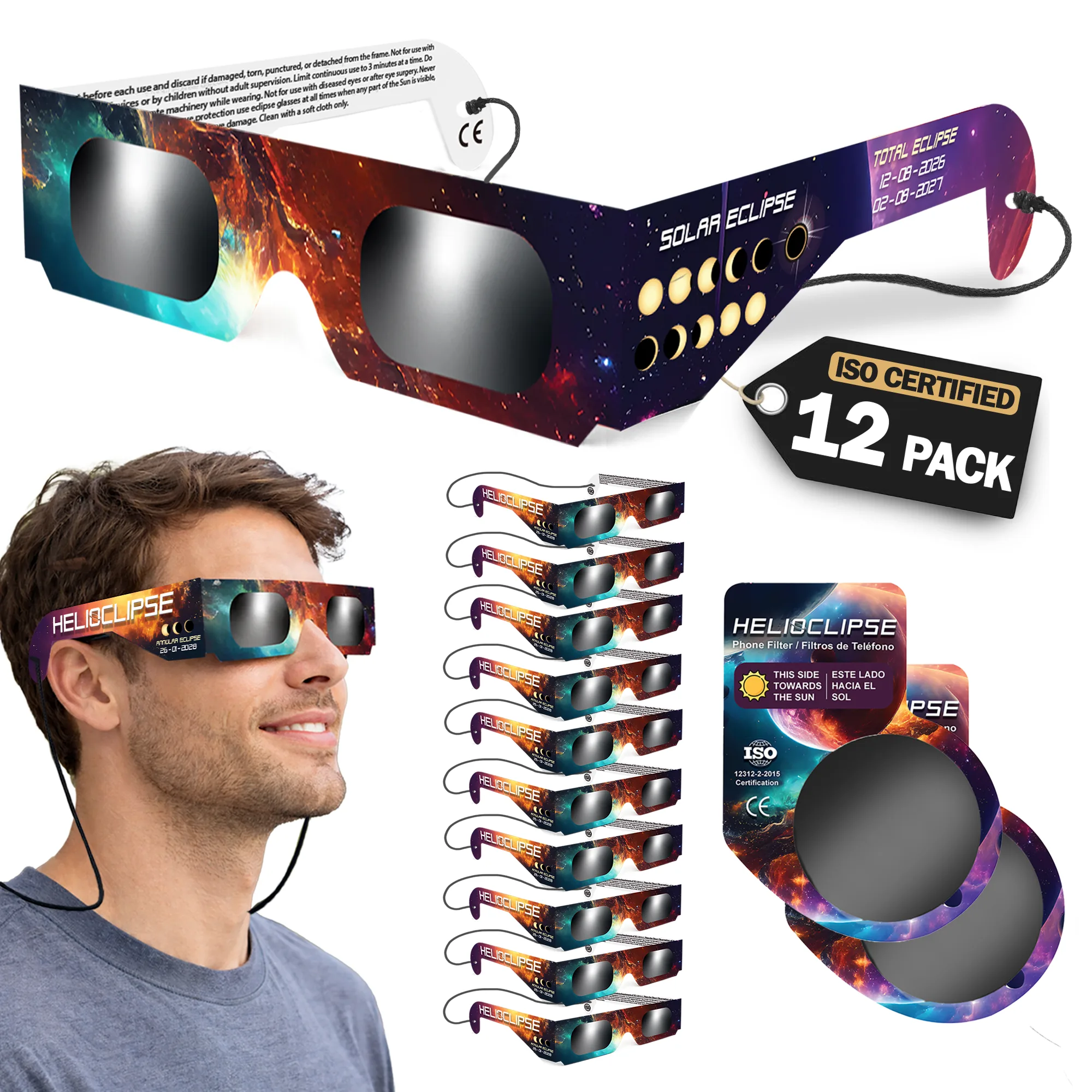
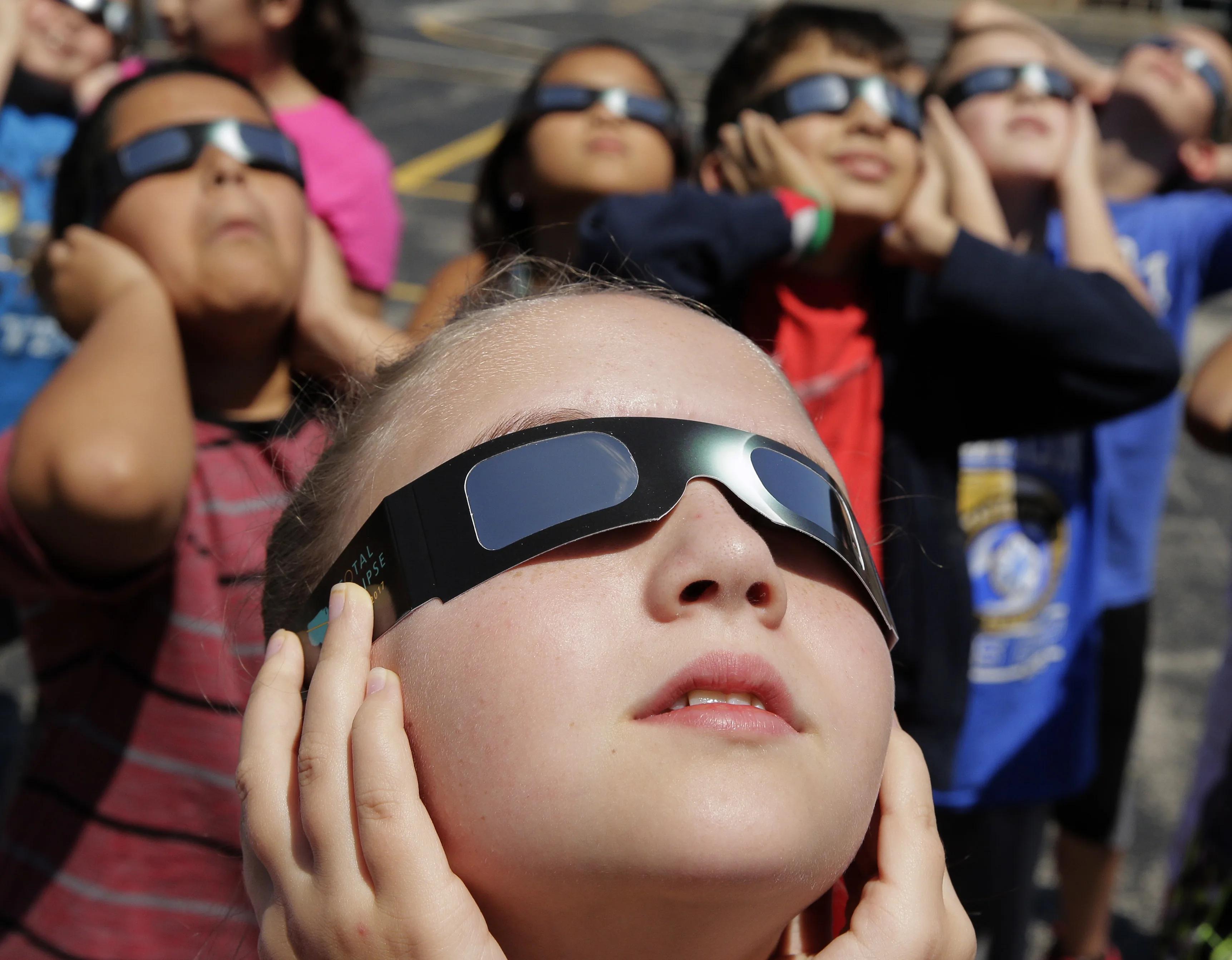
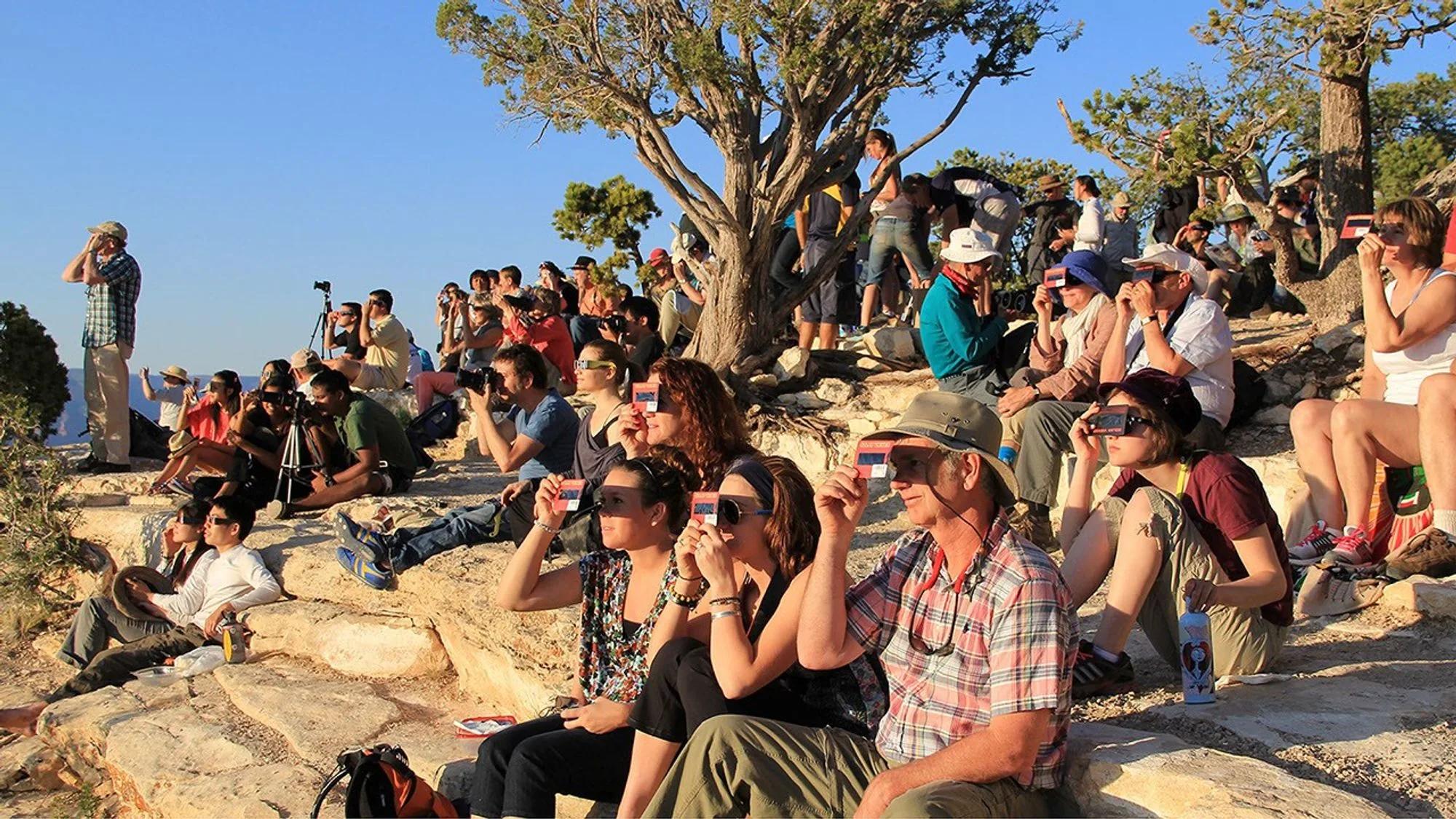
If your family will look directly at the Sun during any partial phase, you need proper solar eclipse glasses or a handheld solar viewer that conforms to ISO 12312-2. The AAS eye-safety guidance is the clearest public reference on this, and NASA says the same basic thing: ordinary sunglasses are not enough.
That is why one of the most common questions online, can you look at a solar eclipse with sunglasses, has a short answer: no. And if you want the exact phrase many parents search, can you look at a solar eclipse with sunglasses is the wrong standard entirely. Sunglasses are made for everyday brightness and comfort. Eclipse viewers are made for direct solar observation.
This is also where labeling can confuse people. You may see phrases like approved solar eclipse glasses, solar eclipse glasses iso 12312-2 certified, or certified solar eclipse glasses used in shopping language. What matters is not a vague claim on a marketplace listing but whether the product is genuinely intended for direct solar viewing, is labeled appropriately, and comes from a trustworthy source. NASA specifically notes that it does not approve any particular brand of solar viewers, so phrases such as “nasa approved” on packaging should not be treated as official endorsement.
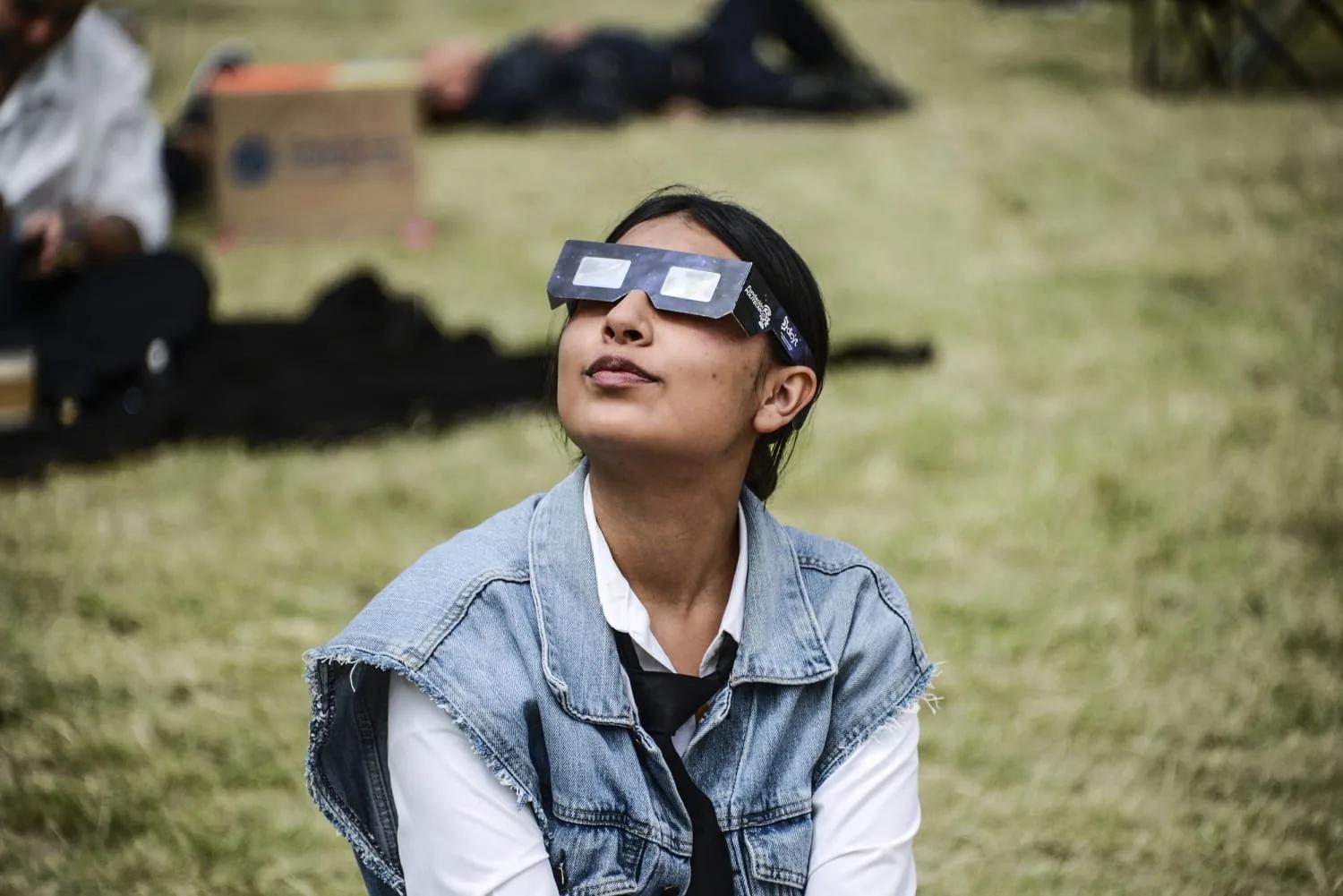
Before eclipse day, inspect every pair. If the filter is scratched, torn, punctured, loose, or otherwise damaged, do not use it. Make sure the glasses fit closely enough that children are not tempted to peek around the edges. If your child already wears prescription glasses, eclipse viewers generally go over them.
If you want a deeper standards explainer before you buy, read our guide to ISO 12312-2 and eclipse viewers: what the standard means for your family. If you are checking products you already have, our post on fake and low-quality eclipse glasses: how to sanity-check what you are about to trust is the next stop.
Age-by-age: what usually works best
Toddlers and very young preschoolers
This is the group most likely to need indirect viewing only. If a child cannot reliably keep viewers on, do not turn eclipse day into a battle. Use a pinhole projector, a colander, leaf shadows under a tree, or a livestream.
Pediatric guidance is refreshingly practical here: if a child is too young to understand the importance of keeping their glasses on, choose another method. That is not a lesser experience. For many little kids, seeing dozens of crescent Suns projected on the ground is more magical than staring upward anyway.
Older preschoolers and early elementary ages
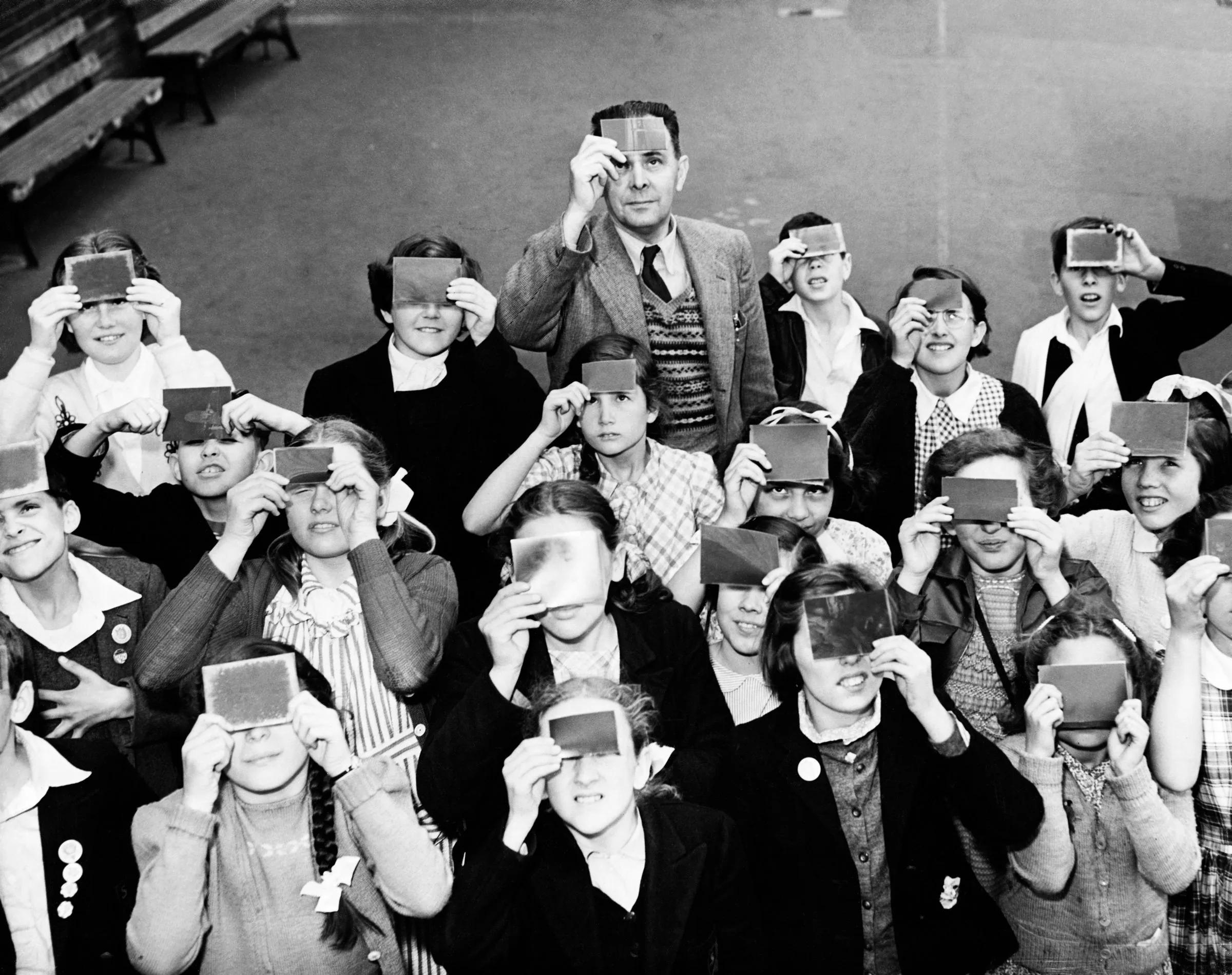
These kids can often do very well with rehearsal. Practice the sequence once or twice. Keep viewing intervals short. Have one adult assigned to one or two children, especially near the most exciting moments.
A simple script helps: “Glasses on. Look up. Look down. Glasses off.” Repetition beats improvisation.
Older kids and teens
They may want more explanation, photos, or independent viewing time. That is fine, but the rules do not change. No unfiltered binoculars, no telescope eyepiece without the correct front-mounted solar filter, no camera viewfinder experiments, and no casual peeking.
If you are bringing optics, make sure the adults operating them know exactly what they are doing. For most families, eclipse day is better without that extra layer of risk and distraction.
The safest backup plans are also the most fun
Parents often ask how can kids watch solar eclipses? The answer is broader than “through glasses.” Direct viewing is only one option.
Indirect viewing is excellent for families because it removes the temptation to peek. A pinhole projector is the classic method: sunlight passes through a small hole and projects the Sun's shape onto paper or the inside of a box. The key rule is easy to remember: never look through the pinhole at the Sun.
A kitchen colander works beautifully too. So do the gaps between crossed fingers, or the tiny spaces between leaves under a tree. During the partial phases, those little openings project many small crescent Suns. For children, that often feels like a discovery rather than a safety compromise.
This is also the best answer to how to see solar eclipse safely at home if you are not traveling. You can stay in your yard, bring out snacks and water, set up a white sheet of paper, and let the shadows do the teaching. If clouds interfere, a livestream is still a real eclipse experience, especially for younger kids who care more about the shared event than the exact geometry overhead.
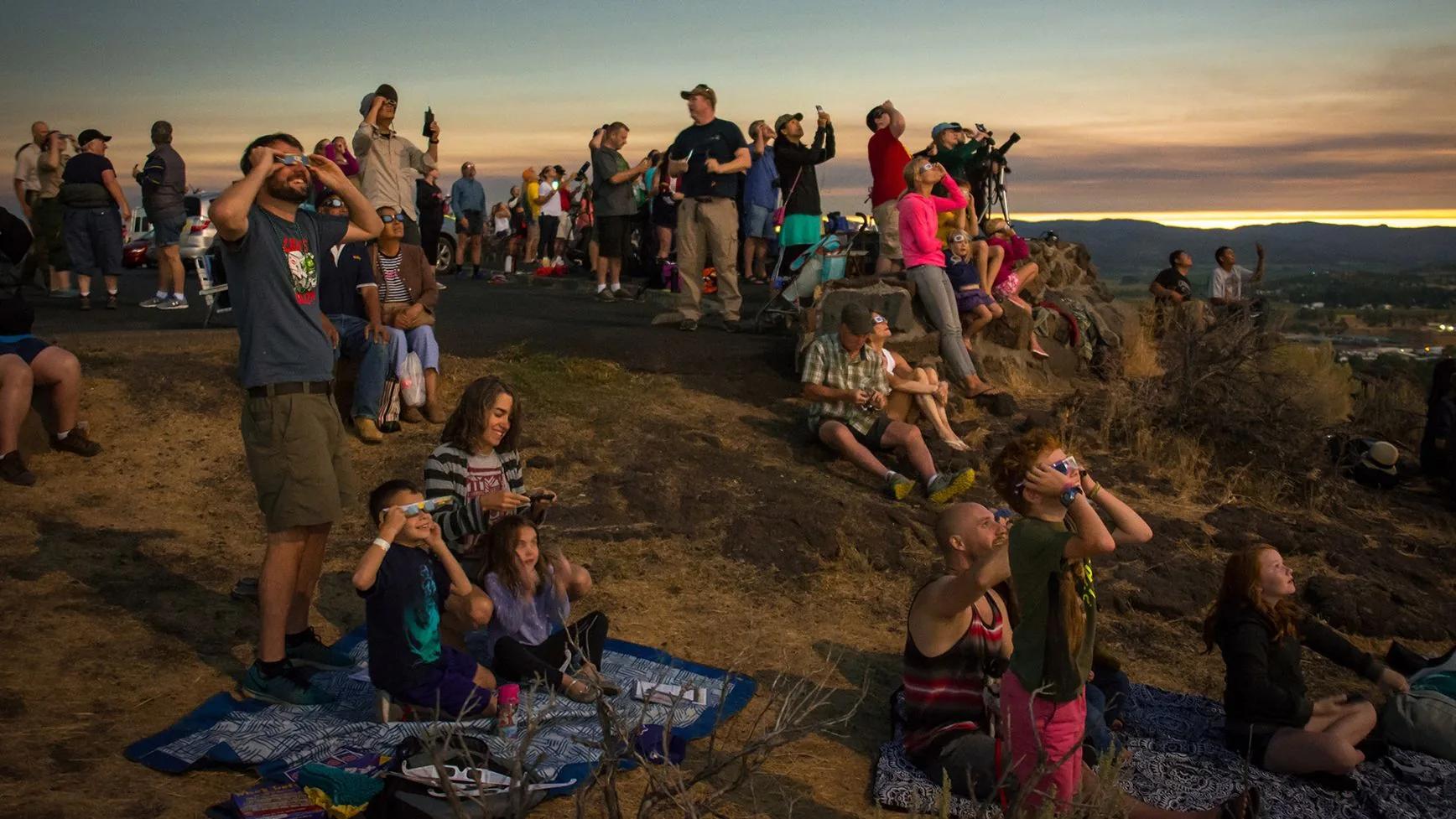
Totality versus partial eclipse: the family rule that prevents mistakes
This is the part adults need to understand before they teach children.
During a partial eclipse, or during the partial phases before and after totality, eye protection is required for any direct look at the Sun. During an annular eclipse, protection is required the entire time. Only during the brief total phase of a total solar eclipse, and only if you are actually inside the path of totality, is it safe to look at the eclipsed Sun without eclipse viewers.
That is why location matters so much. A family standing just outside totality does not get the same rule as a family on the centerline. If you are planning ahead for 2026 or another major event, use the map early and teach the right expectation. Our August 12, 2026 total solar eclipse planning guide explains the difference between being inside the path and merely seeing a dramatic partial eclipse.
For many families, the easiest approach is this: unless the adults are very confident about totality timing and location, keep viewers on for all direct viewing. You lose a little spontaneity, but you gain a lot of peace of mind.
What are the safety precautions during a solar eclipse?
The phrase safety precautions when viewing a solar eclipse sounds formal, but in practice it comes down to a short checklist.
First, inspect your viewers before use. Second, supervise children every time they look up. Third, put viewers on before looking at the Sun and remove them only after looking away. Fourth, never use unfiltered binoculars, telescopes, or cameras. Fifth, have an indirect-viewing backup ready.
There are also non-eye issues families forget. Eclipses can mean hours outside in direct sun. Bring water, hats, sunscreen, and a place to sit. If you are traveling, arrive early, avoid trying to watch while driving, and expect traffic after the event. NASA's eclipse planning guide stresses comfort and logistics for good reason: hungry, overheated children make poor safety decisions.
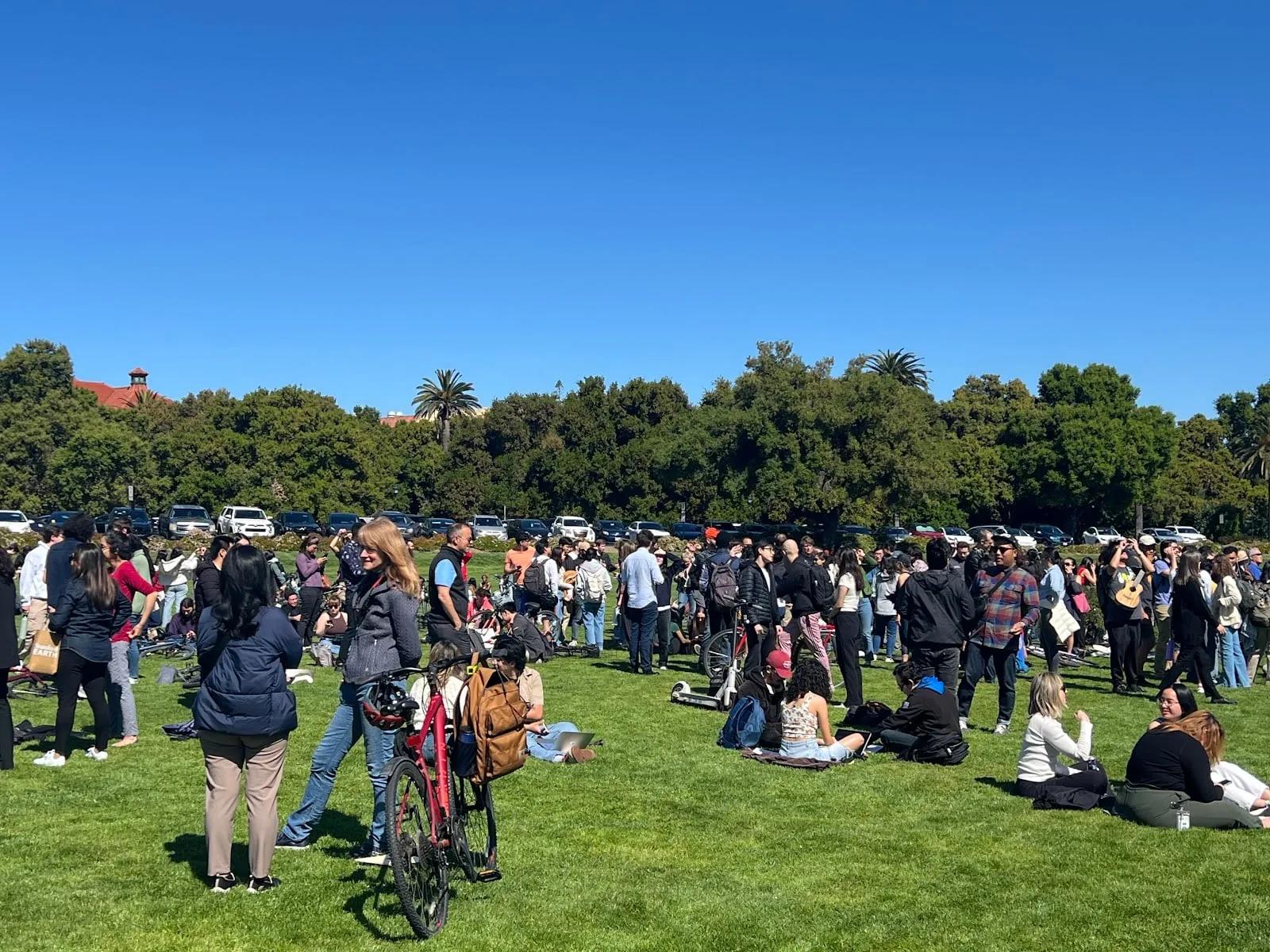
If you are going to a public event, choose a viewing spot where kids can stand still without being jostled. A park, school field, museum lawn, or library event is often better than a roadside shoulder. The best family setup is not the most dramatic one. It is the one where everyone can follow the rules without chaos.
What if a child looks at the Sun briefly?
This is where calm matters most.
Parents sometimes spiral into worst-case thinking after a momentary mistake. The reality is that retinal injury does not come with an immediate pain alarm, which is one reason supervision matters so much. Pediatric and ophthalmology guidance notes that symptoms can appear later and may include a blind spot, distorted vision, abnormal color perception, or headache.
If your child says their vision seems strange after looking at the Sun, contact an eye-care professional promptly. But do not let fear dominate the whole day. The better lesson is prevention: short, repeated routines; direct supervision; and choosing indirect viewing when a child is not ready.
If you want the fuller explanation of why this risk exists, our guide on why staring at the Sun without protection is never “just a quick look” covers the mechanism without sensationalism.
A low-stress eclipse routine for families
Here is a simple plan we like because it works whether you are at home, at school, or traveling.
The day before, put the viewers in one place with snacks, water, hats, and a small blanket or chairs. Check the weather. Confirm whether your location is total or partial. If you are traveling, know where you will park and where the bathroom options are.
An hour before the eclipse begins, explain the rules once. Not five times. Children tune out repeated warnings. Then practice the sequence with the glasses.
During the event, do not ask children to watch continuously. The AAS makes a useful point here: the eclipse changes slowly during the partial phases. A brief look every few minutes is enough to see the Moon's progress. That is good news for families. It means you can alternate between direct viewing, projection activities, snacks, and simply noticing the changing light.
About 15 minutes before totality, if you are in the path, the atmosphere changes. Light gets stranger. Shadows sharpen. Wildlife may react. This is often the moment kids remember most, even more than the Sun itself. If you are not in totality, frame the event honestly. A deep partial eclipse can still be exciting, but it is not totality, and children deserve the real distinction.
This is also where best places and timing for solar eclipse kids families safety becomes less about hype and more about logistics. For families, the best place is usually not the most remote hilltop. It is the place with a clear view, safe footing, shade or sun protection, bathrooms, and enough room to manage children without rushing.
If you are planning for 2026, start earlier than you think
A good solar eclipse kids families safety 2026 guide should say this plainly: the family version of eclipse planning starts before eclipse week.
If you are aiming for the August 12, 2026 total solar eclipse, the first question is not what snacks to pack. It is whether your chosen location is in totality, how long totality lasts there, and what your backup plan is if weather or crowds become a problem. Families need margin.
That is why we recommend checking the Helioclipse Eclipse Explorer / 3D map well in advance, then making a simple plan around your children's ages and tolerance for travel. If you are considering a bigger trip, our guides on eclipse travel without the chaos and cloud cover and eclipse day can help you think like a parent, not just like an eclipse chaser.
And if you landed here because you are searching solar eclipse today, the same family rules still apply. Whether the event is years away or happening this afternoon, the safest plan is the one you can explain in one breath.
The questions kids ask that are worth answering
Children usually do not ask for a lecture on orbital mechanics. They ask what they will see, whether it will get dark, whether animals notice, and whether they can take the glasses off.
Answer the first three with enthusiasm. Answer the last one with precision.
If you are outside totality, the answer is no. If you are inside totality, the answer is: only during the brief fully total phase, and only when the bright face of the Sun is completely covered. For many families, especially with younger children, it is perfectly reasonable to keep the rule simpler than the science.
And if your child asks, how can kids watch solar eclipses?, tell them there are three good ways: with safe viewers, with projected crescents on paper or the ground, or on a livestream with expert commentary. All three count.
How to safely view the eclipse with your kids
The Globe and Mail
Frequently asked questions
How does a solar eclipse usually affect children during a family viewing?
A solar eclipse can feel exciting, confusing, and a little overwhelming for kids because the light changes, the crowd may be busy, and they have to remember the viewing rules. The article recommends keeping the plan calm and simple so children can participate without stress.
What safety steps should families follow when watching a solar eclipse with children?
Use only safe eclipse viewers when looking at the Sun, put them on before looking up, and take them off only after looking away. If a child is too young, too wiggly, or not willing to keep viewers on, switch to indirect viewing, a livestream, or supervised short glances.
What is the easiest way to explain a solar eclipse to a child?
Keep it concrete: the Moon moves between Earth and the Sun and blocks some or all of the sunlight, depending on where you are. The article suggests using a short, simple explanation rather than a long lecture.
How can children watch a solar eclipse safely?
Children can watch with properly fitted eclipse viewers, but they should practice the routine ahead of time so they know to put the viewers on before looking and look away before removing them. If they cannot reliably follow that routine, indirect viewing on the ground or on paper is a safer option.
What should families remember when planning eclipse viewing with kids?
The main idea is to keep the rules few, visible, and boring: use safe viewers, supervise closely, and practice the routine before eclipse day. It also helps to check whether your location will see totality or only a partial eclipse, since that changes the experience.
On-site next steps
- Check your location in the Helioclipse Eclipse Explorer / 3D map so you know whether your family will see totality or a partial eclipse.
- Get your Helioclipse solar eclipse glasses early, inspect them before eclipse day, and keep one pair ready for each direct viewer in your group.
- If you want more family-friendly planning help, browse the Helioclipse blog for safety, phases, travel, and weather guides.
Sources & further reading
- How to safely view a solar eclipse with kids
- How can I safely watch a solar eclipse with my children?
- How to Safely See a Solar Eclipse
- How to Safely See a Partial Solar Eclipse
- Eclipse Viewing Safety — NASA
- How to View a Solar Eclipse Safely — AAS
- About the ISO 12312-2 Standard for Solar Viewers — AAS
- Indirect Solar Viewing: Pinhole & Optical Projection — AAS
- What to Expect: A Solar Eclipse Guide — NASA
- How to Watch the Solar Eclipse With Your Kids — PBS Parents