Santander in 2026: one city, one eclipse—bay sightlines, cliffs, and Cantabrian weather moods
If you want one of the most cinematic urban settings for Spain’s big eclipse, Santander makes a serious case for itself. On August 12, 2026, the city sits inside the path of totality, with the Sun dropping low toward the western horizon over water and headlands. That combination is the promise and the trap. A santander eclipse 2026 plan is not just “be somewhere in town.” It is about horizon geometry, traffic realism, and whether your chosen viewpoint gives you a clean line to a very low Sun at exactly the right moment.
For readers searching total solar eclipse 2026 santander spain, the headline fact is simple: Santander is in totality on August 12, 2026, during the evening, and the experience should be dramatic. But the useful version of that fact is more specific: the Sun will be low enough that a hill can help you see over a foreground obstruction, or hurt you by putting a ridge, wall, trees, or buildings directly in the way. Before you commit to a promenade, beach, or clifftop, open the Helioclipse Eclipse Explorer / 3D map and check your exact spot, not just the city name.
This is our single-city guide to santander spain eclipse 2026 planning: bay versus exposed coast, where urban convenience beats drama, where drama beats convenience, and how Cantabrian weather can change the mood in the final hours.

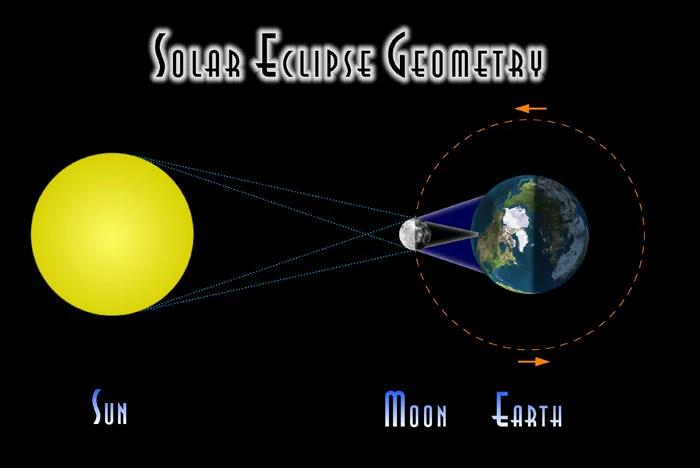
The basic geometry: yes, Santander gets totality
NASA lists August 12, 2026 as a total solar eclipse visible from Spain, among other regions, and Santander is one of the Spanish cities inside the path of totality. City-specific listings from Time and Date and broader path references from the National Solar Observatory and other eclipse authorities all point the same way: Santander is not a deep-partial compromise. It is a real total-eclipse city.
That matters because the difference between 99% partial and 100% total is not a rounding error. During totality, the Sun’s bright photosphere is fully covered, the corona appears, the light collapses into that eerie eclipse twilight, and only then can viewers inside the path briefly remove certified viewers. If you want a refresher on that moment, our guide to when glasses are on and when they come off during eclipse phases is worth reading before eclipse week.
For Santander, the practical complication is the Sun’s altitude. Geometry-focused forecasts for Spain emphasize that on the north coast the Sun will be only about 10° above the horizon during totality. That is low enough that “inside the city” is not the same as “good view.” A distant apartment block, a line of trees, a bluff, or even a slightly raised edge of terrain can matter.
If you have been comparing pages titled total solar eclipse 2026 map time, total solar eclipse 2026 path, or total eclipse 2026 path, that is exactly the right instinct. In Santander, map-level detail is not optional.
What the sky should feel like in Santander
Spain is one of the strongest land-based bets for this eclipse because the track reaches Iberia after crossing much cloudier northern waters. Weather analyses for the 2026 eclipse generally show Spain with much better August sunshine odds than Greenland, Iceland, or the open Atlantic. That does not mean Santander is cloud-proof. It means Santander is in the better end of the event overall, while still living on the Bay of Biscay under famously changeable Cantabrian skies.
That “Cantabrian weather mood” is the right phrase to keep in your head. You can get a clean, glowing late-summer evening. You can also get marine cloud, haze, or a low deck that leaves inland areas brighter than the waterfront. Coastal weather here can look settled at lunch and indecisive by early evening.
The good news is that a total eclipse is not ruined by every cloud. Thin cloud can still allow a memorable darkening and, sometimes, a visible corona. Broken cloud can produce a frantic but salvageable day if you are mobile. A solid low western bank at the wrong moment is the real problem, because Santander’s eclipse is a low-Sun event. The horizon itself matters as much as the overhead sky.
That is why we tell readers to think in layers: first, are you inside totality? In Santander, yes. Second, do you have a clean westward line? Third, what is the cloud doing specifically over the sea and the western horizon? Our broader guide to cloud cover, eclipse day, and when to move goes deeper on that decision-making.
Bay versus exposed coast: the real Santander choice
This is the heart of any total solar eclipse 2026 santander spain 2026 guide worth using.
Within Santander itself, the choice is not between “good” and “bad” so much as between different risk profiles.
Bay-facing Santander: easier access, more urban fallback
Bay-side viewpoints are often easier to reach, easier to leave, and easier to pair with family logistics. You are more likely to have nearby services, flatter walking routes, and less exposure to wind. If you are bringing children, older relatives, or anyone who will care more about toilets, seating, and a short walk than about the most dramatic horizon line, the bay side can be the smart play.
But bay geometry can be trickier than it looks on a postcard. A low western Sun can line up with built edges, marina infrastructure, masts, trees, or rising ground across the water. In some spots, the bay gives you openness but not necessarily a clean enough opening at the exact azimuth you need. This is where a solar eclipse 2026 interactive map becomes more than a nice extra. Use the Helioclipse map to test the Sun’s direction from your exact promenade, not just your neighborhood.
The bay side is often best when you want a controlled, urban eclipse experience and are willing to trade some raw coastal drama for easier logistics.
Exposed coast and cliff edges: bigger sky, bigger weather stakes
Santander’s exposed seaward edges and cliff-top areas can offer the most emotionally satisfying setup: open western horizon, sea-level sunset glow, and a stronger sense of the Moon’s shadow overtaking the landscape. If the sky cooperates, this is the version people remember for years.
But exposed coast means wind, spray, fewer parking options, and more people making the same “best view” calculation. It also means less shelter if the marine layer behaves badly. A cliff can give you the clean horizon you need, yet still become a poor choice if access roads choke, parking fills early, or the safest standing areas are already crowded.
So the bay-versus-coast decision is really convenience versus openness. For best places and timing for total solar eclipse 2026 santander spain, the honest answer is not one magic pin. It is: choose the most open western horizon you can reach without gambling your whole day on a last-minute parking miracle.
Where a hill helps—and where it hurts
Because the Sun will be low, Santander rewards a little topographic thinking.
A modest rise can help if your main problem is a foreground obstruction: sea wall, parked vehicles, beach structures, low trees, or a built edge along the waterfront. Gaining even a little elevation can restore the line of sight and buy you a cleaner view of the partial phases leading into totality.
But elevation is not automatically better. A hill hurts when it puts you behind a crest relative to the Sun’s position, or when the viewing area itself has trees, railings, monuments, or crowds packed along the obvious edge. In a low-Sun eclipse, “higher” can accidentally mean “farther back from the horizon.”
This is one reason generic advice about “find high ground” is too sloppy for Santander. You do not want abstract high ground. You want a spot with a verified sightline toward the low western Sun. If you are scouting in person the day before, crouch and stand. Look from adult eye level and child eye level. Check whether a railing, hedge, or parked van would cut into the last degrees above the horizon.
NASA’s eclipse guidance notes that observers on a hill or tall building may be able to see the Moon’s shadow approaching across the landscape shortly before totality. In Santander, that could be spectacular from the right open viewpoint. But only if the horizon is genuinely open.
Timing: what to expect without pretending to know your exact bench or beach
The eclipse date is fixed: Wednesday, August 12, 2026.
For Spain, accessible public guides place maximum eclipse in the evening, around the 20:27–20:33 CEST range depending on city. Bilbao is commonly listed near 20:27 CEST, Zaragoza near 20:29, Valladolid near 20:30, and Valencia near 20:33. Santander falls in that same evening window, with city-specific timing available from Time and Date. The exact clock time and duration for your precise spot in Santander should be checked on a local calculator or the Helioclipse map, because seconds matter more near the edges of the path and because your chosen site may differ slightly from a city-center reference.
What we can say confidently from the path geometry is this: Santander’s eclipse is a late-evening, low-Sun totality event. You should expect the partial phases to begin well before maximum, the light to become noticeably strange in the final stretch before totality, and the total phase itself to be brief on human terms even if it feels emotionally huge.
Broader 2026 references note that this eclipse exceeds two minutes in some parts of the overall track, but duration varies across Spain and within the path. Do not assume your Santander location gets the same totality length as a centerline point elsewhere. For a total solar eclipse 2026 santander spain 2026 guide map, the map is the tool that turns “city-level yes” into “my exact duration here.”
If you are comparing Santander with other Spanish locations from pages about the total solar eclipse spain 2026 path, remember the tradeoff: some places may offer a slightly different duration or path position, but Santander gives you a major city, sea horizon possibilities, and straightforward identity as a totality destination.
August tourism density and parking realism
This is where many otherwise good eclipse plans fail.
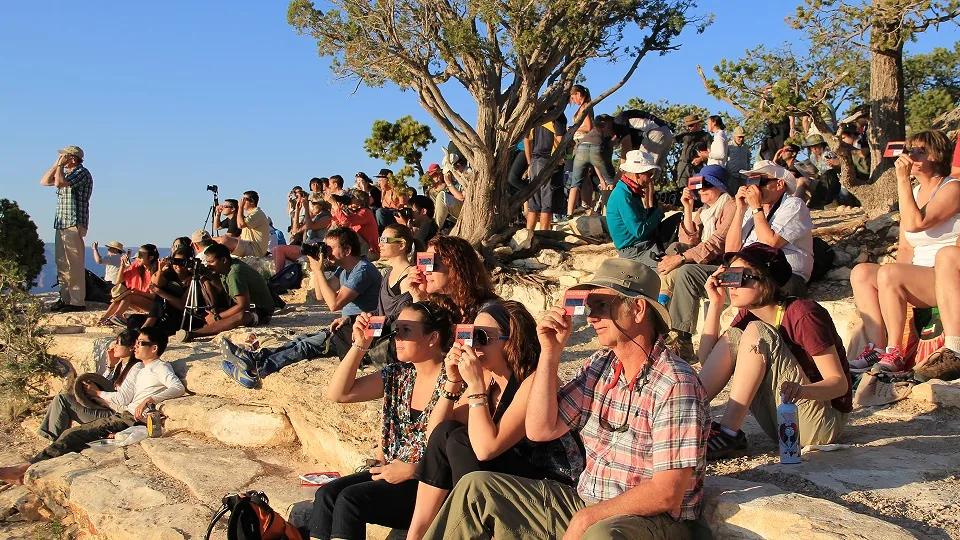
Santander in mid-August is not an empty astronomy lab. It is a coastal city in peak holiday season. Beaches, promenades, scenic overlooks, and waterfront roads already carry summer demand before you add eclipse traffic. On eclipse day, the obvious viewpoints will attract locals, visitors, photographers, families, and people who decided at the last minute that “we’ll just drive somewhere nice” was a plan.
So be blunt with yourself. If your strategy depends on finding easy parking near a famous viewpoint an hour before maximum, that is not a strategy. It is a wish.
A better Santander plan looks like this:
- choose two or three viewing options within the municipality
- rank them by horizon quality and exit difficulty
- arrive early enough that you are not making decisions under pressure
- carry water, snacks, and layers
- assume mobile networks may feel crowded
- decide in advance what weather change would justify moving
NASA’s eclipse planning advice for past total eclipses is still relevant here: fuel up, bring supplies, and expect traffic after totality. In Santander, the extra twist is that some of the most attractive coastal spots are exactly the ones with the least forgiving access.
If you are traveling with a group chat full of “we’ll figure it out,” now is the time to be the useful friend. Send the map. Pick the backup. Tell people when to leave. That is how you turn a beautiful idea into an actual shared memory.
Safety in a city that really does get totality
Because Santander is inside totality, this is one of those places where the safety rule has a precise exception.
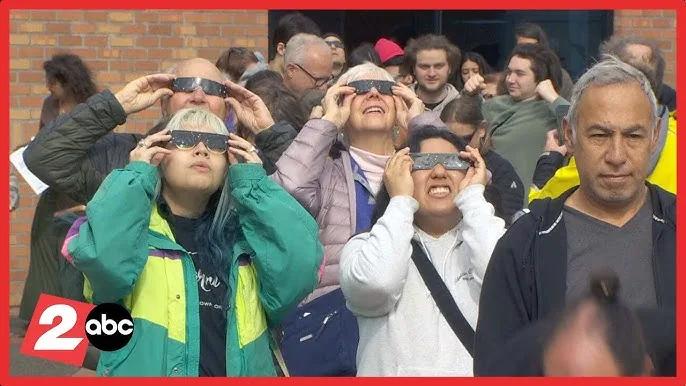
During the partial phases, you need proper solar viewers that conform to ISO 12312-2. Ordinary sunglasses are not safe. Looking through an unfiltered camera, binoculars, or telescope is dangerous. The American Astronomical Society is especially clear on this point: only during the brief total phase, when the Sun’s bright face is completely covered, is it safe to look without eclipse glasses.
That means Santander viewers should not copy advice meant for partial-eclipse cities. Madrid, for example, gets an extremely deep partial eclipse in 2026, but not totality; the rule there is glasses on the whole time. Santander is different because it is in the path. If you want the full distinction, our guide to Spain’s 2026 path basics and what “on the centerline” really means helps frame it.
For families, schools, and group trips, buy viewers early and check them before eclipse day. We recommend using the AAS safety guidance as your baseline and choosing products that clearly state ISO 12312-2 compliance. If you are shopping now, our Helioclipse eclipse glasses page is the simplest place to start for approved solar eclipse glasses and solar eclipse glasses iso 12312-2 certified options you can plan around with confidence.
One important note: NASA does not certify individual brands, so phrases like eclipse glasses nasa approved are common in shopping language but not literally how the safety system works. The standard to verify is ISO 12312-2, and the seller should provide clear labeling and traceable product information. If you want the deeper standards context, read our explainer on ISO 12312-2 and what it means for your family.
What Santander could look and feel like during totality
If the sky opens, Santander has the ingredients for a deeply atmospheric eclipse.
The partial phases should feel slow at first. Then, in the last 15 minutes before totality, the light begins to look wrong in a way that photographs never quite capture. Colors flatten. Contrast sharpens. The western sky becomes the stage. On an open viewpoint, especially near the sea, you may notice the horizon carrying a strange layered glow while the Sun narrows toward a final crescent.
At totality itself, the payoff is not just darkness. It is the sudden absence of the Sun’s ordinary glare. The corona appears. Bright planets or stars may pop out. The horizon can resemble a 360-degree sunset, with the sea and city taking on a theatrical, almost suspended look. In a coastal setting, that can be extraordinary.
And then it ends fast. That is why we keep pushing planning over improvisation. A total eclipse is generous in anticipation and ruthless in duration.
Why this one city matters in the bigger eclipse calendar
Readers often compare one event with another while planning years ahead. You may have looked at a total solar eclipse 2025 map, wondered about total solar eclipse 2027, or even bookmarked total solar eclipse 2030. That is sensible. Eclipse planning is often a multi-year habit.
But Santander’s case in 2026 is unusually appealing because it combines a real totality city, a walkable urban setting, and potentially beautiful sea-horizon geometry. It is not the only place in Spain to watch the eclipse, and it is not automatically the longest-duration choice in the country. What it offers is a distinctive experience: a northern Spanish coastal city with enough infrastructure to make a family trip realistic and enough exposure to the west to make the sky itself the main event.
That is also why pages and searches for total solar eclipse 2026 santander spain 2026 guide, total solar eclipse 2026 santander spain 2026 guide map, and even the awkwardly long seed phrase santander in 2026: one city, one eclipse—bay sightlines, cliffs, and keep circling the same question: not just “is Santander in?” but “what kind of eclipse city is it?”
The answer is: a very good one, if you respect the low Sun and plan like the coast can surprise you.
A practical Santander game plan
If we were helping a friend plan total solar eclipse 2026 santander spain from scratch, we would keep it simple.
First, choose a primary site with a verified western horizon inside Santander municipality. Second, choose a backup with easier access and parking, even if the view is slightly less dramatic. Third, check the forecast repeatedly in the final 24 hours, paying special attention to low cloud over the sea and the western horizon rather than just generic cloud percentage.
Fourth, arrive early. Really early. Bring what you need to stay put comfortably. Fifth, keep your certified viewers with you from first contact onward. Sixth, do not leave the instant totality ends unless you absolutely must; post-eclipse traffic can be worse than pre-eclipse traffic, and the final partial phases are still worth watching.
If your group is still deciding between city convenience and open-coast drama, remember the Santander rule: the best spot is the one you can actually reach, safely use, and trust to give you a clean line to the low Sun.
YouTube
Frequently asked questions
Where should I go in Santander to get the clearest eclipse view?
The best spot depends on your exact horizon, not just the city itself. Because the Sun will be very low in the evening, you should check your specific location on a 3D map and choose a place with an open western view, away from ridges, walls, trees, and buildings that could block the Sun.
What time will the eclipse happen in Santander in 2026?
The excerpt says Santander will be inside totality on August 12, 2026, during the evening. It does not give an exact clock time, so you should confirm the local timing for your exact viewing point before you go.
Is Santander a good place to watch the 2026 total solar eclipse?
Yes, Santander is inside the path of totality, so it is a real total-eclipse location rather than a near-miss. The main challenge is that the Sun will be low over the western horizon, so the quality of the view will depend heavily on your exact sightline.
What should I know before planning a 2026 eclipse trip to Santander?
Plan around geometry, not just convenience. The excerpt warns that a hill can either help you see over foreground obstacles or block the view entirely, so you should verify your exact spot on a detailed map and think about traffic and access as well.
What is the main takeaway from the Santander 2026 eclipse guide?
The main takeaway is that Santander offers a dramatic total eclipse, but the view is highly location-specific because the Sun will be very low. Bayfront, beach, and clifftop settings each have tradeoffs, and Cantabrian weather may also affect the final hours.
On-site next steps
- Explore your exact Santander viewpoint in the Helioclipse Eclipse Explorer / 3D map. For this city, exact horizon direction matters more than a generic city pin.
- Get your viewing gear sorted early with Helioclipse solar eclipse glasses. If you are organizing a family or group, don’t wait until August to hunt for eclipse viewing glasses.
- For broader planning, safety, and Spain coverage, browse the Helioclipse blog.
Sources & further reading
- August 12, 2026 — Total Solar Eclipse — Santander
- Total Solar Eclipse 2026 August 12
- August 12, 2026 Solar Eclipse Map - NSO
- There's a total solar eclipse coming this summer. Here's all you need to know
- Spanish Total Eclipse Adventure 2026
- Future Eclipses - NASA Science
- What to Expect: A Solar Eclipse Guide - NASA Science
- How to View a Solar Eclipse Safely
- About the ISO 12312-2 Standard for Solar Viewers
- Eclipses Frequently Asked Questions - NASA Science