2026 totality in Spain: path basics, timing, and what “on the centerline” really means
Spain is set to become one of the biggest stages for the 2026 solar eclipse, and for good reason: on August 12, 2026, the Moon’s umbral shadow crosses the country late in the day, giving parts of Spain a real shot at totality. If you are already looking up the 2026 solar eclipse, the most important thing to understand is that not all “good eclipse locations” are equal. A town inside totality is not the same as a town outside it, and a town near the middle of the track is not the same as one near the edge.
That is exactly why we built the Helioclipse Eclipse Explorer / 3D map: a solar eclipse 2026 interactive map is the fastest way to turn abstract path lines into a real plan. You can see whether your spot is inside or outside totality, how close it is to the centerline, and how much totality time you gain or lose by moving even a modest distance.
In this guide, we will walk through the total solar eclipse 2026 path, explain the late-afternoon timing over Spain, and unpack what people really mean when they say “be on the centerline.” That phrase gets repeated a lot in eclipse planning, but it is not magic. It is geometry, and once you understand it, you can make smarter decisions for your family, your travel budget, and your backup plan.

What happens over Spain on August 12, 2026
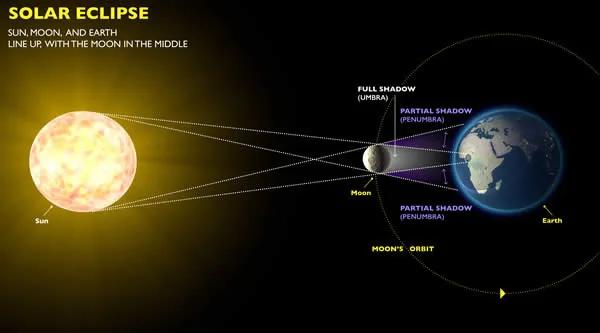
The 2026 solar eclipse path is a narrow corridor where the Moon completely covers the Sun’s bright face. Outside that corridor, even if the Sun looks dramatically bitten away, you are still seeing only a partial eclipse. That difference is everything.
According to broad global timing summaries, the eclipse reaches maximum worldwide at 17:46:06 UTC, with totality beginning somewhere on Earth at 16:58:09 UTC and ending somewhere at 18:34:07 UTC. Spain’s local window falls in the evening, with the event occurring around sunset hours in much of the country. Timeanddate lists Spain among the countries that will see a total solar eclipse, with local timing spanning roughly 7:30 pm CEST to 8:46 pm WEST depending on location and time zone. That alone tells you something important: this is not a midday eclipse in Spain. The Sun will be lower, the light will be warmer, and local horizon conditions will matter.
This late timing is part of what makes 2026 totality in spain so compelling. A total eclipse with the Sun lower in the sky can be visually spectacular, but it also raises the stakes for site selection. Hills, buildings, coastal haze, and mountain horizons can matter more than they would for a high-Sun eclipse.
If you are planning with friends or family, tell them early that “Spain gets the eclipse” is only half the story. The real question is where in Spain you will stand when the umbra arrives.
The path is narrow, and “inside totality” is a hard boundary
A 2026 total eclipse map can look forgiving at first glance because the partial eclipse covers a huge region. In fact, hundreds of millions of people will see at least some part of this eclipse, but only a tiny fraction will stand in the path of totality. Timeanddate estimates that about 980 million people can see some part of the eclipse, while only about 15.2 million are in places that get totality or annularity. That gap is the whole planning story.
For Spain, the practical lesson is simple: if you are outside the path, you do not get the corona, the sudden darkness, the horizon glow, or the full emotional punch of totality. You get a partial eclipse, which can still be beautiful, but it is a different event.
This is why the 2026 total eclipse path spain matters more than a generic national forecast. A city can be in Spain, full of eclipse buzz, and still miss totality entirely. Another town a short drive away can be inside the umbra and get the real thing. The boundary is not fuzzy in the human sense. It is precise. One side: total eclipse. The other side: not total.
That is also why we always recommend checking your exact location on the Helioclipse map rather than relying on a country-level headline or a social post with a simplified graphic.
What “on the centerline” actually means
When people talk about the centerline, they mean the line running roughly down the middle of the path of totality. If you imagine the Moon’s darkest shadow as a moving corridor, the centerline is the route traced by the deepest middle of that corridor across Earth’s surface.
Being on the centerline usually gives you the longest possible duration of totality available at that part of the path. Move away from it toward either edge, and totality gets shorter. Move beyond the edge, and totality disappears completely.
That is the core idea behind the 2026 path of totality in spain. The centerline is not a special VIP stripe where the eclipse suddenly becomes “more total.” Totality is totality anywhere inside the path. What changes is duration, symmetry, and a bit of margin for error. On the centerline, you are maximizing your time under the Moon’s umbra. Near the edge, you may only get a brief total phase.
For first-time viewers, that extra time matters more than many people expect. The difference between, say, a short totality near the path edge and a longer one near the center can be the difference between feeling rushed and feeling like you actually had time to look around, notice the corona, hear the crowd reaction, and take in the horizon.
Why centerline matters in practice
Think of the path as a band, not a single line. If you choose a location close to the centerline, you gain three practical advantages:
- more totality time
- more buffer if your chosen parking spot or viewpoint is slightly off your planned coordinates
- a clearer planning target when comparing nearby towns
That does not mean the centerline is always the best choice no matter what. A centerline site with a blocked western horizon, terrible access, or no weather backup may be worse than a slightly off-center site with a cleaner view and easier mobility. Geometry matters, but so do roads, clouds, and the last 30 minutes before totality.
Spain is not one eclipse experience: named places matter
A lot of weak eclipse coverage treats a whole country as one viewing zone. That is not useful here. A proper 2026 total solar eclipse spain map should push you toward named places and path relationships.
At minimum, think in categories:
Northern and inland path locations
Parts of northern or inland Spain that lie within the umbral track will offer totality if they are inside the path, but the exact duration depends on how close they are to the centerline. In general, inland viewers need to think carefully about local horizon and terrain, especially because the eclipse happens late in the day.
Path-edge locations
Towns near the northern or southern edge of the track may still get totality, but less of it. This is where “I’m in the path” can be technically true and still a little misleading if you are comparing sites. Edge-of-path totality can be dramatically shorter than centerline totality.
Major cities outside totality
Some well-known Spanish cities will attract attention simply because they are easy to reach, but accessibility is not the same thing as eclipse quality. If a city sits outside the umbra, it will only see a partial eclipse no matter how exciting the atmosphere feels on the ground.
That is why a 2026 total solar eclipse path spain article should never stop at “Spain is a great place to watch.” You need to know whether your exact destination is inside the path, near the center, near the edge, or outside totality altogether.
Because local circumstances vary sharply over short distances, we recommend using the Helioclipse Eclipse Explorer to compare candidate sites directly. For each place you are considering, check whether it is inside totality, how long totality lasts there, and how low the Sun will be.
Timing: what the late-day geometry means for viewers
People searching for total solar eclipse 2026 map time usually want one clean answer, but there are really three different timing questions:
- When does the eclipse happen globally?
- When does it happen in Spain?
- When does it happen at my exact viewing spot?
For the global event, the broad UTC milestones are well established: partial eclipse begins somewhere on Earth at 15:34:15 UTC, totality begins somewhere at 16:58:09 UTC, maximum eclipse occurs at 17:46:06 UTC, totality ends somewhere at 18:34:07 UTC, and the final partial phase ends globally at 19:57:57 UTC.
For Spain, the event is an evening eclipse. Timeanddate’s country-level summary places Spain’s local window roughly from 7:30 pm CEST to 8:46 pm WEST, but those are not city-specific contact times. They describe the national span across different locations and time zones, not a single Spanish town.
For your exact site, you need a location-based tool. That is where a 2026 solar eclipse map becomes more than a picture. It becomes a planning instrument. A good map tells you whether your totality starts earlier or later than another town, how long it lasts, and whether moving 20, 50, or 100 kilometers changes your odds in a meaningful way.
Late-day eclipses also create a different emotional rhythm. The light is already soft. Shadows lengthen. Then the Moon starts taking bites out of the Sun, and the sky begins to feel wrong in a way that is hard to describe until you have seen it. If you are on the centerline with a clean horizon, that run-up can be extraordinary.
How much difference does centerline position make?
This is the question behind almost every serious 2026 total solar eclipse path spain 2026 guide. The answer is: often, a lot.
In any total eclipse, maximum duration is found near the centerline, while duration tapers toward the edges. The exact numbers for Spain depend on the specific location you choose along the track, and those numbers should be checked on a location-based map or official circumstances table before you lock in travel. We do not recommend inventing city-by-city times from a simplified national graphic.
But the planning principle is solid: if you care about the longest possible totality, aim near the centerline. If you care more about logistics, weather flexibility, or a lower-stress family setup, you may accept a somewhat shorter totality in exchange for easier access.
That tradeoff is normal. Eclipse chasing is not only about squeezing out every last second. It is about giving yourself the best realistic chance to be in the umbra with a workable view of the Sun.
A useful way to think about it:
- centerline = maximum duration for that local stretch of the path
- mid-path but not centered = still excellent, usually with only a moderate penalty
- near edge = totality becomes brief and less forgiving
- outside path = no totality at all
If you are traveling with children, older relatives, or a group that will not want a last-minute road scramble, a slightly less “perfect” geometric site can still be the smarter choice. The key is to know what you are trading away.
Totality versus partial eclipse: the safety rule that changes with location
This is where path geometry stops being abstract and becomes a safety issue.
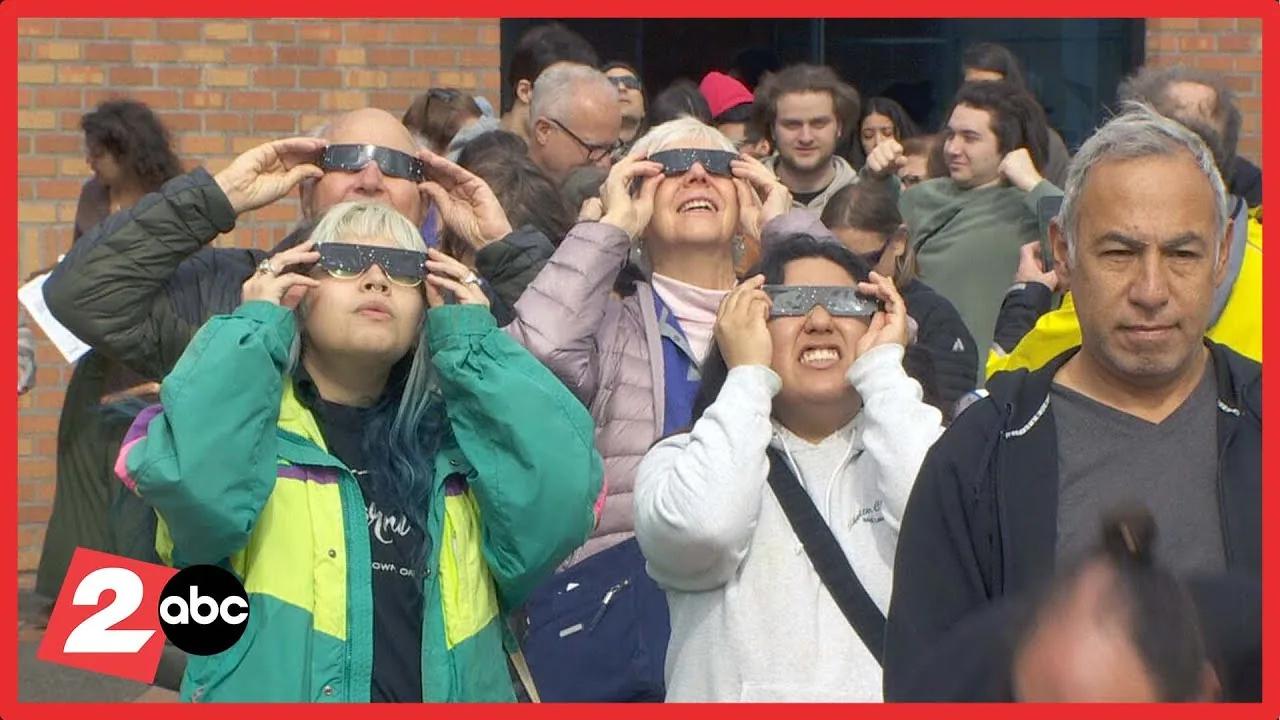
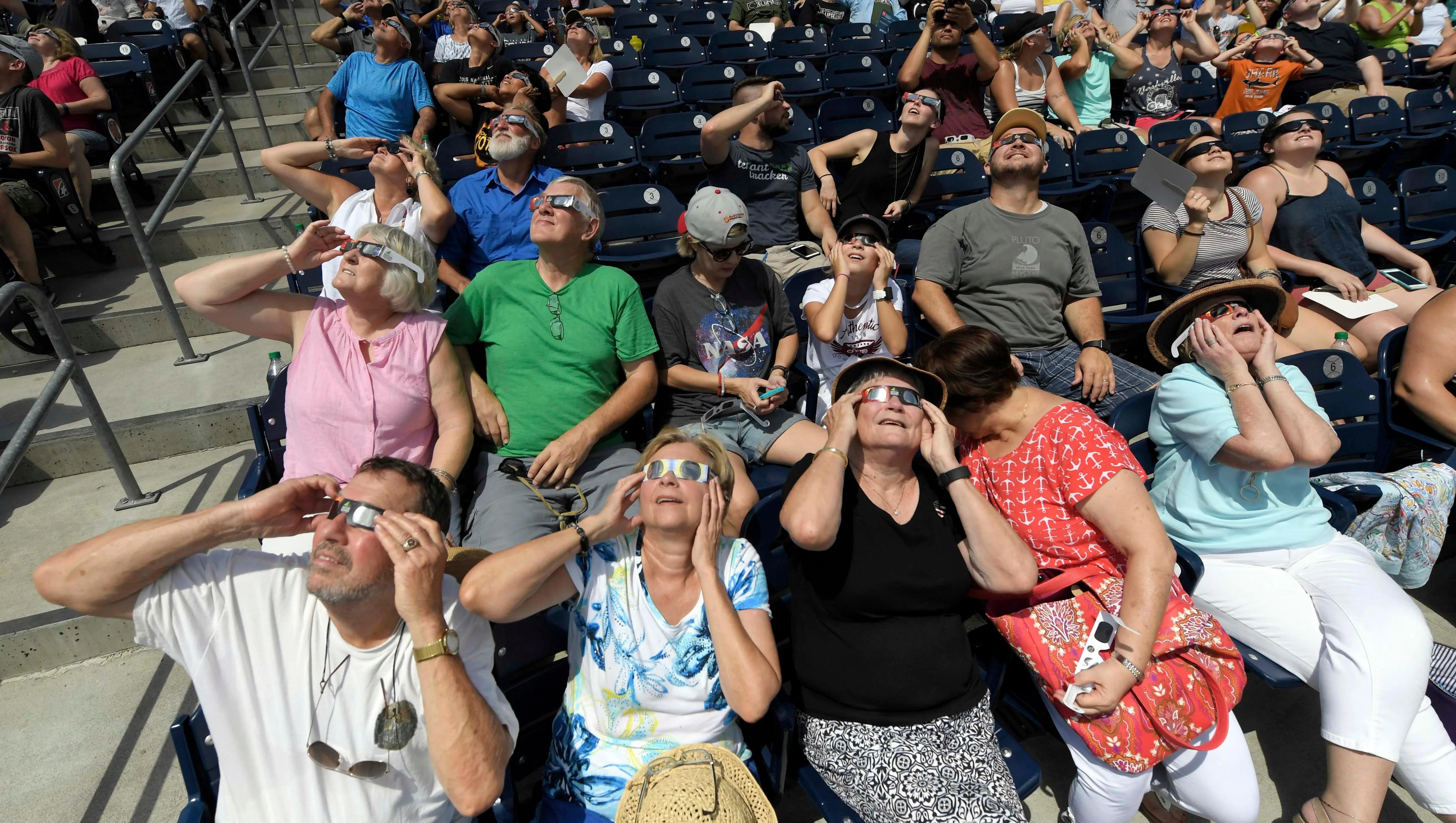
The American Astronomical Society is very clear: during a total solar eclipse, it is only safe to look with the naked eye during the brief total phase, when the Sun’s bright face is completely covered, and that only applies if you are inside the path of totality. Outside the path, there is no safe moment to look directly at the Sun without proper solar filtering.
So if you are not sure whether your site is truly in totality, act as though it is not. Use certified viewers the entire time.
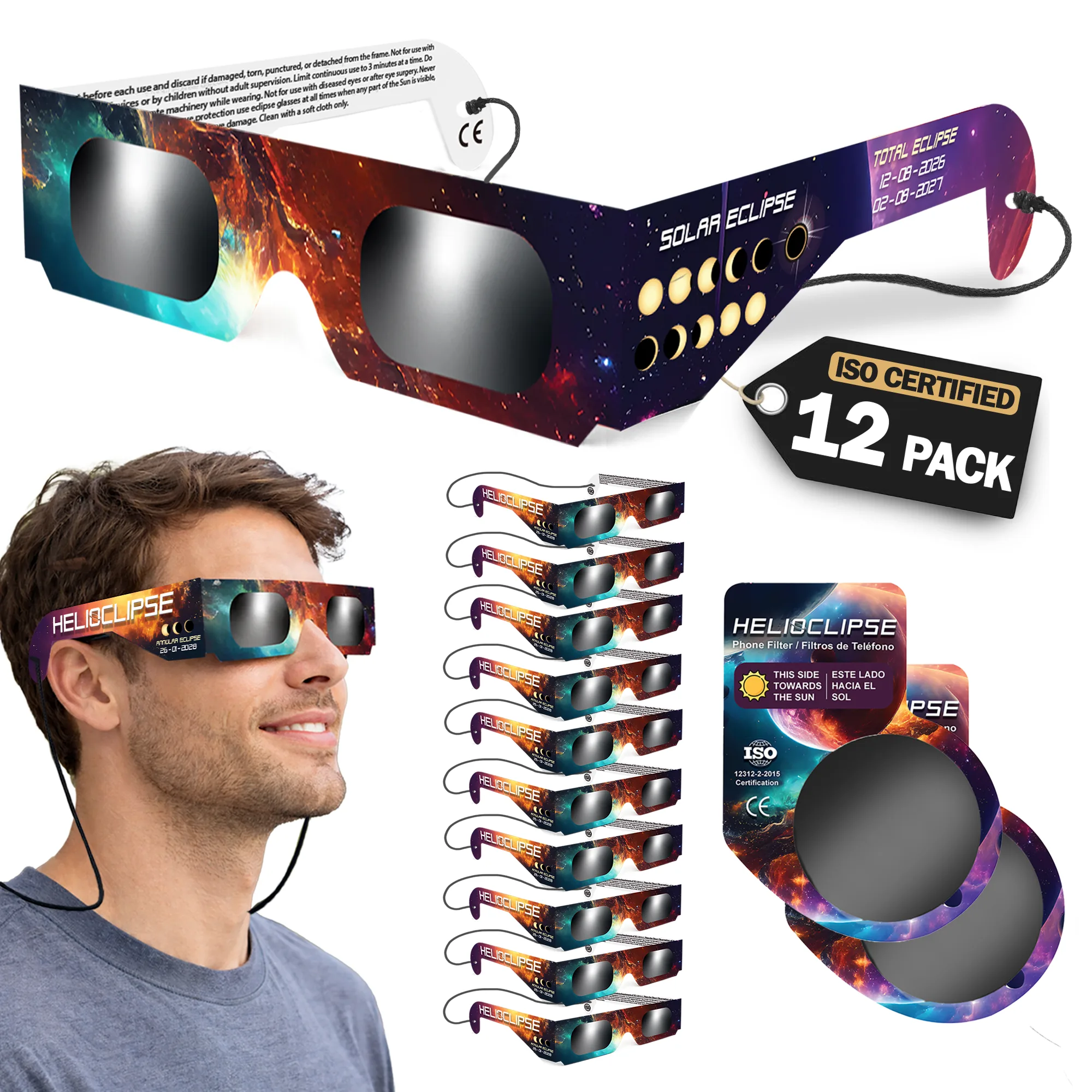
This matters because a lot of people will buy glasses based on vague marketplace language. What you want are approved solar eclipse glasses that conform to the ISO 12312-2 standard, not ordinary sunglasses. You will also see shoppers look for solar eclipse glasses iso 12312-2 certified products or eclipse viewing glasses before a major event like this. That is sensible, as long as the product page is clear about the standard and the instructions are followed.
If you need viewers for your group, our Shop eclipse glasses is the straightforward place to start. Order early enough that you are not making rushed decisions in the final week.
Why Spain will draw huge interest — and why that changes your plan
The August 12 event is the first total solar eclipse for mainland Europe since 1999, which gives Spain unusual weight in the eclipse conversation. That alone helps explain why searches for 2026 total solar eclipse path spain, 2026 totality in spain, and even 2026 total solar eclipse path spain 2026 guide are already building momentum.
It also means you should expect crowd pressure in obvious viewing zones, especially where the path intersects easy transport, scenic coastlines, or well-known tourist regions. If you wait too long to choose a target area, you may still get a good eclipse, but you will have fewer lodging options, fewer backup routes, and less freedom to shift for weather.
This is also why some people are already looking at a total solar eclipse 2026 cruise. For some travelers, a ship-based plan offers mobility and a clear horizon. For others, it adds cost and uncertainty of a different kind. We are not here to sell you a cruise fantasy; we are here to remind you that whatever platform you choose, the same geometry rules apply. You still need to know whether you will actually be in the umbra, how long totality lasts there, and what your horizon looks like.
For most readers, a land plan in Spain with a primary site and one or two backups will be the more practical route.
How to use a map like a planner, not like a poster
A lot of people open a 2026 total eclipse map, zoom once, and think they are done. That is not enough.
Use the map in layers:
1) Confirm total versus partial
First, make sure your candidate location is actually inside the path. This sounds obvious, but it is the most common planning mistake.
2) Check centerline distance
Next, compare how far each site is from the centerline. If one town is near the middle and another is near the edge, the duration difference may be worth the extra drive.
3) Check timing and Sun position
Because this is an evening eclipse in Spain, ask not just “what time?” but “how high is the Sun?” A site with a blocked low-western horizon can ruin an otherwise strong geometric choice.
4) Build a weather pivot
Even a great centerline site is not sacred if clouds settle in. Keep at least one backup option in mind, ideally one you can reach without chaos.
5) Share the plan early
If you are doing this with family, friends, a school group, or a photography buddy, send the map link now. Eclipse plans fall apart when only one person understands the difference between “Spain sees the eclipse” and “this exact town gets 2-plus minutes while that other one gets none.”
Our Helioclipse Eclipse Explorer / 3D map is built for exactly this kind of comparison. Use it to test assumptions before you book anything.
A realistic way to choose your Spanish viewing site
If you are feeling overwhelmed, here is a sane decision order for 2026 total solar eclipse path spain planning:
First, choose totality over convenience. A partial eclipse in a famous city is still a partial eclipse.
Second, choose a clean horizon over a theoretically perfect map position if the difference in duration is modest. A slightly off-center site with a better western view can beat a centerline site with obstructions.
Third, choose flexibility over bravado. The best eclipse plan is the one you can still execute if traffic is heavy, parking is messy, or the weather shifts.
Fourth, prepare your viewing gear before the week of the event. If your group needs eclipse glasses nasa approved language on the packaging to feel confident, remember that the real technical reference is ISO 12312-2 and proper use instructions. Bring enough viewers, keep them in good condition, and make sure everyone understands when they stay on and when, if you are truly inside totality, they can briefly come off.
Finally, tell people now. This is the kind of event that becomes a family memory, a school trip, a reunion excuse, or the best group chat plan of the year. The sooner your people understand the path, the better your odds of seeing the real thing together.
Frequently asked questions
Where in Spain will the 2026 total solar eclipse be visible as a total eclipse?
Parts of Spain will lie inside the narrow path of totality on August 12, 2026, while areas outside that corridor will see only a partial eclipse. The excerpt does not name every location, so the key is to check whether a specific site is inside the totality path and how close it is to the centerline.
Which Spanish cities are expected to fall inside the total eclipse path?
The excerpt does not list specific cities, so it does not support naming any particular urban areas as guaranteed totality sites. It does say that not all good eclipse locations are equal, and that being inside totality is different from being near the edge of the path.
What is the most important thing to understand about the 2026 eclipse in Spain?
The main point is that the eclipse path is narrow, so location matters a lot. Spain will see the event late in the day on August 12, 2026, and whether you are inside totality, near the centerline, or outside the path will strongly affect what you see.
How should I interpret the timing shown on a total solar eclipse map for Spain?
The timing is late afternoon to evening in Spain, roughly from 7:30 pm CEST to 8:46 pm WEST depending on location and time zone. Because the Sun will be low, local horizon conditions such as hills, buildings, coastal haze, and mountain views can affect the experience.
What does a 2026 solar eclipse map actually tell me?
A map helps you see whether your spot is inside or outside totality, how close it is to the centerline, and how much totality time you gain or lose by moving a short distance. The excerpt emphasizes that the difference between a town inside totality and one outside it is decisive, so the map is essential for planning.
On-site next steps
- Explore the Helioclipse Eclipse Explorer / 3D map to compare exact Spanish locations, centerline distance, and total-versus-partial geometry.
- If you are building a group plan, get your Helioclipse solar eclipse glasses sorted early so you are not scrambling for safe viewers close to eclipse day.
- For more planning and safety help, browse the Helioclipse blog.
Sources & further reading
- 2026 Total Solar Eclipse — Spain path, timing, and visibility overview
- Solar Eclipse of August 12, 2026 — Spain and Europe visibility details
- 2026 Total Solar Eclipse in Spain — path map and local circumstances
- August 12, 2026 total solar eclipse: where totality crosses Spain
- How to view a solar eclipse safely
- Eclipse basics
- NASA Science — Eclipses
- ISO 12312-2: Eye and face protection for viewing the sun